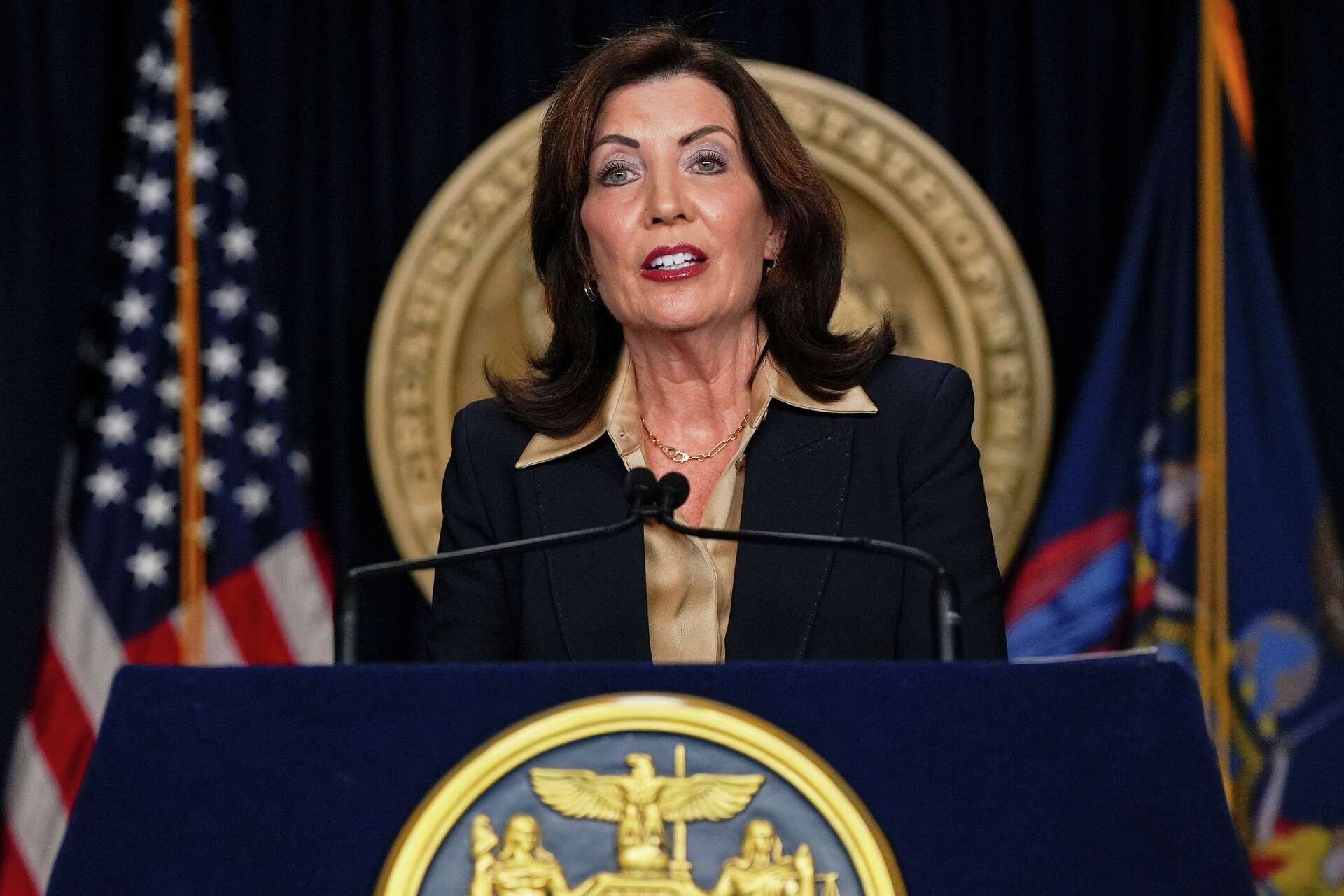
As artificial intelligence continues to transform the advertising world, New York has taken a major step toward ensuring consumers know exactly what they are seeing. A new state law, which officially came into effect on June 10, requires advertisers to clearly disclose when AI-generated people—known as “synthetic performers”—are used in advertisements instead of real actors.
Signed into law by Governor Kathy Hochul in December, the legislation is being described by state officials as the first of its kind in the United States. The move reflects growing concerns about how realistic AI-generated content has become and whether consumers can distinguish between real and artificial performers.
Credits: Reuters
What Exactly Is a Synthetic Performer?
Under the new law, a synthetic performer is defined as digitally created media that appears to be a real person. These AI-generated individuals can be designed to look, move, and express emotions just like human actors, making them increasingly difficult to identify.
The law applies across all advertising formats, including television commercials, social media campaigns, online advertisements, billboards, and other promotional content. Any advertisement using a synthetic performer must provide a clear and conspicuous disclosure informing viewers that the person they are seeing is AI-generated.
Businesses that fail to comply face financial penalties. A first violation can result in a $1,000 fine, while subsequent violations can carry penalties of up to $5,000 each.
Protecting Consumers and Creative Workers
Governor Hochul framed the law as a measure designed to protect both consumers and workers in the creative industry.
“In New York, we are setting the rules of the road instead of letting AI run the show,” Hochul said when announcing the law’s implementation. According to state officials, the legislation aims to ensure transparency while also helping safeguard jobs in industries where AI-generated content could potentially replace human performers.
Supporters argue that consumers have a right to know whether a person appearing in an advertisement actually exists. They also believe disclosures can help prevent misleading marketing practices as AI-generated content becomes more sophisticated.
Important Exceptions to the Rule
The law does not apply universally. Several exemptions were included to address concerns raised by industries that rely heavily on digital effects and AI-generated characters.
Advertisements promoting movies, television shows, streaming content, video games, and similar creative works are exempt if synthetic performers are already featured within the underlying content itself. The law also excludes audio-only advertisements and situations where AI is used solely for language translation purposes.
These carve-outs were introduced during the legislative process to reduce the burden on content creators and broadcasters while still maintaining the law’s primary transparency objectives.
Industry Pushback and Compliance Concerns
Not everyone welcomed the legislation. Advertising organizations strongly opposed the proposal while it was making its way through the state legislature.
The American Association of Advertising Agencies (4As) argued that the law could create compliance uncertainty and add unnecessary complexity to the advertising process. Industry groups warned that broad regulations might slow innovation and discourage companies from experimenting with emerging AI technologies.
Meanwhile, organizations such as the New York State Broadcasters Association expressed concerns about the law’s broad definition of synthetic performers. Despite these reservations, broadcasters have indicated they are prepared to comply with the new requirements.

Credits: The World Economic Forum
SAG-AFTRA and the Growing AI Debate
One of the law’s strongest supporters was SAG-AFTRA, the union representing actors and performers. The organization has been at the forefront of efforts to establish protections against the unauthorized use of AI-generated likenesses and digital replicas.
The law arrives amid broader national discussions about AI’s impact on employment, privacy, and creative industries. Across the United States, lawmakers are exploring regulations aimed at combating deepfakes, protecting personal data, and increasing transparency around AI-generated content.
The debate has also reached the federal level. Shortly after the New York law was signed, President Donald Trump issued an executive order discouraging states from creating AI regulations that could hinder innovation and weaken America’s competitive position against countries such as China.
As AI technology continues to evolve, New York’s synthetic performer law may serve as a test case for how governments balance innovation, consumer protection, and workforce rights in the age of artificial intelligence.