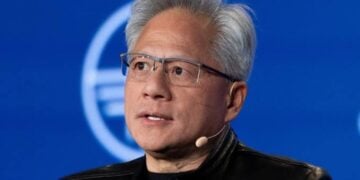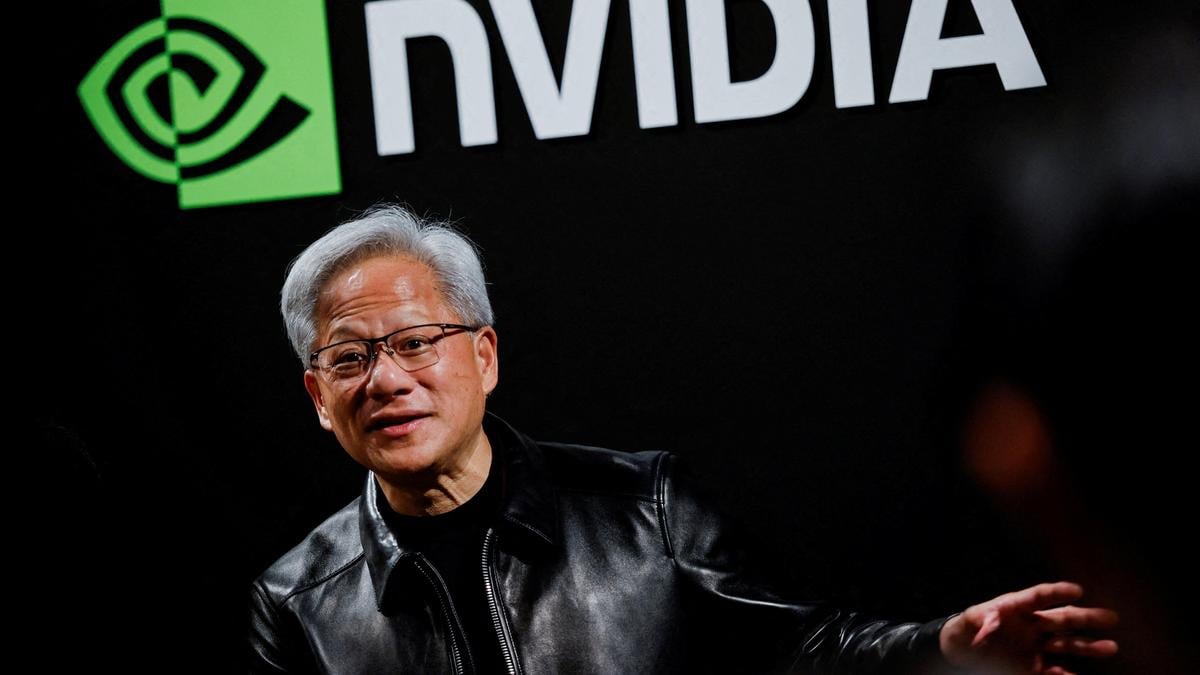
Nvidia is facing an unprecedented leadership controversy after reports emerged that its board was preparing to remove longtime chief executive Jensen Huang following allegations of a second extramarital relationship. The latest revelation has intensified scrutiny of the 63-year-old technology leader, raising questions about corporate governance, executive accountability and the future direction of one of the world’s most influential artificial intelligence companies.
The controversy gained momentum after reports alleged that Huang had a relationship with a senior Nvidia executive who reportedly reported directly to him. The development came shortly after Huang acknowledged being unfaithful to his wife in a message addressed to company employees.
The possibility of his removal represents a significant moment for Nvidia, which has built much of its global identity around Huang’s leadership. The company has transformed from a graphics processing business into a dominant supplier of artificial intelligence chips, making any leadership uncertainty particularly important for investors and industry partners.
Second Affair Allegation Intensifies Pressure
The latest allegations involve a senior Nvidia executive who allegedly worked under Huang’s direct supervision. The reported relationship has raised questions about workplace power dynamics and the professional boundaries expected between chief executives and employees.
Relationships involving individuals within a direct reporting structure can create potential conflicts of interest, particularly when one person has substantial authority over the other’s career progression, responsibilities and professional opportunities.
Although the precise circumstances of the alleged relationship remain unclear, the revelation has placed additional pressure on Nvidia’s board to examine Huang’s conduct and its possible implications for the company’s internal governance.
The allegations have also attracted attention because they emerged shortly after another controversy involving Huang’s reported relationship with Alice Huang, a Chinese businesswoman associated with Singapore-based data centre company Megaspeed.
U.S. intelligence officials reportedly assessed that Alice Huang had connections to China’s Ministry of State Security and may have been gathering information for Beijing. These allegations raised concerns about possible foreign intelligence access to sensitive business information.

China has rejected the espionage allegations.
The two reported relationships have created a complicated situation for Nvidia, combining questions about executive conduct with separate national security concerns.
Nvidia Board Considers Leadership Change
Following the emergence of the second allegation, reports indicated that Nvidia’s board was preparing to consider removing Huang from his position.
The potential decision marked a dramatic development for a company that has relied heavily on its co-founder’s leadership for more than three decades.
Huang has played a central role in Nvidia’s transformation and strategic expansion. His public profile is closely connected to the company’s technological achievements, making the possibility of his departure a major concern for employees, investors and business partners.
The board’s responsibilities extend beyond protecting the company’s financial performance. It must also ensure that senior leadership follows appropriate workplace standards and that allegations involving executive conduct receive independent scrutiny.
The controversy has therefore raised questions about whether Nvidia’s existing governance mechanisms are sufficient to address concerns involving its most powerful executive.
Huang’s Resignation Marks a Historic Moment
The leadership crisis reached a turning point on November 12, 2026, when Nvidia announced Huang’s resignation as chief executive.
The company appointed Chief Financial Officer Colette Kress as interim CEO while beginning the process of determining its future leadership arrangements. Board member Harvey Jones was also appointed executive chairman to help oversee the transition.
Huang’s departure marks the end of an extraordinary leadership period spanning more than 30 years.
He co-founded Nvidia in 1993 and guided its expansion into graphics processing, gaming, data centres and artificial intelligence computing. Under his leadership, the company became a critical supplier of processors powering some of the world’s most advanced AI systems.
His resignation consequently represents more than a routine executive transition. It creates questions about how Nvidia will maintain its strategic direction without the person most closely associated with its growth.
Investor Confidence and Market Uncertainty
The possibility of Huang’s removal also raised concerns among investors about Nvidia’s future performance.
The company’s success has been closely associated with its leadership, product strategy and ability to maintain its technological advantage. Any sudden change at the executive level could create uncertainty about future investments, strategic priorities and relationships with major customers.
Nvidia operates in an increasingly competitive semiconductor market, where companies are investing heavily in artificial intelligence infrastructure. Its processors remain essential to numerous technology businesses developing AI models and operating large data centres.

Investors will therefore be watching how the company manages its leadership transition and whether its existing executive team can maintain operational stability.
The controversy also comes amid heightened geopolitical tensions surrounding advanced semiconductor exports and competition between the United States and China.
What Lies Ahead for Nvidia?
Huang’s resignation places Nvidia at a significant crossroads. The company must now balance leadership restructuring with its responsibility to maintain technological innovation and investor confidence.
The board will face the challenge of establishing a long-term succession strategy while addressing concerns about executive accountability and corporate governance.
The controversy also highlights the importance of maintaining professional boundaries within large organisations, particularly when senior executives hold considerable influence over employees.
For Nvidia, the immediate question is whether its established leadership team can continue the company’s growth trajectory during this transition.
After more than three decades of Huang’s leadership, the company is entering a new phase in its history. Its ability to navigate the controversy while maintaining its position at the centre of the global AI industry will determine how this leadership change shapes its future.