The artificial intelligence arms race just got a whole lot more expensive. Nvidia, the chipmaker that has become synonymous with artificial intelligence computing, is nearing a deal to invest $20 billion in OpenAI’s latest funding round, which could be the company’s biggest bet in a single investment.
Sources close to the talks have indicated that Nvidia’s part of the bargain is now close to being finalized, but a formal agreement hasn’t signed just yet. Neither Nvidia nor OpenAI commented officially about their arrangement, but the magnitude of such an investment also spells out just how integral a partnership between these two titans of AI has become.
For Nvidia, the deal is a strategic bet on a company that has emerged as the public face of conversational AI technology. The chipmaker’s recent success has been founded on its provision of the graphics processors that drive AI technology such as ChatGPT, and a closer financial link with OpenAI could see this relationship continue.
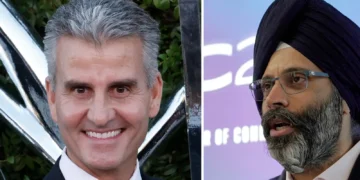
Nvidia’s CEO said this while in Taipei over the weekend. “We will definitely participate in the next round of financing because it’s such a good investment,” Nvidia’s CEO, Jensen Huang, said.
At the same time, the CEO was quick to point out that it could likely “be the largest investment we’ve ever made,” words that carry significant weight from a company that has been named the most valuable chipmaker in the world thanks in large part to developments in artificial intelligence.
Why OpenAI and Nvidia Can’t Afford to Break Up?
The investment comes at an interesting moment for the Nvidia-OpenAI partnership. Recent days have brought reports of behind-the-scenes tensions between the two companies. The Wall Street Journal revealed that a broader plan Nvidia announced last September-one that could have seen the chipmaker invest up to $100 billion in OpenAI overall-had hit roadblocks after some Nvidia executives expressed reservations about the arrangement.

Those internal doubts underscore the precarious balancing act that tech companies are performing in their decisions about how much to invest in AI. The potential rewards are enormous, but so are the uncertainties about how the technology will evolve and who will be left standing.
Despite this friction, however, each company has sought to go public with their commitment to the other. Huang’s latest announcement of commitment in Taipei has been just the latest round of public statements made by officials of each company expressing their commitment to each other. The relationship is just too valuable for each company to let friction like this stop it altogether.
Therefore, for OpenAI to achieve this amount of funding, it would give them enormous funding to continue developing its AI capabilities. They have been burning through cash quickly as they continue to train sophisticated AI models. They have also been developing other products besides ChatGPT.
Therefore, they have big-pocketed investors such as Nvidia, Amazon, as well as SoftBank to give them the funding they need to stay ahead in a crowded and competitive space.
Capital, Computing, and Consolidation in the AI Arms Race
For the case of Nvidia, the investment is about more than just the returns it makes into the future. It ensures that the company maintains a relationship with what is likely one of the most important consumers of its AI chips, and it could be getting a glimpse into the future of AI development itself.
The funding round also helps to illustrate the state of consolidation in the AI space and how it is being dominated by a handful of large players who have the wherewithal to compete at a high level. Potentially, developing and training top-tier AI models requires a tremendous amount of computing and financial power.
As the deal nears its completion, the tech world will be watching with great interest. If the deal closes, it will be one of the largest funding rounds in tech history and will demonstrate that investors still have faith in the potential of AI to revolutionize the world, despite all the controversy that still surrounds the industry.
Though still unclear are the final terms or timing of this deal, it is becoming increasingly clear that the stakes for artificial intelligence have never been higher, and that the companies pushing the field forward are certainly putting their money where their mouth is.