The future of computing may no longer revolve around humans. In a major announcement at GTC Taipei 2026, Nvidia introduced Vera, a new CPU architecture built specifically for artificial intelligence agents rather than traditional human-operated workloads. The launch signals a dramatic shift in how computing infrastructure is being designed as AI systems become increasingly autonomous and capable of performing complex tasks without direct human involvement.
According to Nvidia CEO Jensen Huang, Vera represents a new generation of processors tailored for the era of agentic AI, where intelligent software agents can reason, make decisions, write code, and execute tasks independently.

Credits: TechPowerUp
A CPU Built for the Age of AI
For decades, CPUs have been designed primarily to support human-driven applications such as web browsing, office software, gaming, and enterprise computing. Vera changes that paradigm entirely.
Unlike conventional processors, Vera is optimized for workloads generated by AI agents. Nvidia claims the new architecture can complete tasks up to 1.8 times faster than traditional x86 processors in AI-centric environments.
The company believes that future data centers will increasingly be populated by AI agents handling everything from software development and analytics to research and business operations. As a result, infrastructure must evolve to support these new demands.
“AI factories” have become a key focus for Nvidia, and Vera is designed to serve as the central brain powering these next-generation facilities.
Powered by Olympus and Packed with Performance
At the heart of Vera lies Olympus, Nvidia’s custom CPU core architecture. The processor features 88 cores and introduces advanced technologies such as Spatial Multithreading, allowing it to handle large-scale AI workloads more efficiently.
The chip is paired with an LPDDR5X memory subsystem capable of delivering an impressive 1.2TB/s memory bandwidth, ensuring rapid data movement across applications.
These specifications make Vera particularly suitable for CPU-intensive tasks that modern AI systems rely on, including Python runtimes, sandboxed code execution, orchestration frameworks, analytics pipelines, and reinforcement learning environments.
Rather than competing directly with consumer CPUs, Vera is aimed squarely at enterprise AI infrastructure and cloud-scale deployments.
Industry Giants Are Already On Board
Perhaps the strongest validation of Vera comes from the list of companies already adopting the technology.
Nvidia revealed that leading AI firms including Anthropic, OpenAI, and SpaceXAI are among the earliest adopters of Vera-powered systems. These organizations are at the forefront of developing advanced AI models and autonomous agents, making them ideal candidates for the new architecture.
Beyond AI labs, major hyperscale cloud providers are also preparing deployments. ByteDance, CoreWeave, and Oracle Cloud Infrastructure have reportedly planned Vera implementations as they expand their AI computing capabilities.
The adoption by such influential players suggests that the industry sees significant value in specialized CPU architectures built specifically for AI workloads.
More Than Just a Standalone Processor
Nvidia has designed Vera to play multiple roles across its expanding AI ecosystem.
First, it serves as the processor powering standalone Vera servers. Second, it functions as the host CPU for Nvidia’s Vera Rubin GPU platforms through second-generation NVLink-C2C technology, delivering up to 1.8TB/s of coherent CPU-GPU bandwidth.
Additionally, Vera acts as the intelligence layer behind Nvidia’s Vera BlueField-4 STX AI storage platform, creating a tightly integrated infrastructure stack optimized for AI operations.
This approach allows Nvidia to offer customers a complete end-to-end solution spanning computing, networking, storage, and AI acceleration.
Traditional Server Market Faces New Competition
One of the most significant implications of Vera is its potential impact on the enterprise server industry.
Major manufacturers including Dell Technologies, HPE, Lenovo, and Supermicro will offer standalone Vera CPU server configurations. This marks one of the first major alternatives to traditional x86-based enterprise servers in years.
As organizations increasingly prioritize AI workloads, specialized processors like Vera could challenge the long-standing dominance of conventional server architectures.
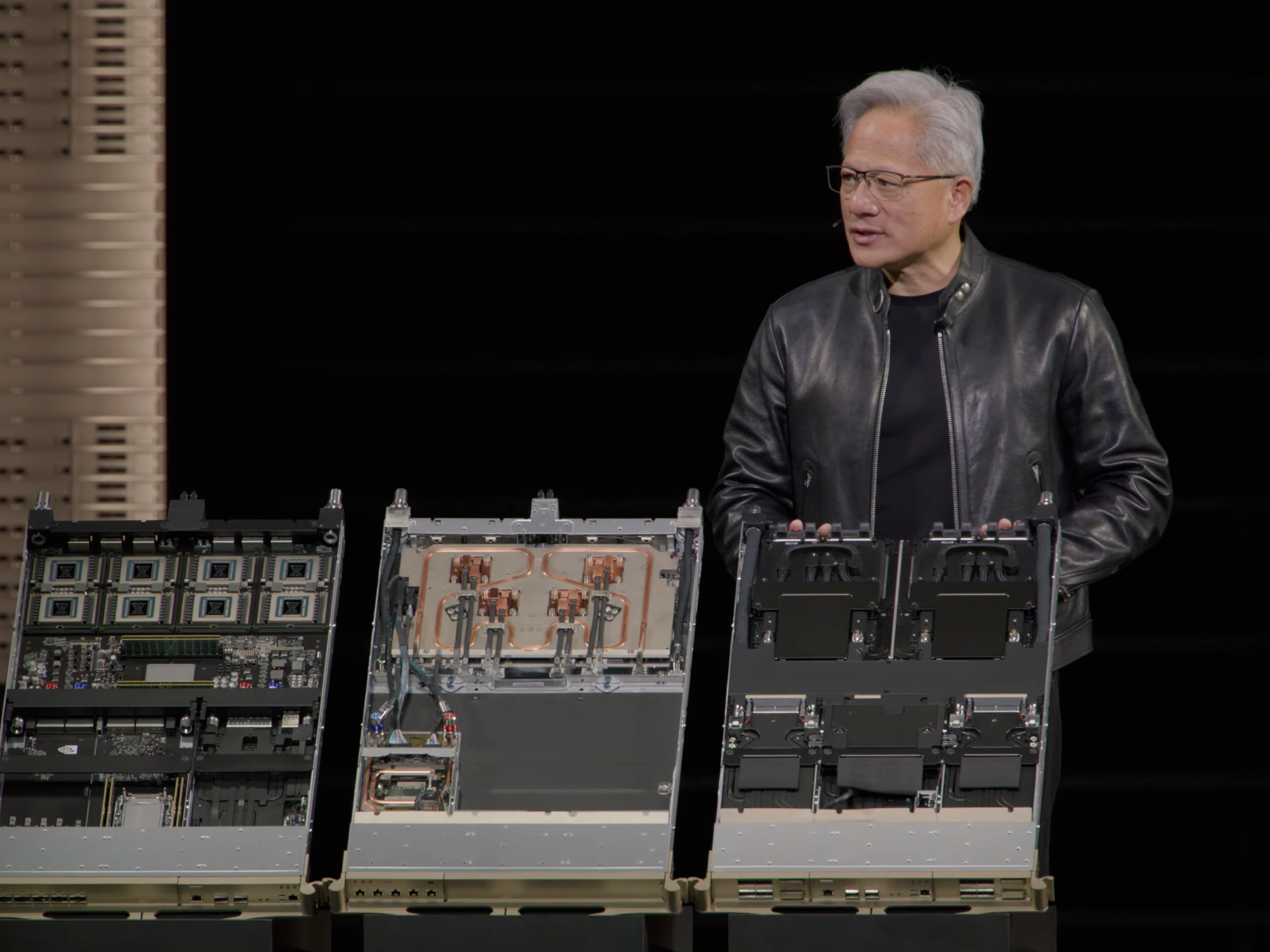
Credits: PC Gamer
The Beginning of an AI-First Computing Era
Vera systems are expected to become available through system builders and cloud partners starting this autumn. While GPUs have long dominated discussions around artificial intelligence, Nvidia’s latest announcement highlights the growing importance of AI-optimized CPUs.
By creating a processor designed specifically for autonomous AI agents, Nvidia is betting that the next phase of computing will be driven less by human interaction and more by intelligent software working independently. If that vision becomes reality, Vera could mark the beginning of a completely new chapter in computing history.