A stirring press conference address by Palantir Technologies CEO Alex Karp at this week’s World Economic Forum in Davos: “Artificial intelligence is about to transform the labor market in such a way that countries will no longer need mass immigrants.”
Addressing a panel discussion on January 20, 2026, Karp spoke to a group of business and political leaders about the changes that AI will bring to the world of work and asserted that “there will be more than enough jobs in AI” for local labor, especially those with vocational training.
His remarks, alongside BlackRock CEO Larry Fink, have prompted a fervent debate on the future of employment and the way forward on matters of immigration.
“There will be more than enough jobs for the citizens of your nation, especially those with vocational training,” Alex Karp stated. “I do think these trends really do make it hard to imagine why we should have large-scale immigration unless you have a very specialized skill.”
Karp’s argument offers a major paradigm shift in the conventional discourse on automation.
How Alex Karp Sees Automation Reshaping Labor and Migration?
In comparison to waves of technology that affected industry and manual work, the Palantir Chief Executive predicts that artificial intelligence will disrupt white-collar professionals most. White-collar professionals and knowledge workers are more likely to be affected than tradesmen.
This, he believed, would lead to a further boost in demands for vocational skills such as electricians, plumbers, construction workers, and other skilled jobs that are less likely to be computerized. This would result in plenty of job opportunities for trained citizens of the country and make mass migration irrelevant except for very skilled individuals.
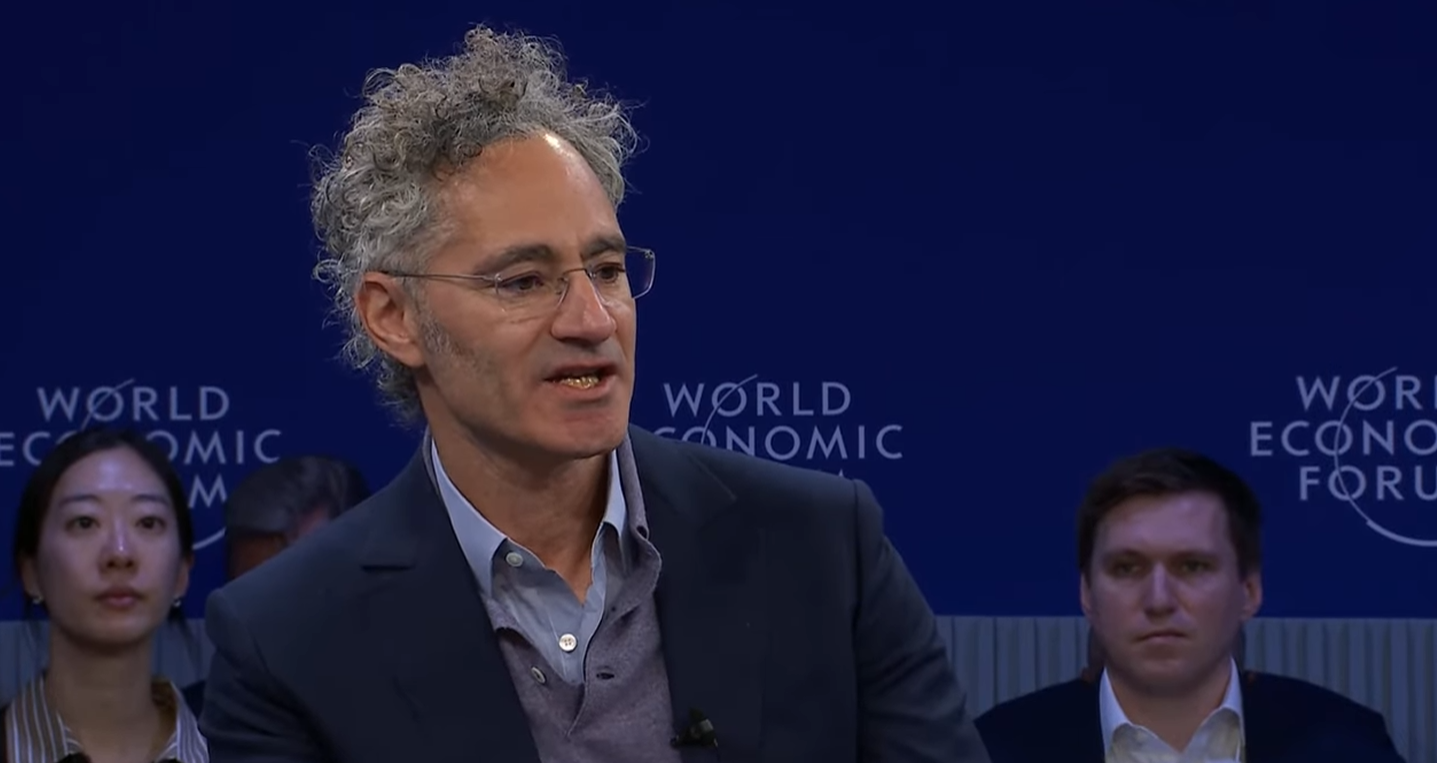
These comments are being made at a time when the world is wrestling with the issue of immigration policy, as well as the quick pace of development of AI technology. Karp here links two prominent policy issues, indicating a possible shift related to the need for labor due to the deployment of AI technology.
These remarks have triggered significant conversations on social and news sites. The news spread on news sites such as Bloomberg and Gizmodo, as well as on online communities such as Reddit and Hacker News.
Advocates of Karp’s vision argue that he points to the hope that AI can ensure that domestic workers are not pushed down on salaries due to international labor competitiveness. His vision gives priority to employment and vocational training of citizens at a time when people feel left behind because of technological change.
However, critics argue that Karp’s view about what might happen is incorrect or, at any rate, unlikely compared to realities related to economics.
AI Productivity and the Realities of the Global Workforce
A number of people have cited industries such as farming, service, or senior care, for instance, that rely heavily on immigrants today, many of whom will not be supplanted by automation any time soon. This is because those vacancies have remained unfilled despite being available to local citizens.
Karp’s statements largely represent the conflict that AI brings to societal effects. Technologists are known to prioritize the productivity gains that AI offers, but displaceable job concerns also run rampant in this group.
The emphasis placed by Palantir’s CEO on vocational training as a way ahead represents one way of dealing with this shift, but there are clearly issues about how soon such transitions can or will take place.
The comments also touch on politically charged issues relating to immigration policy, which differ widely across countries and remain contentious in democracies worldwide. Through its connection of AI use to immigration, Karp finds himself in the middle of issues that are much broader than tech issues.
Deconstructing Palantir’s Vision for a Post-AI Workforce
With the increasing pace of AI capability expansion, it becomes very challenging for policymakers to address issues related to managing transitions in the employee pool, addressing affected personnel, and deciding on the best immigration policies to adopt in the new scenario.
Karp’s comments at the Davos summit have reignited the debate, although there is a debate on whether his visions will actually come to fruition.
However, the current vision of the CEO of Palantir is merely a vision at this stage, a projection of a possible future impacted by the changes brought by AI in the labor market and the need for immigration
Whether his predictions come to pass will depend on a host of different things, from the rate at which AI progresses to the policies put in place by governments around the world, but it’s obvious that issues like these will not be going away anytime soon, and people like Karp will continue to frame the debate with respect to the role of technology in the future of society.