
The digital identity landscape is undergoing its most profound structural shift since the inception of the commercial internet. For more than six decades, the foundational mechanism protecting global digital assets has been a shared-secret model: the traditional string of characters known as a password. However, as cybercrime infrastructure scales via automated credential-stuffing bots, advanced generative phishing frameworks, and sophisticated social engineering schemes, the systemic vulnerabilities of memory-based authentication have become an acute liability for enterprises and retail consumers alike. To counter these systemic threats, a global security coalition spearheaded by the FIDO Alliance and the World Wide Web Consortium (W3C) has deployed WebAuthn credential pipelines. This architectural battle, framed as passkeys vs passwords, marks a transition from a world of shared secrets to a resilient model of asymmetric cryptography.
Consequently, modern organizations are aggressively phasing out text-based fields in favor of hardware-bound, cryptographically backed credentials. Unlike traditional credentials that require users to generate, remember, and rotate complex combinations of letters, numbers, and symbols, a passkey replaces human memory entirely with localized device authentication. By analyzing the structural mechanics of passkeys vs passwords, software engineers, corporate security officers, and IT administrators can build highly resilient infrastructure that actively eliminates phishing pathways, mitigates the risk of massive server-side credential leaks, and dramatically slashes user friction across consumer ecosystems.
1. Architectural Dissection: How Passwords Fail at Scale
To understand why the cybersecurity community is shifting away from traditional character strings, it is necessary to examine the technical flow of password validation. Legally and operationally, traditional logins operate on a Symmetric Knowledge Model. Both the user and the remote application server must share prior knowledge of a identical secret.
When a user establishes an account, the application server processes the raw text string through a cryptographic hashing function ideally utilizing slow, resource-heavy algorithms like Argon2id or bcrypt and appends a unique random value (“salt”) to prevent pre-computed dictionary attacks. The resulting hashed output is stored within a centralized database.As illustrated above, this structural pattern introduces multiple highly vulnerable intercept vectors:
- The Intercept Layer (Phishing): Because passwords are raw strings of text, a user can easily be tricked into typing their credentials into a malicious, proxy-controlled replica website. The attacker captures the plaintext sequence in real time and immediately replays it against the authentic application server.
- Server-Side Compromise Targets: No matter how secure an enterprise’s peripheral defenses are, holding millions of user hashes creates a high-value target for threat actors. If a database is leaked or cracked via SQL injection attacks, the stored hashes can be subjected to offline, high-velocity brute-force cracking loops.
- The Reuse Multiplier: The average modern consumer manages over 100 distinct digital accounts. Due to cognitive fatigue, up to 70% of users routinely reuse identical or slightly modified password baselines across multiple unrelated platforms. Consequently, a minor breach at a low-security retail site can instantly compromise an individual’s high-value corporate or financial portals.
2. The Cryptographic Blueprints of Passkey Infrastructure
Passkeys fundamentally rewrite this transaction by operating on an Asymmetric Cryptographic Model. Built squarely on top of the FIDO2 and WebAuthn standards, passkeys completely detach the authentication proof from the remote application server. Instead of a shared text secret, creating a passkey generates a unique, cryptographically bound public-private key pair.
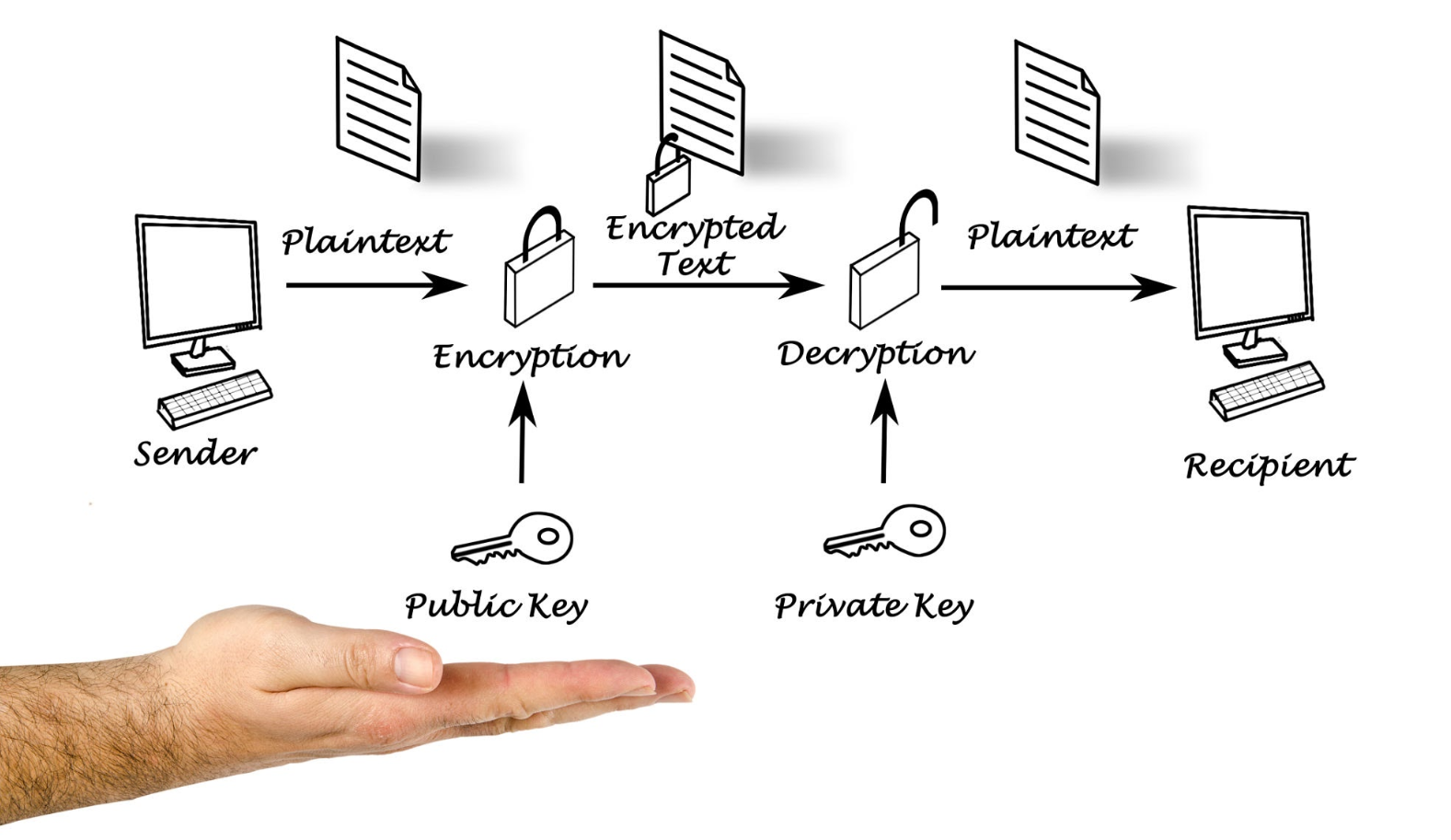
When a user registers a passkey on an application platform, the cryptographic process executes inside an isolated, hardware-protected zone on the user’s local device, such as Apple’s Secure Enclave or an Android TEE (Trusted Execution Environment):
- Key Generation: The local device generates a new public-private key pair using proven elliptic curve algorithms like Ed25519 or ECDSA P-256.
- Public Key Distribution: The user’s device transmits the Public Key across the network to be stored openly by the application server. This public key is useless to an attacker on its own; it can only verify a digital signature it cannot recreate the private key or generate a fake signature.
- Private Key Isolation: The Private Key remains strictly quarantined inside the local device’s hardware vault. It is never exposed to the browser, never transmitted over the network, and cannot be read by the host operating system or third-party software applications.
The Challenge-Response Authentication Flow
When a user subsequently attempts to log in, the application server does not ask for a password. Instead, it generates a random, single-use piece of cryptographic data known as a challenge. The server sends this challenge across the network to the user’s device.
To complete the login, the user must activate their local device’s biometric sensor (such as Apple’s Face ID, Windows Hello, or an Android fingerprint reader) or input a local device PIN. This localized physical action unlocks the hardware vault, permitting the private key to cryptographically sign the server’s challenge. The resulting unique digital signature is sent back to the server, which uses the stored public key to verify that the signature was generated by the correct private key. If the math checks out, the user is instantly authenticated.
3. Direct Operational Comparison: Passkeys vs Passwords
To guide enterprises evaluating large-scale migrations from legacy authentication structures to modern passwordless flows, we can compare these frameworks across core technical and operational vectors.
Technical & Security Feature Matrix
| Security & Threat Vector | Legacy Password Authentication | FIDO2 / WebAuthn Passkey Systems |
| Cryptographic Foundation | Symmetric Knowledge (Shared String) | Asymmetric Cryptography (ECC Keypair) |
| Phishing Resistance Profile | Vulnerable (Easily proxy-intercepted) | Inherent Immunity (Domain-bound keys) |
| Credential Reuse Risk | High (Driven by human memory limits) | Zero (Unique keys auto-generated per domain) |
| Server Breach Exposure | Severe (Exposes hash sheets to offline cracks) | Zero Impact (Public keys hold no theft value) |
| Multi-Factor Architecture | Requires separate secondary layers (SMS, TOTP) | Built-in MFA (Possession + Inherent Biometric) |
| User Sign-In Velocity | ~12–15 Seconds (Manual entry + MFA) | ~3–5 Seconds (Single biometric gesture) |
4. Solving the Phishing Crisis via Domain Binding
The single most significant advantage of passkey architecture is its inherent, absolute immunity to phishing attacks a vulnerability that continues to compromise even the most complex password configurations. Phishing relies entirely on exploiting human perception: an attacker convinces a user that a fake website is legitimate, tricking them into revealing their credentials.
Passkeys completely bypass human error through a security mechanism known as Origin Binding. When a passkey is initially generated, the client device tightly binds the public-private key pair to the explicit Fully Qualified Domain Name (FQDN) of the active website (e.g., login.amazon.com).If an employee accidentally clicks a highly convincing link and lands on a malicious domain like login.amaz0n.com, the browser’s WebAuthn API handles the transaction programmatically. The operating system queries the internal hardware vault for a key pair matching the exact origin domain login.amaz0n.com.
Because no such key pair exists for that specific string, the device flatly refuses to surface a credential. Because the user does not know the private key and cannot view it, they cannot manually override this security block to copy, paste, or force-feed the credential into the phishing form, completely neutralizing the attack vector.
5. Deployment Archetypes: Synced vs. Device-Bound Credentials
As organizations move toward full-scale passkey integration, engineering teams must choose between two distinct deployment archetypes: Synced Passkeys and Hardware-Bound Passkeys. Both rely on identical WebAuthn principles, but they utilize vastly different keyspace management styles.
Synced Passkeys (Consumer Grade)
Designed to provide seamless ease-of-use for retail consumers, synced passkeys allow credentials to be duplicated and shared securely across an individual’s personal devices. Cloud platform providers including Apple iCloud Keychain, Google Password Manager, and 1Password manage this synchronization by distributing the private keys across a user’s authenticated hardware profile via an end-to-end encrypted backup mesh.
If a consumer drops their smartphone in the ocean, they don’t lose access to their accounts; they simply sync their credentials onto a replacement device by logging into their primary cloud account. This approach dramatically reduces customer support overhead and eliminates account lockout friction.
Hardware-Bound Passkeys (Enterprise & High-Defense Grade)
For high-security corporate environments, financial networks, and critical infrastructure, synced credentials introduce an unacceptable expansion of an organization’s digital attack surface. These high-defense environments mandate Hardware-Bound Passkeys, which are generated and permanently locked inside specialized physical cryptographic modules like YubiKeys or built-in, non-exportable computer TPMs.
Under this deployment style, the private key can never leave the specific physical token where it was created. If an employee loses their physical security key, the credential cannot be restored from a cloud backup; instead, the account must be systematically reset using strict corporate identity verification procedures overseen by an IT administrator.
6. Overcoming Modern Migration and Recovery Friction
While the technical advantages of passkeys over passwords are undeniable, moving an entire global user base away from legacy character fields introduces significant operational friction. The most acute hurdle centers on Account Recovery. If a consumer loses access to both their physical devices and their primary cloud synchronization backup accounts, recovering access to a passwordless portal requires alternate validation paths.
To prevent user lockouts without re-introducing weak, password-based backdoors, modern software architects are deploying decentralized, multi-tiered recovery frameworks:
- Identity Verification APIs: Integrating secure identity verification pipelines that match live user selfies against government IDs to authorize new device registration.
- Pre-Generated Recovery Cryptographic Tokens: Providing users with physical, paper-based alphanumeric recovery codes during account setup to be stored offline in home safes.
- Sovereign Multi-Device Attestation: Allowing users to pre-authorize secondary family or work devices to act as trusted trust anchors capable of approving a replacement key. Ultimately, managing these edge cases is a necessary investment to unlock a true zero-trust security architecture. By moving past the fragile, memory-dependent shared secrets of the past, the technology sector is building an inherently resilient digital ecosystem. Making the upgrade to passkeys doesn’t just patch a security hole; it fundamentally closes the loop on password-based cybercrime, ensuring that user access remains fast, convenient, and un-phishable for decades to come.