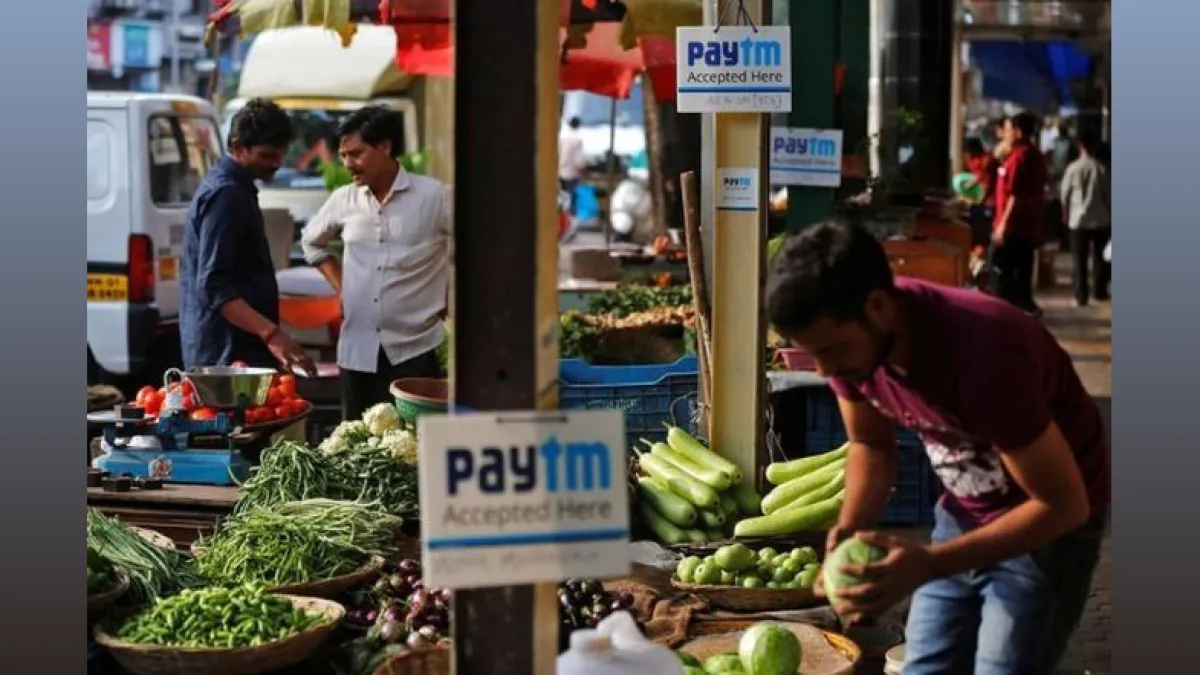
Paytm is turning its financial turnaround into a sustained growth story. One 97 Communications, the parent company of the digital payments platform, reported a more than tenfold jump in net profit to ₹225 crore for the July-September quarter of FY27, compared with ₹21 crore in the corresponding quarter last year.
Operating revenue rose 28% year-on-year to ₹2,648 crore, supported by growth in merchant payments, financial services distribution and consumer offerings. The results mark Paytm’s sixth consecutive profitable quarter on a reported basis, highlighting its progress towards building a more profitable business.
The company is also increasingly relying on artificial intelligence (AI) to improve productivity, automate routine operations and strengthen customer engagement. With payments and financial services driving revenue growth, Paytm is looking to turn its expanding user and merchant base into stronger earnings.
Credits: Upstox
Paytm records highest-ever EBITDA as margins improve
Paytm’s earnings before interest, taxes, depreciation and amortisation (EBITDA) surged 90% year-on-year to a record ₹270 crore in Q2 FY27. Its EBITDA margin reached 10%, entering double-digit territory for the first time.
For the first half of FY27, net profit more than tripled to ₹445 crore, compared with ₹144 crore in the corresponding period a year earlier.
The improvement reflects stronger operating performance and better cost efficiency as the company expands its payments and financial services operations. The combination of revenue growth and rising profitability suggests Paytm is extracting greater value from its existing business rather than relying solely on customer acquisition.
Merchant payments drive Paytm’s revenue growth
The merchant payments business remained a key contributor to Paytm’s quarterly performance. Payment services revenue increased 25% year-on-year to ₹1,434 crore, while net payment revenue rose 21% on a comparable basis to ₹644 crore.
The gross merchandise value (GMV) processed through merchants grew 26% to ₹7.1 lakh crore during the quarter.
Paytm also added 27 lakh merchant subscribers over the past year, taking its total subscription base to 1.64 crore. Its Soundbox devices, which provide audio confirmations for digital payments, remain an important part of its merchant ecosystem.
The company attributed its performance partly to improved payment processing margins and greater adoption of higher-margin instruments, including credit cards on UPI and Paytm Postpaid.
Financial services revenue climbs 49%
Paytm’s financial services distribution business delivered another strong quarter, with revenue increasing 49% year-on-year to ₹912 crore.
Growth came from merchant loan distribution, personal loans, Paytm Postpaid and investment-related offerings, including Margin Trade Funding and Paytm Gold.
The number of key financial services customers rose 35% year-on-year to 8.8 lakh. Repeat borrowers accounted for more than half of merchant loan disbursements during the quarter, according to the company.
By expanding its financial services offerings, Paytm is building revenue streams beyond payment processing. Its existing relationships with merchants and consumers provide opportunities to distribute additional financial products without relying exclusively on transaction-based income.
Paytm gains UPI market share for sixth consecutive quarter
Paytm reported an increase in its consumer UPI payment market share for the sixth consecutive quarter. Its UPI transaction value grew 42% year-on-year, more than twice the industry growth rate of 19%, according to the company.
Monthly transacting users increased by one crore over the previous year to reach 8.5 crore. Paytm attributed the growth to product improvements, customer acquisition, retention and AI-powered personalisation.
Marketing services revenue also rose 26% year-on-year to ₹287 crore, providing another source of growth.
AI and cost controls strengthen Paytm’s profitability
Artificial intelligence is becoming an increasingly important part of Paytm’s operations. The company said it uses specialised AI models and agents for software development, customer engagement, merchant services, risk management, fraud prevention and collections.
These applications are designed to automate routine tasks, improve customer targeting and increase employee productivity. Paytm has also begun offering its AI platform to enterprise merchants, extending its technology capabilities beyond its core payments business.
The company reported that indirect expenses as a share of revenue declined to 46% from 52% a year earlier, with AI-led efficiencies contributing to the improvement.

Credits: Entrackr
Cash reserves provide room for expansion
Paytm reported a cash balance of ₹13,617 crore as of September 2026, providing financial flexibility as it expands its payments and financial services businesses.
However, sustaining the current momentum will depend on continued customer growth, merchant adoption, effective cost management and competition across India’s digital payments ecosystem.
For now, Paytm’s Q2 FY27 results demonstrate progress on two fronts: expanding its revenue base and improving profitability. With merchant payments, financial services and AI-driven efficiencies supporting the business, the company is positioning itself for its next phase of growth.