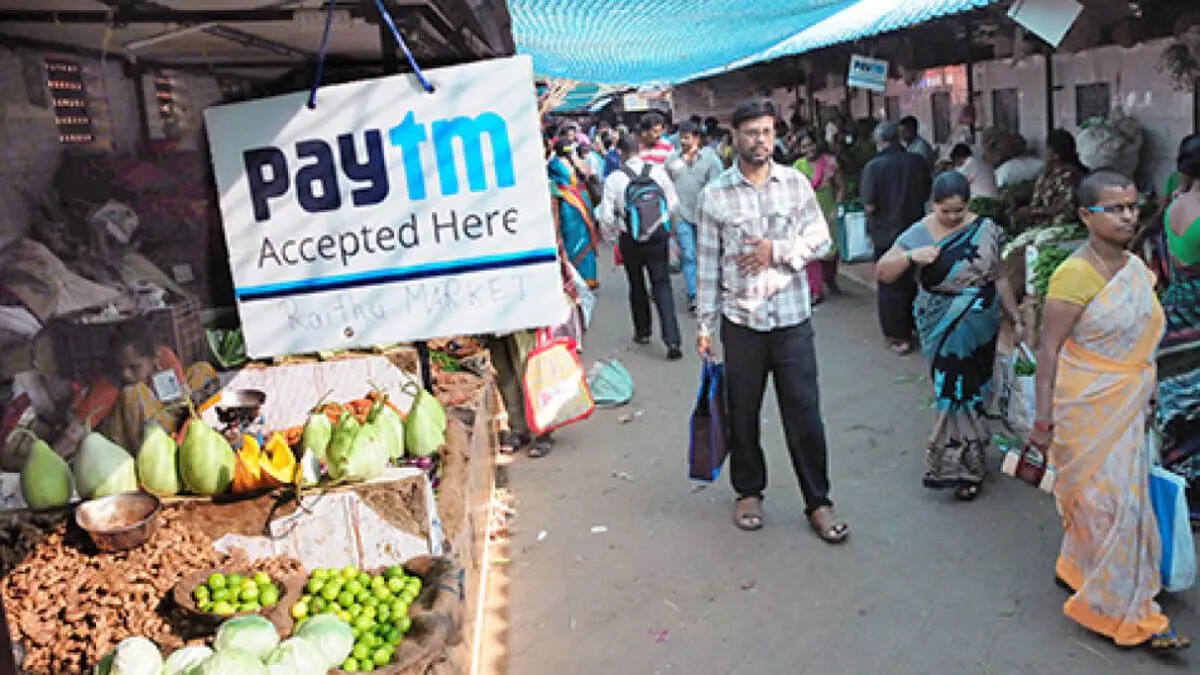
On 12 August 2025, the Reserve Bank of India (RBI) granted Paytm’s subsidiary, Paytm Payments Services Ltd. (PPSL), an in-principle approval to act as an online payment aggregator. This long-awaited green signal lifts a major restriction that had been haunting the company since November 2022, when it was barred from onboarding new merchants.
The approval doesn’t come without strings attached. PPSL must adhere to RBI’s strict guidelines for payment aggregators and gateways, and it has six months to complete a comprehensive system and cybersecurity audit. But for Paytm, the move represents a major reset — a chance to resume growth in a business line that sits at the very core of its digital payments strategy.

Credits: bfsi diary
Investors Cheer: Stock Hits Fresh Highs
The stock market response was swift and euphoric. One 97 Communications Ltd., Paytm’s parent, saw its shares skyrocket to a 52-week high of ₹1,167, reflecting the optimism that regulatory clouds had finally cleared.
In just one year, Paytm’s stock has delivered a staggering 104% return, signalling a turnaround story that investors had once doubted. Over the past six months, shares have climbed 55%, while in the last month alone, they rose 18.6%. The RBI’s announcement added rocket fuel to this rally, showing that the market views regulatory clarity as the missing piece in Paytm’s recovery puzzle.
Why This License Matters So Much
The payment aggregator license is not just a regulatory checkbox. It is the backbone of Paytm’s business model in digital payments. Without it, the company was effectively sidelined while rivals like Razorpay, Stripe, and PayU aggressively scaled their merchant networks.
Now that the ban has been lifted, Paytm can resume merchant onboarding, which is crucial for its growth flywheel. Each new merchant isn’t just a source of transaction volume; it’s also a gateway to cross-selling other services like Paytm Soundbox devices, point-of-sale systems, and financial products. This integrated approach strengthens the ecosystem, increases stickiness, and boosts recurring revenue streams.
The license also gives Paytm more control over payment flows and customer data, reducing reliance on third-party aggregators. In a market where trust and efficiency matter, this control is a powerful advantage.
From Losses to Profits: A Financial Turnaround
The RBI’s nod came at an opportune time — just as Paytm announced its first-ever quarterly profit. In July 2025, the company reported a consolidated net profit of ₹123 crore for Q1 FY26, compared to a staggering loss a year earlier. This reversal was powered by 28% revenue growth and tighter cost management.
For years, skeptics questioned whether Paytm could ever make money. Now, with profitability in sight and regulatory restrictions easing, the company appears to be entering a more stable and sustainable phase. Investors aren’t just betting on sentiment; they are seeing a business model that is finally proving itself.
The FDI Puzzle: Clearing the Final Hurdle
The delay in Paytm’s license approval wasn’t simply about compliance lapses. It was rooted in India’s evolving foreign direct investment (FDI) norms, particularly those introduced in 2020 to regulate investments from countries sharing a land border with India.
Paytm’s early investor, Antfin — an affiliate of Alibaba — was the sticking point. Even after reducing its stake, concerns over beneficial ownership kept the RBI from granting the license. The breakthrough only came when Antfin fully exited in August 2025, selling its remaining stake for ₹3,803 crore. This “clean-up trade” removed the Chinese ownership overhang once and for all, clearing the path for approval.
What Lies Ahead for Paytm
The road ahead now depends on execution. The company must aggressively rebuild its merchant base, win back clients lost to competitors, and leverage its unified platform to offer a complete suite of services.
Another key focus will be monetising UPI, India’s dominant payments channel. While UPI transactions are free for consumers, Paytm can generate recurring income through merchant subscriptions, device rentals, and value-added services like loans and insurance.
Above all, compliance will remain central. The RBI’s conditions underline the need for ongoing audits, strong governance, and a clean ownership structure. After navigating years of regulatory turbulence, Paytm cannot afford to let compliance slip again.

Credits: Mint
Conclusion: A Defining Moment
The RBI’s in-principle approval of the payment aggregator license is more than just a regulatory clearance. It is a symbolic turning point for Paytm. With profitability achieved, foreign ownership concerns resolved, and regulatory clarity restored, the company is finally in a position to reclaim its leadership in India’s booming digital payments market.
If it executes well — scaling merchants, monetising UPI, and staying compliant — this could mark the beginning of a new era of sustainable growth for Paytm, transforming it from a struggling disruptor into a resilient fintech powerhouse.