As Global Malls Struggle, Capital Turns East
While shopping malls across the US and Europe battle rising vacancies, store closures and large-scale repurposing, India’s retail real estate market is emerging as a rare global outlier. In the US alone, nearly 1,200 mall stores have shut since 2020, pushing close to 40% of vacant malls toward rezoning into offices, warehouses or residential spaces.
India, however, is moving in the opposite direction. Strong consumption growth, limited supply of quality retail assets and rising institutional confidence are fuelling a retail resurgence that is increasingly attracting global capital.

Credits: Realty Plus Magazine
According to ANAROCK Group, Indian shopping malls are expected to attract over $3.5 billion in capital inflows over the next three years, even as foreign brands accelerate their expansion plans across the country.
A Severe Supply Crunch Creates a Rare Opportunity
At the heart of India’s retail boom lies a stark supply-demand mismatch. The country remains one of the most under-malled markets globally. Per capita retail stock in Tier-1 cities stands at just 4–6 sq ft, while Tier-2 and Tier-3 cities have a mere 2–3 sq ft. Grade-A mall space is even scarcer at 0.6 sq ft per capita.
By comparison, the US offers nearly 23 sq ft per capita, and China over 6 sq ft.
“This gap, combined with India’s per-capita income nearly doubling over the last decade, has created a demand-supply imbalance virtually unheard of in global retail,” said Anuj Kejriwal, CEO – Retail Leasing and Industrial & Logistics, ANAROCK Group.
The impact is visible on the ground. Grade-A malls are operating at 95–100% occupancy, with long waiting lists for prime zones. Rental growth has crossed pre-pandemic levels, and leasing cycles are now outpacing construction timelines — a phenomenon rarely seen in global retail markets.
Malls Evolve Into Lifestyle Destinations
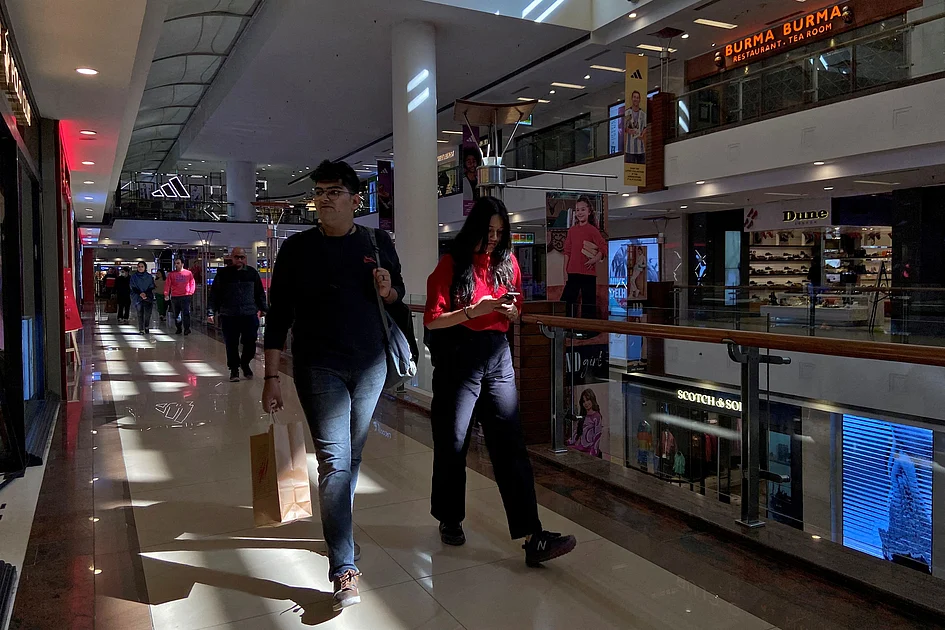
India’s retail resilience is also rooted in how malls are designed and consumed. Unlike Western markets where malls were heavily dependent on traditional retail, Indian malls function as lifestyle and social hubs.
Entertainment, dining and experiential retail anchor footfalls. Weekday footfalls in major malls often cross 20,000, while weekends surge beyond 40,000. Food & beverage and entertainment together contribute 30–35% of total footfalls, insulating malls from the disruptions faced by pure-play retail formats.
This evolution aligns well with India’s broader consumption trajectory. The country is projected to become a $6-trillion consumption economy by 2030, with discretionary spending rising sharply across income segments.
Institutional Capital Sharpens Its Focus
Despite having over 600 operational malls, fewer than 100 assets meet institutional investment standards, intensifying competition for high-quality portfolios.
The sector’s credibility received a major boost in 2023 with the listing of Blackstone-backed Nexus Select Trust REIT, which houses 19 malls, over 1,000 brands and generates around ₹1,600 crore in annual net operating income.
“The REIT listing established retail real estate as a transparent, scalable and professionally managed asset class,” Kejriwal said. “By 2030, at least two more retail REITs are expected to enter the Indian market.”
E-Commerce Plays a Supporting Role
Contrary to global narratives, e-commerce has not weakened India’s mall ecosystem. Online retail penetration remains around 8%, significantly lower than the 20%+ levels in the US and China.
Brands are increasingly adopting a ‘phygital’ strategy, using physical stores to build trust and experience while scaling reach online. Many direct-to-consumer brands report offline conversion rates two to three times higher than online, reinforcing the strategic importance of brick-and-mortar presence.
Credits: Khaleej Times
Higher Returns Seal India’s Appeal
For global investors, returns are a decisive factor. Indian Grade-A malls typically offer 14–18% internal rates of return, nearly double yields in many Western markets. Structured rental escalations, revenue-sharing models and consistently low vacancy levels provide predictable, inflation-hedged cash flows.
“This renders India unique among leading retail markets,” Kejriwal noted. “While US and European malls grapple with oversupply and declining footfalls, India combines limited quality supply, rising incomes, heavy foot traffic and rapid brand expansion.”
Reflecting this momentum, retail leasing in India surged nearly 70% year-on-year in H1 2025, while new mall supply grew by over 160%, signalling that India’s retail real estate story is only beginning to unfold.