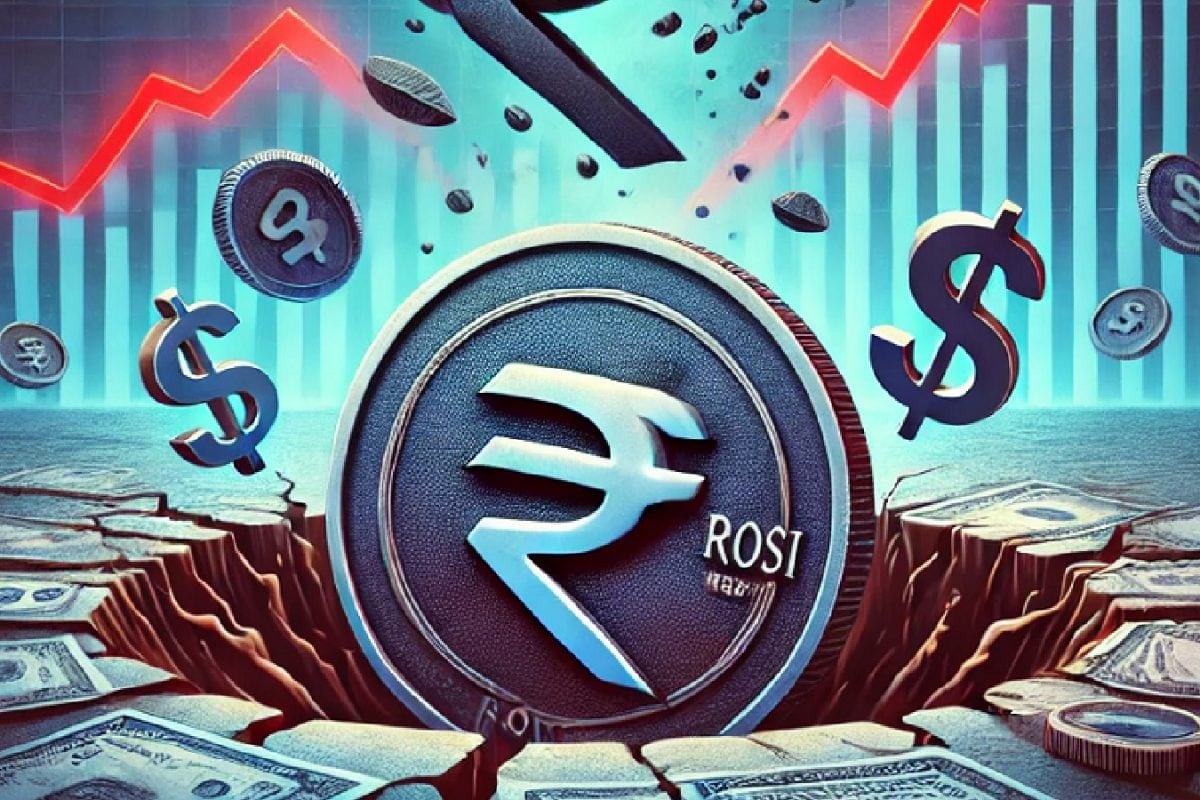
The Indian rupee has once again made headlines, and not for the right reasons. On Friday, it plunged to a historic low against the U.S. dollar, breaching the 88-per-dollar mark for the very first time. The trigger? Washington’s surprise move to impose an additional 25% tariff on Indian goods—doubling duties to a hefty 50%. As markets digested the news, panic rippled across currency, equity, and bond markets, raising fresh concerns over India’s growth trajectory.
In this article, we will delve into the unfolding currency crisis, its causes, and its possible impact on India’s broader economy.

Credits: Reuters
A Record-Breaking Fall
The rupee ended at 88.1950 per dollar, down 0.65% in a single day—its steepest one-day drop in nearly three months. During intraday trade, the currency touched 88.3075, setting a new all-time low. Market participants believe the Reserve Bank of India (RBI) may have intervened to curb further weakness, though official confirmation is unlikely.
For August, the rupee slid 0.68%, extending its losing streak to four consecutive months. The trend has become worrisome: India’s currency is weakening despite a broadly softer U.S. dollar in global markets.
Why U.S. Tariffs Matter
At the heart of the turmoil lies Washington’s decision to slap higher tariffs on Indian exports. By raising duties from 25% to 50%, the U.S. has effectively made Indian goods significantly less competitive in its markets. Since Indian exports to the U.S. account for 2.2% of GDP, the move could have wide-ranging implications.
Economists estimate that the tariffs could shave off 60-80 basis points from India’s GDP growth if they remain in place for a year. That’s a heavy blow to an economy already grappling with slowing growth. Labour-intensive industries such as textiles, leather, and jewellery are expected to be the hardest hit, raising the specter of job losses in sectors that employ millions.
Portfolio Outflows Add Fuel to Fire
Foreign portfolio investors (FPIs), already jittery over global uncertainty, have accelerated their exit. So far in 2025, FPIs have pulled out $9.7 billion from Indian equities and debt. The tariff shock triggered an additional exodus of over $1 billion from equities in just two sessions, sparking the sharpest stock market fall since March.
This capital flight worsens India’s balance of payments situation at a time when trade deficits are expected to widen further. With weaker export earnings and dwindling investor confidence, the pressure on the rupee looks far from over.
Analysts See More Weakness Ahead
Currency strategists are not optimistic. Dhiraj Nim of ANZ Bank maintains a bearish outlook, expecting the rupee to slide further even if the dollar softens globally. “The U.S. tariffs are likely to prolong India’s balance of payment stress, keep financial flows weak, and widen the trade deficit,” he warns.
The rupee has also hit record lows against other major currencies, including the Chinese yuan, further reflecting its fragility.
Silver Lining: Competitiveness Boost
It’s not all bad news. A weaker rupee makes Indian exports more competitive globally, especially outside the U.S. Analysts at J.P. Morgan point out that India’s trade-weighted real effective exchange rate is now at its lowest in two years. This could provide a cushion for exporters in sectors not directly impacted by U.S. tariffs and help partially offset the shock.
The Road Ahead
India’s central bank projects GDP growth at 6.5% for FY25, but this forecast may come under threat if tariffs persist. Much will depend on how policymakers respond—through diplomatic negotiations with Washington, fiscal support for vulnerable industries, and decisive RBI intervention to stabilize the rupee.
For now, the rupee’s freefall is more than just a number on the forex screen. It reflects deeper vulnerabilities in India’s external position and raises urgent questions about resilience in the face of global shocks.
Credits: News 18
Conclusion
The rupee’s slide past 88 per dollar is more than a symbolic breach—it is a wake-up call. Tariff wars, portfolio outflows, and a slowing economy are converging to create a perfect storm. While a weaker currency might help competitiveness in the long run, the immediate risks to growth, jobs, and financial stability cannot be ignored.
Unless swift corrective measures are taken, the rupee’s latest fall may just be the beginning of a prolonged struggle for Asia’s third-largest economy.