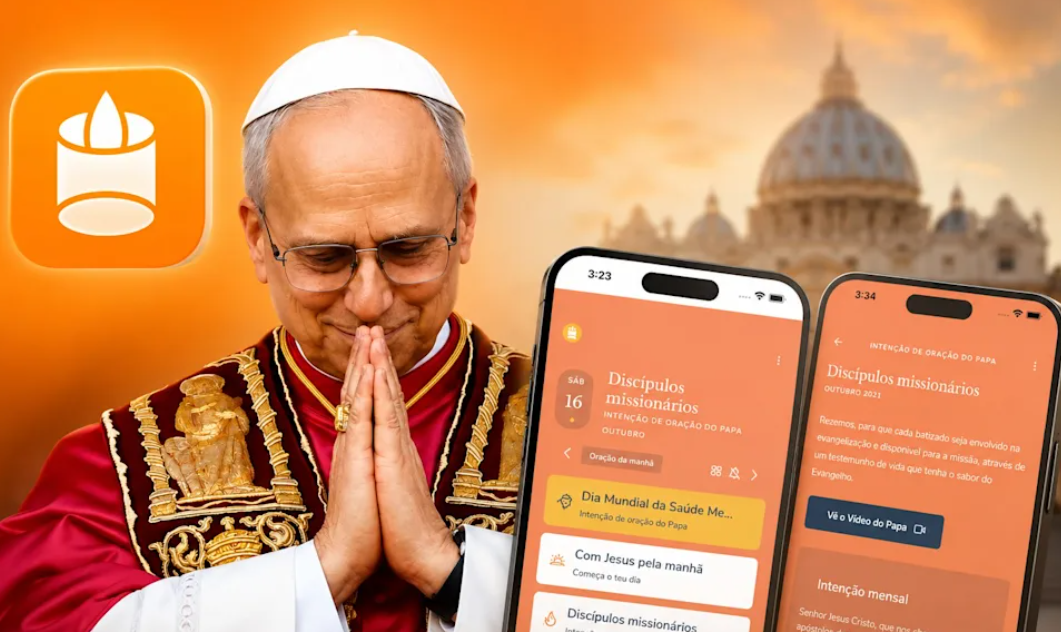
In the digital era, even spiritual devotion relies on mobile applications, cloud databases, and web APIs. Millions of faithful individuals around the world turn to digital platforms daily to share personal prayers, follow papal intentions, and connect with global religious communities. However, when software development practices fail to enforce basic authorization checks, even sacred platforms become vulnerable to basic cyber threats. A massive Pope official prayer app data leak has exposed the personal information of over 700,000 global users, highlighting how broken access controls can compromise user privacy across non-tech institutions.
The vulnerability affects Click to Pray, the official digital prayer platform of the Pope’s Worldwide Prayer Network. Discovered by independent white-hat security researcher “BobDaHacker” and verified by cybersecurity researchers, the flaw stems from an exposed Application Programming Interface (API) endpoint that fails to require user authentication or authorization. By simply incrementing numerical user IDs in a standard web browser address bar, anyone could query and extract sensitive account records without writing complex exploit scripts or bypassing encryption.
1. Anatomy of an IDOR Flaw: How 700,000 Profiles Were Exposed
The technical flaw responsible for the breach is classified as an Insecure Direct Object Reference (IDOR) a subset of Broken Access Control, which currently ranks as the number one web application security risk on the OWASP Top 10 list. While modern web frameworks often manage basic authentication (verifying who a user is), developers must explicitly program authorization logic (verifying what that user has permission to view).
In the case of Click to Pray, when an individual creates an account, the database assigns them a sequential user ID. The backend API exposed an endpoint that accepted these sequential numbers and returned the associated account profile in clear, plaintext JSON format. Because the API lacked object-level permission checks, querying user_id=1, user_id=2, or user_id=700000 yielded full profile data for every registered user.
2. Faith as an Attack Vector: The Danger of Phishing and Exploitation
Cybersecurity analysts emphasize that leaks from religious and non-profit organizations carry unique risks. The exposed dataset includes low-numbered user IDs corresponding to active employees, staff members, and administrators of the Pope’s Worldwide Prayer Network, alongside hundreds of thousands of everyday worshipers. Malicious threat actors could easily leverage this leaked database to launch targeted social engineering and spear-phishing campaigns. By impersonating official Vatican communications or referencing daily prayer intentions, attackers could trick vulnerable users into clicking malicious links, disclosing financial details, or downloading malware.
3. Regulatory Irony: Decree No. DCLVII and Data Custody
The discovery of the Pope official prayer app data leak creates significant legal and regulatory awkwardness for the Holy See. On April 30, 2024, the Vatican formally promulgated its own personal data protection framework under Decree No. DCLVII. The decree mandates strict organizational protocols, required risk analyses, and technical safeguards to protect personally identifiable information (PII).
Data Governance: Regulatory Requirements vs. System Reality
| Compliance Domain | Vatican Decree No. DCLVII Mandate | Observed System Reality |
| Access Control | Implement strict authorization measures | Unauthenticated API endpoint left publicly open |
| Risk Analysis | Conduct routine security audits of digital assets | IDOR flaw remained unpatched months after discovery |
| PII Protection | Safeguard user identities and email records | Plaintext user records accessible via browser |
| Custodial Duty | Enforce data protection regardless of non-profit status | Over 700,000 global profiles exposed to enumeration |
While many users partially mitigated their exposure by registering with Apple’s “Hide My Email” feature, hundreds of thousands of primary email addresses remain exposed in the database. As security researchers note, any institution that collects personal data, whether a multi-billion-dollar tech conglomerate or a religious organization, is fundamentally a data custodian obligated to protect its users.
The Lessons of Broken Access Control
The breach of Click to Pray serves as a vital reminder to software engineers, non-profit organizations, and enterprise platforms alike. Beautiful user interfaces and noble intentions cannot substitute for fundamental API security practices.
Preventing IDOR vulnerabilities requires rigorous backend authorization checks at every API endpoint, ensuring that a user can only access resources belonging specifically to their authenticated session. Until organizations prioritize API security audits alongside basic functionality, user data will remain vulnerable to simple web-enumeration scripts.