OpenAI CEO Sam Altman made an astonishing prediction about work in the years to come that asserts that human-made AI would be capable of taking care of 40 percent of work that humans currently do.
Remarks from the technology leader come as AI capacity is increasing exponentially faster than ever experienced before, and raise crucial questions about human productivity and work in the years to come.
Altman, whose firm is behind ChatGPT, shared those thoughts in a recent interview granted to German newspaper Die Welt. They provide an indication of how one of AI’s biggest personalities sees the direction of the tech and its application in our daily lives.
ChatGPT-5’s Bold Arrival, Sam Altman Declares It the Last AI Model He’ll Need
Pressed on the prospect of jobs being replaced by machines, Sam Altman was careful to mention tasks in his question and response instead of jobs as a whole. “I think it is a good idea to talk about the percentage of tasks rather than a percent of jobs,” he clarified.
“I have no difficulties picturing a world in which 30, 40 percent of tasks that are currently done in the economy nowadays will be done by AI in rather near future.”
This distinction is crucial. Rather than suggesting that 40 percent of jobs will vanish entirely, Altman envisions AI as a tool that will handle specific tasks within existing roles. This means many jobs will likely evolve rather than disappear completely, with workers collaborating with AI systems to accomplish their goals more efficiently.
Altman’s confidence in AI’s capabilities was on full display at the launch of ChatGPT-5 earlier this year. The OpenAI chief made a bold statement that captured attention across the tech industry: after using ChatGPT-5, he would never use any other AI model. This declaration highlighted just how advanced the company’s latest offering has become compared to competitors in the market.
ChatGPT-5 and the Accelerating Race to Artificial General Intelligence
ChatGPT-5 is a breakthrough in large language model technology. These computers are now capable of undertaking highly sophisticated tasks ranging from creative work and problem-solving to analysis and writing with high accuracy and sophistication.
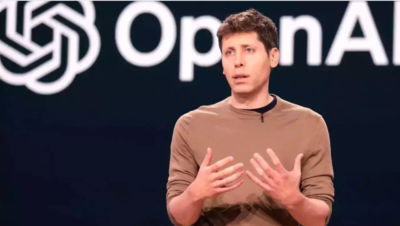
Much more fascinating are Altman’s remarks about Artificial General Intelligence (AGI), an AI that would be superior to or equal to human abilities on all cognitive tasks. Asked about superintelligence and AGI, Altman believed that such systems would be “smarter than humans in all ways.”
He even went so far as to say that ChatGPT-5 is already “smarter than me and most humans” in some areas. Ahead of schedule, Altman anticipates that AGI will come earlier than 2030. “If we don’t have models [in 2030] that are incredibly competent and do things that we ourselves are unable to do, I’d be really shocked,” he said.
The tech sector is already going through tremendous shifts as most of its companies have been introducing AI-based automation that has been responsible for laying off workers. As AI becomes increasingly competent, this phase is only going to intensify in many sectors.
But that Altman is talking about work, not jobs, is a source of optimism.
We have learned that technological change regularly creates new opportunities even as it displaces some work. Workers’ problem will be to learn to be adaptable to such reorientations and to develop skills to complement AI rather than replace it.
Why Human Empathy is the High-Value Skill in the Age of AI?
For workers entering the labor force or considering a job change, understanding AI strengths and limitations is invaluable. The lowest risk of replacement is occupations that are distinctively human: emotional empathy, creative invention, nuanced decision-making in a world of uncertainty, and human connection.
Professions that combine human discernment with AI support will most likely prosper. As opposed to being completely substituted, most professionals will have to coexist with AI systems and employ such tools to be more productive and to work on a higher level of responsibility.
Altman’s forecast highlights the accelerating development of AI and its increasingly significant impact on society. AGI would bring about, if it occurs this decade, a watershed in human development that will essentially change our rapport with technology.
As AI keeps changing, it becomes more critical to be aware of these shifts. As a business executive, employee, or student, knowing where AI is headed will allow you to be better equipped to face its opportunities and challenges. Altman’s near-future is not far away, it is already near, and it all begins now