Samsung is going all-in on artificial intelligence, and it’s turning to India to lead the charge. The company has kicked off a hiring spree for engineers at its Bengaluru research center, aiming to make it a global hub for designing next-generation AI semiconductors. With this move, Samsung is doubling down on both innovation and India’s fast-emerging semiconductor ecosystem.

Credits: Tech in Asia
Building the Brains Behind AI
Artificial intelligence chips — specialized processors designed to handle massive amounts of data and complex algorithms — are the backbone of everything from self-driving cars to generative AI tools. Samsung’s goal is clear: to stay ahead in the global high-performance computing race by developing more efficient, powerful, and energy-smart AI chips.
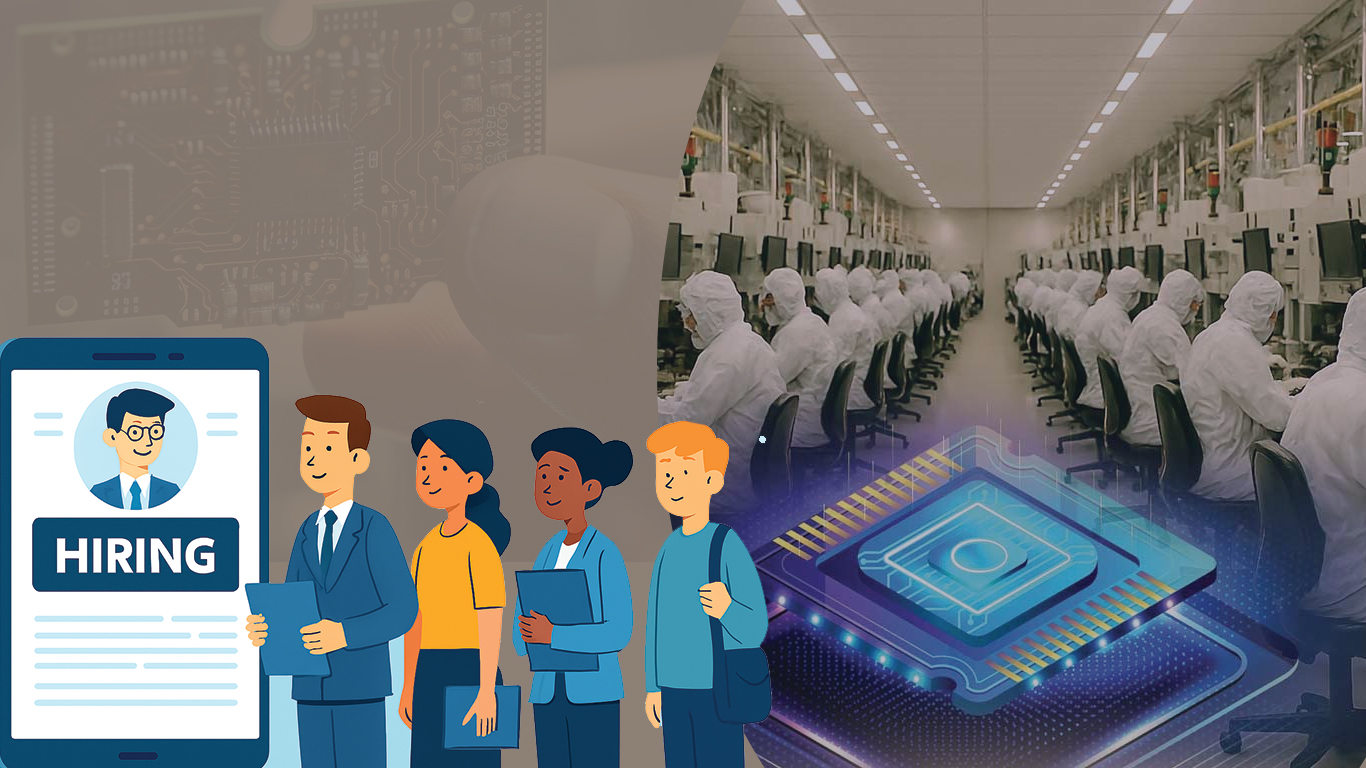
At the heart of this push is the company’s Bengaluru R&D facility, one of its largest outside South Korea. The center has long been instrumental in developing memory and system LSI (Large-Scale Integration) technologies. Now, with this hiring drive, Samsung plans to transform it into a central node for AI chip design — where engineers will focus on breakthroughs in architecture, optimization, and next-gen fabrication techniques.
Why Bengaluru, Why Now
India’s semiconductor story is heating up — and Samsung wants a front-row seat. The country’s semiconductor market is projected to touch $100 billion by 2030, fueled by government incentives, a growing electronics manufacturing base, and global supply chain diversification.
Bengaluru, with its deep tech talent pool and strong academic ecosystem, has already become a magnet for chip design. Major players like Intel, Qualcomm, and Micron have been expanding their engineering presence here — and now Samsung is taking things a step further by anchoring its AI semiconductor ambitions in India.
This move also aligns with India’s broader vision to move up the semiconductor value chain — from assembly and testing to design and innovation. By scaling its local team, Samsung isn’t just hiring engineers; it’s investing in India’s capability to shape the global semiconductor future.
A New Captain at the Helm
Driving this new chapter is Rajesh Krishnan, who has been appointed as the Managing Director of Samsung’s Bengaluru research center. Krishnan takes over from Balajee Sowrirajan, who played a pivotal role in establishing the center as one of Samsung’s most advanced global R&D hubs.
Krishnan’s arrival signals a strategic pivot. With a deep background in memory technology and expertise in developing solutions that accelerate AI workloads, he brings the technical and leadership firepower to lead Samsung’s next phase of innovation. His appointment also reflects Samsung’s growing confidence in Indian leadership to steer complex, global technology initiatives.
The Bigger Picture: India in the AI Chip Race
AI chips are shaping the next decade of computing — and whoever leads in this space will define the future of automation, machine learning, and data processing. For India, Samsung’s expansion isn’t just another corporate growth story. It’s a validation of the country’s transformation from a talent hub to a technology powerhouse.
The combination of global demand, local expertise, and government backing — through programs like the India Semiconductor Mission — is creating a perfect launchpad for innovation. Samsung’s move could also encourage more semiconductor giants to invest in R&D here, accelerating India’s journey toward becoming a global center for chip design and development.
Credits: KNN India
What Lies Ahead
As Samsung strengthens its AI semiconductor capabilities, Bengaluru will likely see an influx of specialized engineering roles in VLSI design, machine learning acceleration, and chip architecture optimization. The company’s investments could ripple through India’s broader tech ecosystem, nurturing startups, skilling talent, and forging new research partnerships.
For Samsung, the strategy is simple — think global, build in India. And for India, the message is equally powerful: the world’s next generation of AI chips might just be born in Bengaluru.