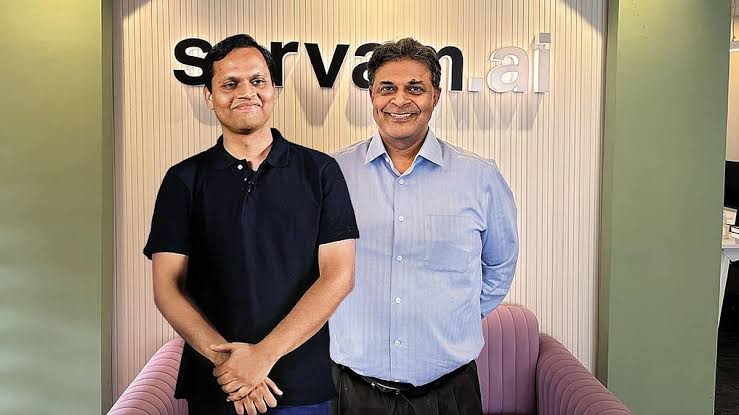
Indian artificial intelligence startup Sarvam AI is reportedly in talks to raise $250 million to $300 million in a fresh funding round, potentially doubling its valuation to $3 billion in just four months. If the deal goes through, the company could become India’s highest-valued AI startup, highlighting growing investor interest in homegrown AI models and applications.
Sarvam is known for developing AI models designed for Indian languages and local use cases. Its latest fundraising discussions come as the company expands its presence among enterprises and government organisations, positioning itself as a potential player in India’s rapidly developing AI ecosystem.
The proposed funding round could provide Sarvam with additional capital to develop its technology, expand its enterprise offerings and compete in a market increasingly shaped by investments in advanced AI infrastructure and applications. However, the fundraising remains under discussion, and the final amount and valuation could change.

Credits: ET Enterprise AI
Maharashtra Approves Sarvam’s Indus AI Workspace
Sarvam has also secured approval from the Maharashtra government to deploy its Indus AI workspace for government-related tasks, including drafting and translating documents. The deployment is expected to keep government data hosted within India, addressing data-handling requirements that are particularly important for public-sector organisations.
The approval represents an important development for Sarvam as governments explore ways to integrate AI into administrative processes. Tools capable of assisting with document preparation and translation could help officials handle routine tasks across departments and support communication in multiple languages.
For India, the use of locally developed AI systems also aligns with broader efforts to build domestic technological capabilities. However, the effectiveness of such deployments will depend on factors including accuracy, security, reliability and how well the tools perform in real-world administrative settings.
Sarvam’s focus on Indian languages could be relevant in this context, given the linguistic diversity of the country’s public institutions and population. AI systems designed around local language requirements may offer applications beyond those typically associated with English-focused enterprise software.
Sarvam Expands Its Enterprise Presence
The startup already works with several prominent financial services companies, including Life Insurance Corporation of India (LIC), SBI Life, IDFC First Bank, Tata Capital and Cred.
These relationships indicate Sarvam’s growing engagement with enterprise customers, where AI tools can potentially support document processing, customer interactions, internal workflows and other business operations. The precise applications used by each organisation, however, have not been detailed.
Enterprise adoption could become an important part of Sarvam’s commercial strategy. While consumer-facing AI applications often compete for users and attention, business customers may pay for tools that address specific operational requirements, improve productivity or integrate with existing systems.
Financial institutions also operate in environments where data security, regulatory compliance and reliability are essential. Building products that meet these requirements could help Sarvam expand its reach among businesses seeking AI solutions tailored to their needs.
Credits: AIM
India’s AI Startup Ecosystem Attracts Investment
Sarvam’s reported fundraising discussions come amid increasing interest in developing AI capabilities within India. Startups working on local-language models, enterprise applications and AI infrastructure are exploring opportunities to serve businesses, consumers and public institutions.
A potential valuation of $3 billion would mark a significant increase for Sarvam in a relatively short period. It would also reflect investor expectations about the commercial potential of AI systems built for India’s linguistic and business requirements.
However, valuation alone does not establish a company’s long-term commercial success. Its ability to attract paying customers, manage computing costs, improve model performance and compete with international AI providers will remain important factors.
If Sarvam completes the proposed funding round, the additional capital could support its efforts to expand its models and products across more use cases. Its government deployment and existing enterprise relationships could also provide opportunities to test and commercialise AI applications in practical settings.
For now, the fundraising remains at the discussion stage. If completed on the reported terms, the deal could strengthen Sarvam’s position in India’s AI market and underline the growing interest in locally developed AI technology.