A self-driving bus carrying paying passengers crashed with a tram in Gothenburg, Sweden, on its first day of public service. No one was hurt, but the incident has raised fresh questions about how autonomous public transport will work in busy city traffic.
The crash took place on Monday, May 25, in Gothenburg’s Gårda district. The autonomous bus was running on Line 169 between Gothenburg Central Station and Liseberg. During the trip, the bus braked without warning. A tram behind it then struck the rear of the vehicle.
Officials said there were no injuries. No passengers, staff members, or tram workers were harmed. The damage was limited to the vehicles.
The bus has now been removed from service for checks and inspection. Transport officials have not said when it will return to operation.
The vehicle involved was a Karsan e-ATAK autonomous bus. The eight-meter electric bus can carry up to 52 passengers. It uses an autonomous driving system developed by ADASTEC.
The service is part of a pilot program called “Gårda autonom.” The route covers five kilometers and includes seven stops in central Gothenburg.
Although the bus drives itself, a trained safety driver rides onboard. That person can take control if needed.
The trial has approval from Sweden’s Transportstyrelsen, the national transport agency. It is set to continue until July 31, 2027.
Autonomous Bus Crash in Gothenburg Highlights Challenges
Before opening to the public, the bus had already spent weeks on Gothenburg streets. Since late March 2026, it had been running empty as part of testing in the city center.
Monday marked a major step for the project. It was the first day the bus carried paying passengers. The crash happened during only its second passenger trip.
That timing makes the event hard to ignore.
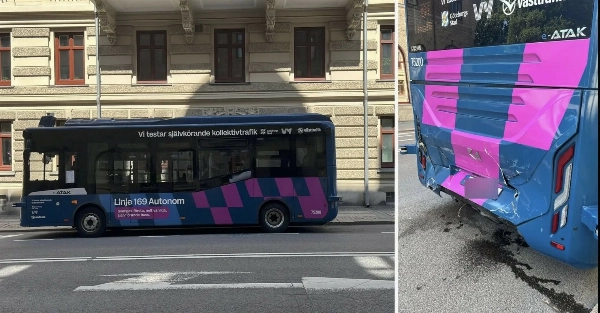
Autonomous vehicles depend on sensors, software, cameras, and mapped data to make driving decisions. Sudden braking can happen for several reasons. A system may detect a possible obstacle, read road conditions in a cautious way, or react to nearby traffic. Officials have not yet explained why the bus stopped.
For now, investigators will likely focus on what triggered the braking event and how the tram collision unfolded.
Public transport systems pose a unique test for self-driving technology. Unlike private cars, buses operate on fixed schedules, make frequent stops, and share crowded streets with cars, cyclists, pedestrians, and rail traffic.
Cities across Europe have started pilot programs to test autonomous shuttles and buses. Supporters say the technology could help reduce operating costs, improve transport access, and support electric mobility goals.
Yet trials also show how hard it is to build systems that can handle every real-world traffic case.
The Gothenburg crash reflects that tension. On one hand, the incident caused no injuries. Safety measures worked as designed. A trained driver was onboard, and officials acted fast by removing the vehicle from service.
Collision During Gothenburg Autonomous Bus Trial Highlights Challenges for Self-Driving Transit
On the other hand, the event happened almost as soon as the public rollout began. That fact may affect public trust, even though the damage was limited.
Västtrafik, the public transport operator behind the service, said tram traffic continued as normal after the collision. The operator also reported no harm beyond damage to the vehicles.
Västtrafik spokesperson Patrik Chi confirmed the details to AFP.
The coming investigation may offer a clearer picture of what went wrong. Engineers and transport planners will want to know whether the issue came from software behavior, traffic conditions, system sensing, or another factor.
Autonomous buses remain a growing part of Europe’s transport plans. But projects like the Gothenburg trial show that even controlled pilot programs can face problems once real passengers step onboard.
For transit agencies, the goal is not only to make self-driving systems work. It is to make them reliable enough for daily city life.