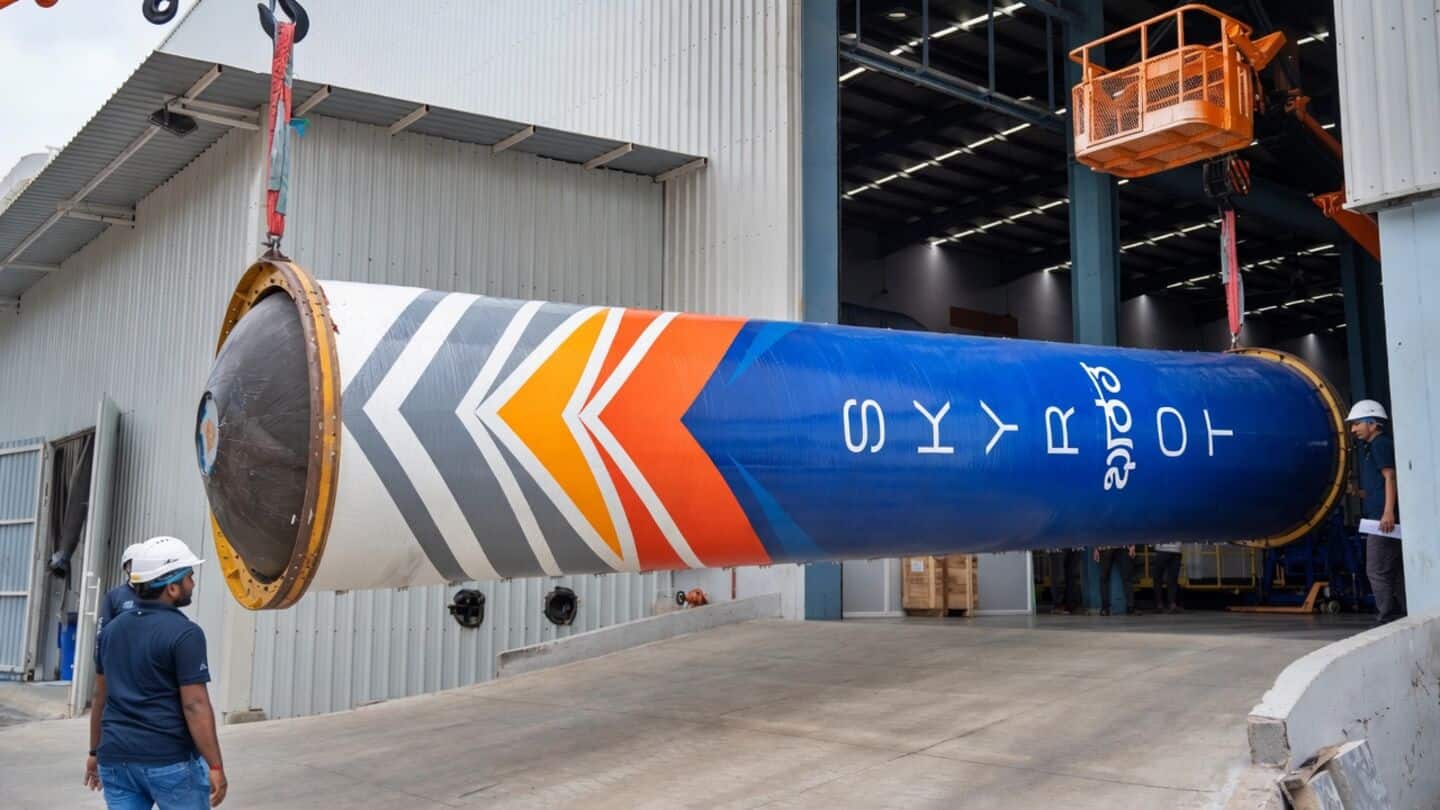
India’s private space sector is preparing for another important milestone as Skyroot Aerospace gets ready to launch its Vikram-1 rocket once again. Following the vehicle’s successful debut, the Hyderabad-based space startup is now moving quickly toward its next mission, with the first stage of the rocket already making its way to the Satish Dhawan Space Centre in Sriharikota.
The move marks the beginning of another crucial phase involving integration, testing and launch preparations. While reaching orbit for the first time was a major achievement, repeating that success could be even more significant for Skyroot. The ability to launch consistently is what can transform a promising space startup into a dependable commercial launch provider.
Credits: NewsBytes
From Historic Debut to a Repeat Launch
Vikram-1 is part of Skyroot’s family of launch vehicles designed to serve the growing small-satellite market. The rocket’s first successful flight demonstrated that a privately developed Indian rocket could reach space and operate as part of the country’s expanding commercial space ecosystem.
The second mission therefore carries a different kind of importance. It is not simply about proving that Vikram-1 can fly; it is about demonstrating that Skyroot can build, test and prepare rockets on a repeatable schedule.
For the global satellite industry, reliability is critical. Companies launching satellites need providers that can offer predictable timelines, dependable hardware and competitive costs. A successful second mission would give Skyroot another opportunity to demonstrate these capabilities.
Why the Second Launch Matters
The global demand for small satellites has grown rapidly, driven by applications ranging from communications and Earth observation to scientific research and technology demonstrations. This has created opportunities for smaller rockets capable of delivering payloads directly into targeted orbits.
Skyroot is positioning Vikram-1 to compete in this increasingly crowded market. By increasing its launch frequency, the company can potentially build a stronger commercial presence while contributing to India’s ambitions of becoming a major player in the global space economy.
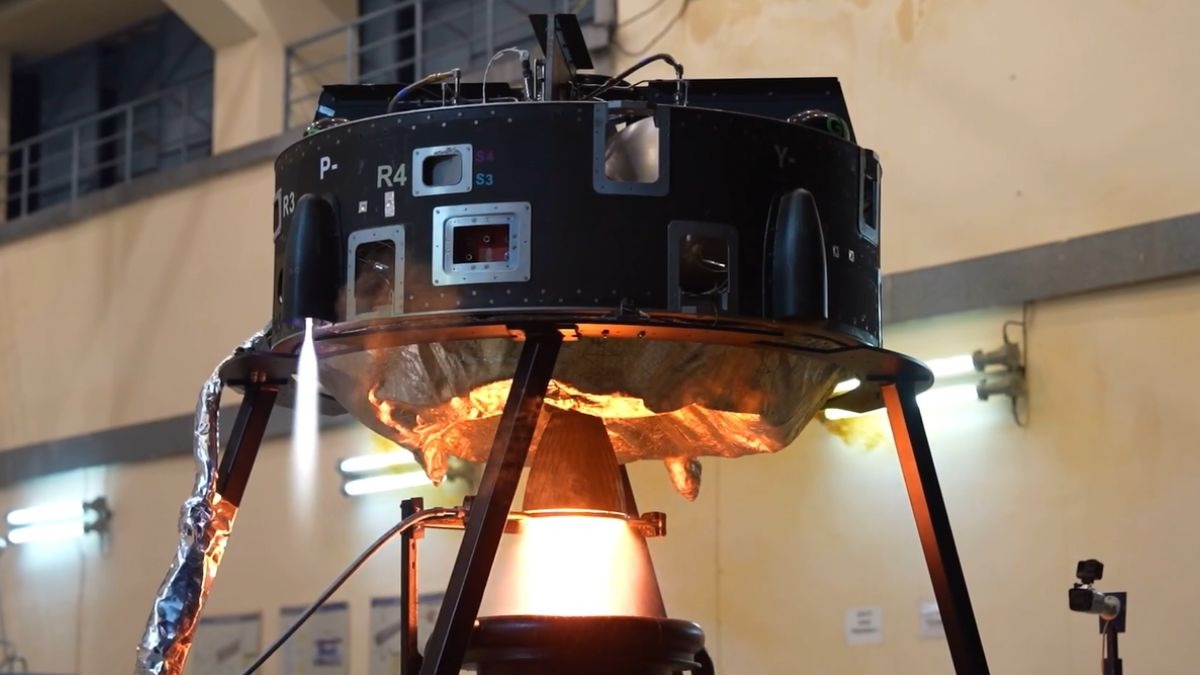
The upcoming mission will also provide valuable operational experience. Every launch generates data that can be used to improve manufacturing, testing procedures, mission planning and future rocket designs.
Government Support Strengthens India’s Private Space Sector
Skyroot’s progress comes as India continues opening its space sector to private companies. Government policy reforms and access to national space infrastructure have helped startups move beyond experimental projects and toward commercial operations.
Facilities such as the Satish Dhawan Space Centre provide an important foundation for India’s emerging private launch industry. Collaboration between government institutions and private companies can help startups access infrastructure and expertise that would otherwise require enormous investments.
This ecosystem is becoming increasingly important as India seeks to expand its role in the global space market. Alongside companies such as Skyroot, a growing group of Indian startups is working on launch vehicles, satellites, propulsion systems and other space technologies.
A Bigger Test for Skyroot
The next Vikram-1 launch is ultimately about more than another rocket reaching orbit. It is a test of whether Skyroot can turn an impressive technological achievement into a repeatable business.
A successful mission could strengthen confidence among satellite operators, investors and international customers while giving the company valuable momentum for future Vikram-series rockets.
For India’s young space industry, the significance is even broader. Each successful private launch shows that advanced space technology is no longer limited to traditional government institutions. As companies like Skyroot continue to push forward, they could inspire a new generation of engineers, entrepreneurs and innovators to look toward the stars.
Credits: India Today
Conclusion
Skyroot Aerospace’s preparations for Vikram-1’s next launch represent another important chapter in India’s private space journey. The first mission proved what the company could achieve; the second will test how reliably it can repeat that achievement. If successful, it could strengthen Skyroot’s position in the global small-satellite launch market and further establish India as an increasingly important destination for private space innovation.