
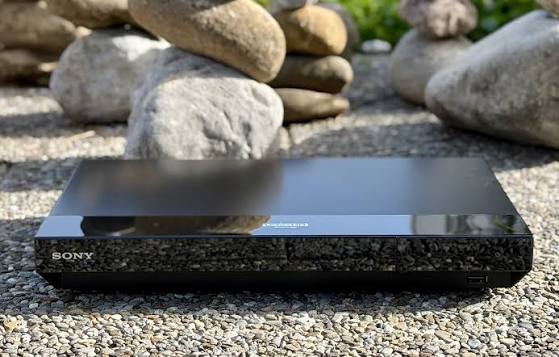
Sony has stopped shipping its last standalone 4K Ultra HD Blu-ray player in Japan, marking another setback for physical media as the electronics giant continues to scale back its disc-based products.
Shipments of the Sony UBP-X700/K ended on October 22, with the remaining stock on the company’s Japanese online store reportedly selling out almost immediately. The development leaves the disc-equipped PlayStation 5 as the only Sony product available in Japan that can play 4K Ultra HD Blu-ray movies.
The company has not announced a successor to the player, raising questions about the future of its standalone Blu-ray hardware business. For home theatre enthusiasts, the decision also means fewer options for enjoying high-quality physical media without relying on a gaming console.
Credits: GuruGamer
Sony’s last 4K Blu-ray player disappears from Japan
The UBP-X700/K was launched on May 17, 2025, as a simplified version of Sony’s original UBP-X700, which debuted in 2018. Unlike the older model, the Japanese variant removed streaming applications, focusing exclusively on disc playback.
The player was last listed at ¥58,300 on Sony’s Japanese store. According to Sony retailer Kunkoku, the remaining inventory sold out shortly after shipments ended.
Sony will continue selling the BDP-S1700/K in Japan, but the entry-level device supports standard Blu-ray discs rather than 4K Ultra HD Blu-ray movies. Consequently, consumers looking for a dedicated Sony player capable of handling 4K discs no longer have a locally available option.
The move follows Sony’s February announcement that it would phase out all its Blu-ray recorders in Japan without introducing successor models. Together, the decisions suggest that the company is steadily retreating from physical media hardware in its home market.
Why the PlayStation 5 is not a complete replacement
Although the disc-equipped PlayStation 5 can play 4K Ultra HD Blu-ray movies, it is not an equivalent replacement for the UBP-X700/K for every home theatre enthusiast.
The console supports HDR10 for compatible content but does not support Dolby Vision playback for 4K Blu-ray movies. The discontinued standalone player offered Dolby Vision, making it a more attractive option for users with compatible televisions and home theatre systems.
The distinction matters because enthusiasts often choose dedicated players for their specific video and audio capabilities rather than simply seeking a device that can read physical discs.
The PS5 also occupies a different role in the living room, combining gaming and movie playback in one device. While that versatility appeals to many consumers, it may not satisfy buyers looking for specialised home entertainment equipment.
Credits: GameGPU
Sony’s physical media business faces an uncertain future
The discontinuation comes as Sony’s wider disc-based business faces additional uncertainty. The company has announced that new PlayStation games will stop shipping on physical discs from January 2028, according to a separate report. However, the implications for future PlayStation hardware remain unclear.
Sony has not confirmed whether the PlayStation 6 will include a built-in disc drive. An earlier report suggested that a detachable drive could be offered, but the company has yet to establish the final configuration publicly.
If future consoles abandon disc playback entirely, Sony’s remaining options for playing physical movies could become increasingly limited.
For now, the withdrawal of the UBP-X700/K appears confined to Japan. Sony’s US store continues to list the UBP-X700U, indicating that standalone 4K Blu-ray players have not disappeared from every market.
Nevertheless, Sony’s decisions in Japan point towards a broader shift away from dedicated disc hardware. Whether that trend eventually reaches other countries remains uncertain, but the disappearance of the company’s last standalone 4K Blu-ray player in Japan underscores the challenges facing physical media in an increasingly digital entertainment market.
The decision could also push movie collectors towards competing brands, as demand for dedicated players persists among enthusiasts who prefer physical ownership and premium playback quality.