

• Send Us A Tip
  • Calling all Tech Writers
  • Advertise
Saturday, October 24, 2026
  • Login
TechStory
  • News
  • Crypto
  • Gadgets
  • Memes
  • Gaming
  • Cars
  • AI
  • Startups
  • Markets
  • How to
No Result
View All Result
  • News
  • Crypto
  • Gadgets
  • Memes
  • Gaming
  • Cars
  • AI
  • Startups
  • Markets
  • How to
No Result
View All Result
TechStory
No Result
View All Result
Home Future Tech AI

The $250 Billion Compute Alliance Nvidia in Talks to Guarantee Massive Financing for OpenAI Data Centers

How a Historic Debt Guarantees Model Could Secure Next-Gen AI Compute Clusters While Expanding Nvidia's Hardware Monopoly and Testing Wall Street's Risk Tolerance

by Anochie Esther
July 28, 2026
in AI, Business, Finance, News, Tech
Reading Time: 3 mins read
0
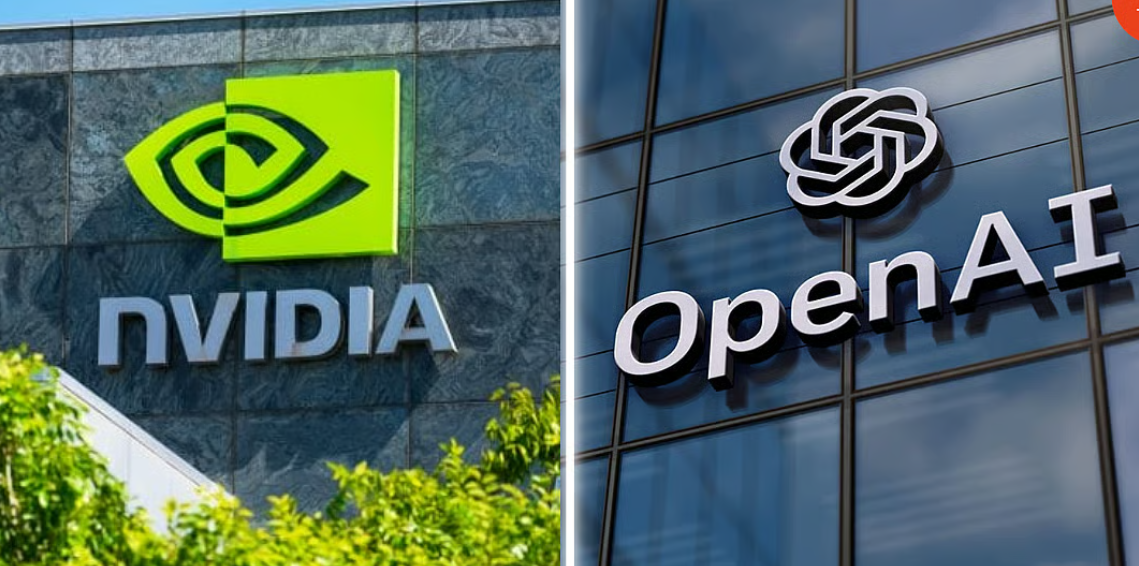
Nvidia OpenAI 250 billion financing data center

Image Credit: The Bridge Chronicle

TwitterWhatsappLinkedin

The capital requirements for the ongoing artificial intelligence revolution have escalated beyond traditional venture equity and corporate cash reserves. As frontier AI models demand exponential increases in compute capacity, the world’s leading technology firms are turning to unprecedented debt financing structures to build out next-generation server architecture. In what could mark the largest vendor-backed financing agreement in corporate history, semiconductor titan Nvidia is reportedly in advanced discussions to guarantee up to $250 billion in debt financing to fund a massive network of dedicated AI data centers for OpenAI.

You might also like

How to Download YouTube Music to MP3: A Simple Guide

How Accurate Captions Make Short Mobile Videos More Accessible and Easier to Understand

What RBI Draft Interest Rate Rules Mean for Loan Cost Disclosures in India

According to a report by The Wall Street Journal and confirmed by Reuters, the proposed Nvidia OpenAI 250 billion financing data center framework would allow OpenAI to secure private credit and bank loans at favorable interest rates backed by Nvidia’s $3 trillion balance sheet. By acting as a guarantor for the loans, Santa Clara-based Nvidia aims to ensure that OpenAI can build out gigawatt-scale data center infrastructure packed with hundreds of thousands of next-generation Vera Rubin GPUs, solidifying Nvidia’s chip dominance while removing capital bottlenecks for its primary software customer.

1. Deconstructing the Deal: Debt Guarantees over Direct Equity

Unlike traditional equity investments where tech firms exchange capital for company shares, this proposed transaction introduces a vendor-backed financing model to the AI supercycle. Under the terms being negotiated, private equity consortiums, sovereign wealth funds, and global banking syndicates would issue $250 billion in long-term debt to build the physical facilities, power connections, and cooling systems.

Nvidia’s role as guarantor means that should OpenAI face cash flow shortages or delays in enterprise monetization, Nvidia would be legally responsible for servicing or backing the underlying debt obligations:

  • Lower Cost of Capital: Nvidia’s AAA-equivalent credit profile enables OpenAI to secure financing at significantly lower interest rates than an unrated startup could achieve independently.
  • Guaranteed Wafer & GPU Sales: In exchange for providing the credit guarantee, OpenAI commits to equipping the new data center network exclusively with Nvidia hardware, including Vera Rubin GPUs and NVLink networking switches.
  • Off-Balance-Sheet Structuring: The physical infrastructure is expected to be held within Special Purpose Vehicles (SPVs), keeping direct project liabilities off OpenAI’s primary balance sheet during early construction.

2. Wall Street Scrutiny: The Risks of Circular AI Financing

While the market initially welcomed news of the Nvidia OpenAI 250 billion financing data center negotiations, financial analysts and credit rating agencies are raising serious questions about the risks of circular financing in the tech sector. Critics note that vendor financing where a hardware supplier finances its own customers’ purchases was a defining feature of the late-1990s telecom boom, which ultimately led to severe write-downs when infrastructure demand softened. If enterprise AI software monetization fails to scale rapidly enough over the next 3 to 5 years to support servicing $250 billion in debt, Nvidia could face substantial credit impairment charges on its own ledger.

3. Comparative Infrastructure Commitments across Big Tech

The scale of the proposed $250 billion financing guarantee eclipses traditional capital expenditure programs across the tech sector, illustrating the immense financial resources required to compete at the frontier of artificial intelligence.

Hyperscaler Infrastructure Financing Matrix

Tech Entity Proposed / Active Capital Commitment Structure / Mechanism Primary Strategic Objective
Nvidia / OpenAI $250 Billion Vendor-Backed Debt Guarantee / SPVs Secures massive Vera Rubin GPU cluster deployment
Microsoft ~$80 Billion (Annual Capex) Direct balance sheet outlays & Azure leases Powers global Azure AI nodes and OpenAI workloads
Meta Platforms ~$60 Billion (Annual Capex) Corporate bond issuances & joint ventures Builds open-source Llama training clusters
Alphabet / Google ~$75 Billion (Annual Capex) Direct capex for custom TPUs & data centers Expands Gemini inference and Search AI capabilities

The Frontier of Infrastructure Engineering

The negotiations surrounding the Nvidia OpenAI 250 billion financing data center framework signal a new phase in the economics of artificial intelligence. Compute capacity is no longer governed solely by software engineering, but by complex debt packaging, sovereign energy access, and corporate balance sheet strength.

If finalized, this historic deal will establish the largest private compute network in human history, cementing Nvidia and OpenAI at the center of the global AI economy while testing whether Wall Street’s appetite for debt-fueled technology growth can be sustained.


Tags: #AIFinance#NvidiaOpenAI250BillionFinancingDataCenterNvidiaOpenAIReuterstechnews
Tweet55SendShare15
Previous Post

Corporate Vulnerability Traps The Legal Clash Over Medical Disclosures at Netflix

Next Post

Pvt Ltd Registration vs LLP Registration: Which Is Better for Your Business

Anochie Esther

Recommended For You

How to Download YouTube Music to MP3: A Simple Guide

by Rohan Mathawan
October 24, 2026
0
How to Download YouTube Music to MP3: A Simple Guide

YouTube Music is a convenient place to discover new songs, revisit old favorites, and explore playlists for almost any mood. However, streaming isn't always the most practical option....

Read more

How Accurate Captions Make Short Mobile Videos More Accessible and Easier to Understand

by Rohan Mathawan
October 24, 2026
0
Short videos have become a daily habit for mobile users. People watch clips on buses, in waiting rooms, during breaks, and late at night with the volume turned down. Gaming highlights, creator tutorials, reaction clips, and quick product reviews all compete for a few seconds of attention. In that setting, captions are no longer a bonus feature. They are a core part of how a video communicates. When captions are accurate, they help more people follow along, understand the message, and enjoy the content as the creator intended. When they are careless, they can confuse viewers or leave them out entirely. Why Captions Matter for Mobile Viewers Many creators now rely on a caption generator to turn spoken audio into on screen text quickly, which saves time when they publish several clips each week. The real value of that text, however, depends on how closely it matches what is actually said and heard. For viewers who are deaf or hard of hearing, captions are the main way to access speech, tone, and important sound cues. For other viewers, captions support situations where audio is not practical, such as noisy streets, shared spaces, or quiet environments. A clip with clear and correct text works for all of these people without requiring any extra effort from them. Accessibility Starts with Accuracy Accessibility is about giving every viewer a fair chance to understand the content. Captions that skip words, change meanings, or misspell names can make that difficult. A viewer who relies on text cannot compare it against the audio, so any error becomes part of the message they receive. Accurate captions should include the spoken words, the speaker when it is not obvious, and meaningful sounds such as music cues, laughter, or alerts. For example, in a cooking clip, a caption that reads "add two teaspoons of salt" instead of "add two tablespoons of salt" changes the result of the recipe. Accuracy protects the viewer from small mistakes with real consequences. Comprehension in Fast Moving Gaming Clips Gaming clips move quickly. Players speak fast, use abbreviations, call out locations, and react to events that happen in a split second. Team callouts such as map positions, weapon names, and character abilities often sound similar when heard quickly, which makes accurate text especially useful. A viewer who is new to a game may not recognize a term by ear, but seeing it written correctly helps them learn it. Captions also help when the in game audio, music, and voice chat overlap. Clear text separates the commentary from the background noise, so the viewer can follow what the player is saying without replaying the clip several times. Creator Clips and Clear Communication Creators share advice, tutorials, opinions, and stories in short formats where every second counts. Captions give them a way to reinforce key points without adding extra length. A beauty creator can display product names exactly as spoken, a fitness creator can show the number of repetitions, and a tech reviewer can spell out model names that are easy to mishear. Captions also help viewers whose first language is not the language of the video. Reading along while listening can make unfamiliar accents or fast speech easier to follow. This does not replace translation, but it supports comprehension for people who are still building their listening skills. Common Caption Errors and Their Effects Some caption mistakes appear again and again in short videos. Understanding them helps creators know what to check before publishing. Homophones, such as "their" and "there," or "to" and "two," can change the meaning of a sentence. Proper nouns, including usernames, game titles, brand names, and place names, are often misspelled. Missing punctuation can make a sentence read as a different statement or question. Lines that appear too early or too late can confuse the viewer about who is speaking. Technical terms and slang may be replaced with common words that sound similar but mean something else. Each of these errors is small on its own, but in a clip that lasts under a minute, even a few of them can reduce clarity. Reviewing the text once before posting is a simple habit that keeps these problems from reaching the audience. Practical Tips for Better Captions Creators do not need advanced skills to improve caption quality. A few steady habits can make a visible difference. Record audio as clearly as possible, because clean speech gives any captioning method a better starting point. Read through the full text while listening to the clip, and correct names, numbers, and terms that are specific to the topic. Keep each line short, so viewers can read it comfortably without missing the picture. Add brief descriptions for important sounds, such as "applause" or "game alert," when they affect understanding. Watch the final video on a phone, since that is where most viewers will see it. These steps are practical rather than technical. They focus on the viewer experience and not on any promise of a specific result. Timing, Placement, and Design on Small Screens On a small mobile screen, the look of captions matters almost as much as their wording. Text should appear at a size that is easy to read, with enough contrast against the background. White text with a dark outline or a soft background box is a common choice because it stays readable over changing scenes. Captions should also avoid covering important parts of the video, such as the game interface, a product being demonstrated, or a speaker's face. Timing is equally important. Text that appears just as the words are spoken feels natural, while text that lags behind can make the video feel out of sync. Careful placement and timing help viewers read and watch at the same time without effort. Conclusion Accurate captions make short mobile videos more accessible, easier to follow, and more useful to a wider audience. They support viewers who cannot rely on sound, help new players understand fast gaming clips, and give creators a reliable way to share clear messages in a few seconds. A caption generator can speed up the first step by producing text from speech, but the best results come when creators review the output, correct names and terms, and check timing and readability on a phone. By treating captions as a real part of the video and not an afterthought, creators can make their content welcoming and understandable for more people, one short clip at a time.

Short videos have become a daily habit for mobile users. People watch clips on buses, in waiting rooms, during breaks, and late at night with the volume turned...

Read more

What RBI Draft Interest Rate Rules Mean for Loan Cost Disclosures in India

by Rohan Mathawan
October 24, 2026
0
Photo by Sasun Bughdaryan on Unsplash

A Business Loan with a low interest rate may look like a good deal at first. But once you add processing fees, documentation charges and other costs, the...

Read more
Next Post
Pvt Ltd Registration vs LLP Registration: Which Is Better for Your Business

Pvt Ltd Registration vs LLP Registration: Which Is Better for Your Business

Please login to join discussion

Techstory

Tech and Business News from around the world. Follow along for latest in the world of Tech, AI, Crypto, EVs, Business Personalities and more.
reach us at info@techstory.in

Advertise With Us

Reach out at - info@techstory.in

Aviator Game India 2026

BROWSE BY TAG

#Crypto #howto 2024 acquisition AI amazon Apple Artificial Intelligence bitcoin Business China cryptocurrency e-commerce electric vehicles Elon Musk Ethereum facebook funding Gaming Google India Instagram Investment iPhone IPO Market Markets Meta Microsoft News OpenAI samsung Social Media SpaceX startup startups tech Tech news technology Tesla TikTok trend trending twitter US

© 2025 Techstory.in

No Result
View All Result
  • News
  • Crypto
  • Gadgets
  • Memes
  • Gaming
  • Cars
  • AI
  • Startups
  • Markets
  • How to

© 2025 Techstory.in

Welcome Back!

Login to your account below

Forgotten Password?

Retrieve your password

Please enter your username or email address to reset your password.

Log In
Are you sure want to unlock this post?
Unlock left : 0
Are you sure want to cancel subscription?