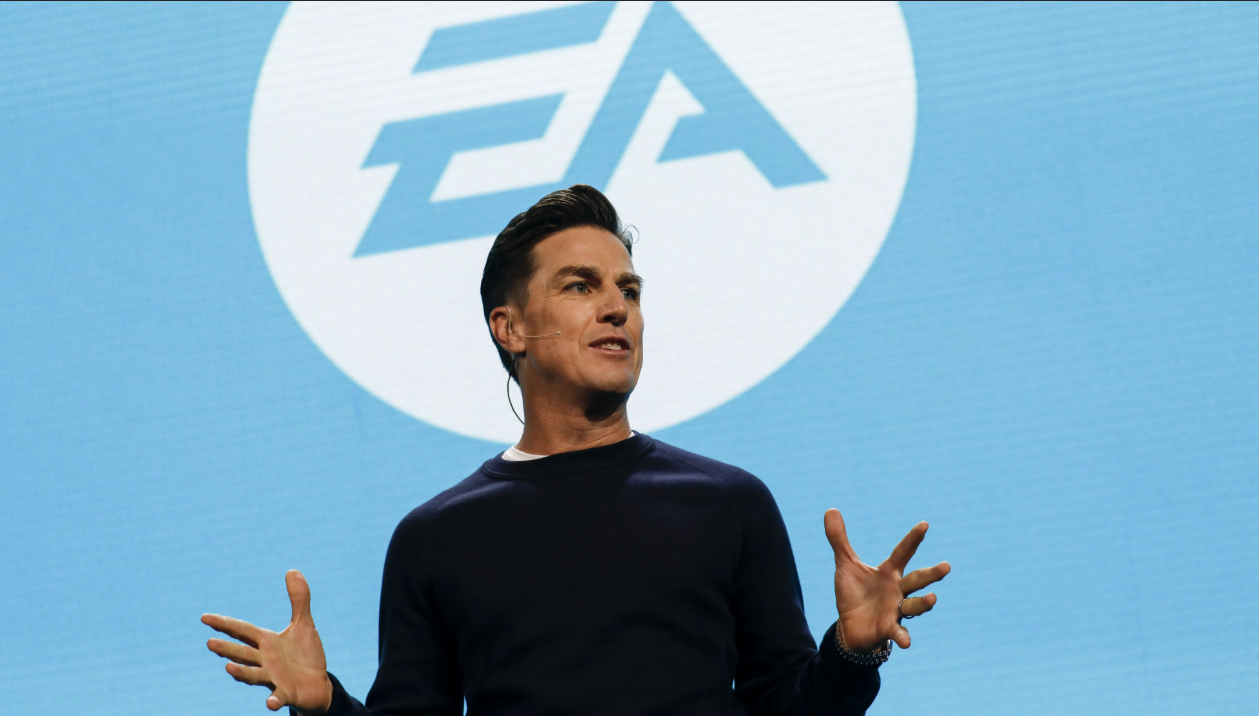
The gaming industry’s ongoing tension between executive compensation and workforce stability has reached a new boiling point. For video game developers, delivering a critical and commercial hit is typically seen as the ultimate form of job security. However, as major publishers prioritize profit margins, generative AI deployment, and executive bonus metrics, even blockbuster success fails to insulate production teams from corporate restructuring. In a stark example of this industry-wide disparity, newly released regulatory filings reveal that EA pays CEO $38 million after layoffs hit the very developers responsible for making Battlefield 6 the top-selling game of the year.
Electronic Arts’ (EA) mandatory Form 10-K filing with the U.S. Securities and Exchange Commission (SEC) confirms that Chief Executive Officer Andrew Wilson received a total compensation package valued at $38,649,984 for fiscal year 2026. The $8.12 million pay increase a 27% jump over his $30.53 million earnings in fiscal 2025 was explicitly justified by EA’s board as reward for Battlefield 6 meeting “all milestones for a high-quality launch,” alongside strong performance from EA Sports FC and the company’s aggressive GenAI strategy.
1. Breakdown of the $38.6 Million Executive Package
According to page 21 of EA’s annual SEC filing, Wilson’s base salary remained steady at $1.3 million. The overwhelming majority of his compensation was derived from performance-based incentives, equity grants, and corporate perks:
- Stock Awards: $28.48 million in equity grants tied to long-term financial targets.
- Cash Performance Bonus: $6.50 million awarded after EA beat its non-GAAP net revenue targets ($8.026 billion achieved vs. $7.85 billion guidance).
- Personal Security & Travel Perks: $2.37 million in “other compensation,” including $1.25 million for private jet usage and corporate security upgrades following a mandatory security assessment.
“Battlefield achieved meeting all milestones for a high-quality launch of Battlefield 6 with positive critical reviews and stable services and gameplay, with interim milestones related to future launches being met.” Electronic Arts SEC Form 10-K Filing
Wilson was not the only executive to receive a multi-million-dollar payout. President of EA Entertainment Laura Miele received $13.7 million, Chief Financial Officer Stuart Canfield took home $11.3 million, Chief Legal Officer Jacob Schatz earned $8.4 million, and Chief People Officer Mala Singh received $8.3 million.
2. The Human Cost: Layoffs at Battlefield Studios
The timing of the compensation disclosures sparked widespread criticism across social media and developer communities. Just four months prior to the filing, in March 2026, EA executed sweeping staff reductions across four primary development hubs DICE, Criterion Games, Ripple Effect Studios, and Motive Studio collectively known as Battlefield Studios.The layoffs occurred despite Battlefield 6 selling over 7 million copies in its first three days and outpacing rival franchises like Call of Duty to become the best-selling title in North America for 2025. EA defended the workforce reductions as an operational necessity to “better align our teams around what matters most to our community,” creating a stark contrast between corporate language and executive payouts.
3. Structural Comparison: Executive Pay vs. Operational Metrics
The SEC filing highlights how corporate performance metrics reward executive leadership for margin expansion and AI integration, even while reducing overall headcount.
EA Fiscal Year 2026 Financial & Compensation Summary
| Metric / Domain | FY2025 Performance | FY2026 Performance | Operational Context |
| CEO Total Compensation | $30.53 Million | $38.65 Million (+27%) | Fueled by Battlefield 6 & GenAI milestones |
| Non-GAAP Net Revenue | $7.43 Billion | $8.026 Billion | Exceeded corporate guidance ($7.85B target) |
| Median Employee Salary | $116,540 | $126,612 | CEO-to-worker pay ratio expanded to 305:1 |
| Primary Franchise Success | EA Sports FC growth | 7M copies (Battlefield 6) | Best-selling game of 2025 in North America |
Re-Evaluating Corporate Governance in Gaming
The controversy where EA pays CEO $38 million after layoffs highlights a systemic governance challenge within the video game industry. As major publishers prioritize shareholder returns, automated GenAI production pipelines, and C-suite bonuses, the frontline developers who build critically acclaimed titles face persistent job insecurity.
With EA currently preparing for a proposed take-private transaction involving a Saudi Arabian investor consortium, future public disclosures like Form 10-K reports may soon disappear leaving developer unions and industry watchdogs demanding greater accountability for executive pay practices.