The political honeymoon between state governments and the world’s most powerful technology conglomerates is coming to an abrupt, expensive halt. For years, regional lawmakers across the United States actively outbid one another to attract corporate data centers, offering massive financial handouts under the assumption that these facilities would anchor long-term economic growth. However, the explosive rise of generative artificial intelligence and high-density computing has fundamentally altered the math. Faced with skyrocketing energy demands, strained local water systems, and a growing budget deficit, the state of Pennsylvania has made a historic policy shift. In an overwhelming bipartisan vote, the Pennsylvania House of Representatives passed legislation to completely repeal a lucrative sales tax exemption, effectively erasing a projected $517 million tech tax break that was originally designed to lure digital infrastructure to the Commonwealth.
This legislative rollback marks a major turning point in how public officials regulate the physical backbone of the internet. First introduced as a modest tax refund cap in 2016 and expanded into a sweeping, uncapped 6% sales tax exemption in 2021, the incentive was designed to keep Pennsylvania competitive against tech hubs like Virginia and Maryland. However, as independent tech developers and hyperscalers rushed the state, lawmakers from both sides of the aisle united to declare that the corporate subsidy had vastly outlived its purpose. By evaluating the mechanics of this legislative reversal, it becomes clear that state leaders are no longer willing to subsidize profitable corporations at the direct expense of residential utility taxpayers and public funding balances.
1. The Projections of Scarcity: Inside the $517 Million Drain
To understand why a bipartisan supermajority voted so decisively to terminate the program, one must look at the rapidly escalating fiscal cost of the tax exemption. What began as a minor revenue concession has ballooned into a massive, multi-million-dollar drain on the state treasury. According to official state revenue audits, the Computer Data Center Equipment Exemption Program cost Pennsylvania $41.1 million during the 2024–25 fiscal year. That number is tracking to nearly triple to $114.8 million for the current fiscal cycle.
If left untouched, state financial data projects that the annual waived tax revenue would explode to an astonishing $517 million tech tax break by the 2030–31 fiscal year, marking an unsustainable 1,150% spike in state subsidies. With Pennsylvania currently facing a tight fiscal landscape where projected spending routinely outpaces revenue collections, lawmakers determined that continuing to bankroll infrastructure for firms like Amazon Data Services and Iron Mountain was an unsupportable luxury.
2. The Local Backlash: Archbald Borough and the Corporate Gold Rush
Beyond the immediate macroeconomic concerns in Harrisburg, the driving force behind the legislative pushback was an intense, grassroots resistance bubbling up from local municipalities.
Local Infrastructure Density and Zoning Exposure
| Affected Local Region | Total Data Center Proposals | Footprint Profile Target | Primary Community Grievance |
| Lackawanna County | 16 Distinct Facility Builds | Broad Regional Footprint | Grid strain and high localized noise pollution |
| Archbald Borough | 6 Massive Complexes | 14% of Entire Town Footprint | Massive transformation of residential zones |
| Reading District | Former Titus Power Station | Adaptive Industrial Reuse | Environmental oversight vs. international AI race |
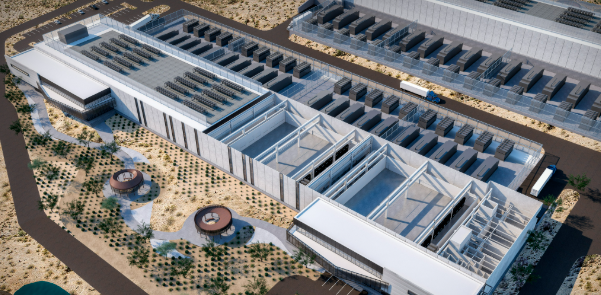
Democratic Representative Kyle Mullins of Lackawanna County delivered an impassioned testimony on the House floor, characterizing the unregulated expansion of server farms across Pennsylvania as a speculative, irresponsible “gold rush.” Mullins highlighted that inside the small borough of Archbald alone, corporate entities had submitted proposals for six massive data projects comprising 51 separate buildings. If approved, this single industrial footprint would devour a staggering 14% of the entire borough’s land layout, overwhelming local zoning boards and placing an immense physical burden on regional water networks and power transmission lines.
3. The Political Split: Shapiro’s Standards vs. The Absolute Repeal
The dramatic House vote highlights a clear policy disagreement between legislative Democrats and the administration of Governor Josh Shapiro. While the House voted 197-5 to completely eliminate the tax break, the Governor has actively championed a separate, compromise approach. Shapiro’s alternative proposal attempts to use the lucrative tax break as leverage, requiring data center developers to adhere to strict environmental standards, invest in energy efficiency, and generate their own off-grid power to qualify for faster state permitting.
However, a strong coalition of House Democrats and Senate Republicans are pushing past this incentive-based model. Led by representatives who want to redirect the saved tax revenue toward reducing the state’s 58-cent gasoline tax, the legislature is sending a clear, uncompromising message to the tech sector: infrastructure operators must fully fund the public utilities and resources they consume, without expecting working-class communities to foot the bill.
Technical Implications for Global Governance
The decisive bipartisan action in Pennsylvania serves as an important warning to the global tech industry. The era of receiving unmonitored financial subsidies and open-ended utility access simply for building data infrastructure is quickly drawing to a close.
As states struggle with the immense resource realities of artificial intelligence scaling, the repeal of the $517 million tech tax break proves that public officials are reasserting their regulatory power. By prioritizing the safety of local power grids and the stability of public budgets ahead of corporate interests, Pennsylvania is setting an aggressive new standard, proving that the digital expansion of the cloud must finally answer to the physical and financial needs of the communities on the ground.