People who have engaged for a long time with decentralized digital assets can sometimes witness how suddenly congested a decentralized digital asset network may become. During periods of peak market demand, whatever you are trying to send as a routine transaction or to interact with as part of a smart contract can cost exorbitantly high fees and also take far longer than normal to process completely. Nonetheless, the network congestion is not a bug, but also a core architectural problem which is deeply entrenched in the nature of distributed and/or decentralized systems. To help to resolve this significant problem, developers have intentionally divided the entire network architectural design into two operationally separate model categories. Today, there is an ongoing global debate about scalability of the network and it is focused on the intricate relationship between the base (or foundational) layer and the agile (or scalability) layer that is built on top of the base layer. Therefore, anyone interested in successfully navigating the current digital economy must understand the complexities involved in Layer One vs. Layer Two. The underlying challenge causing all of this is widely known across the industry as the blockchain trilemma. According to this concept, at any particular moment, decentralised networks can effectively optimise for two out of the three primary properties of decentralisation, total security, or absolute scalability. Because the two base networks prioritise decentralisation and total security over all other factors, they are bound to forego performance speed. Due to this fact, it would be necessary to use external scaling solutions to assist with performance at a time when their only focus is to be secure and decentralised.
The Foundation: Understanding Layer 1 Networks
The entire digital asset ecosystem relies on a single, unchanging foundation called a Layer 1 Network. It provides a central foundational blockchain to process transactions on its own decentralized network. You hear about these “massive” and “world-famous” networks (e.g., Bitcoin, Ethereum, and Solana) in the news because they are all examples of top-level, foundational Layer 1 Blockchains. These base layers are ultimately responsible for establishing the core programmatic rules of the entire system, maintaining an irreversible and transparent public ledger, and ensuring that every single participant around the globe agrees completely on the current state of the network. They achieve this massive, decentralized coordination through highly complex, algorithmically driven consensus mechanisms. Whether utilizing incredibly energy-intensive mining processes to solve cryptographic puzzles or leaning into more modern, capital-efficient staking models where users lock up their assets, the overarching goal always remains exactly the same: to create a completely impenetrable, singular source of absolute truth that cannot be manipulated by any government, corporation, or individual malicious actor.
Because a Layer 1 network must independently verify every single transaction moving through its system via thousands of globally distributed nodes, it inevitably faces very strict physical hardware limitations and bandwidth constraints. If the digital block size is intentionally kept small to allow everyday retail users to easily run nodes on standard consumer hardware, the overarching network simply cannot process thousands of transactions every single second. When user demand spikes during a bull market or a popular decentralized application launch, network participants are suddenly forced into a highly competitive bidding war, paying massive priority fees just to get their transactions included in the very next block. This is exactly why foundational networks are increasingly viewed by industry experts as incredibly secure, high-value settlement layers rather than everyday consumer payment rails meant for buying a cup of coffee. They offer completely unparalleled, military-grade security for moving millions of dollars, but they physically cannot scale to safely accommodate billions of daily micro-transactions strictly on their own.
The Scaling Engine: Demystifying Layer 2 Solutions
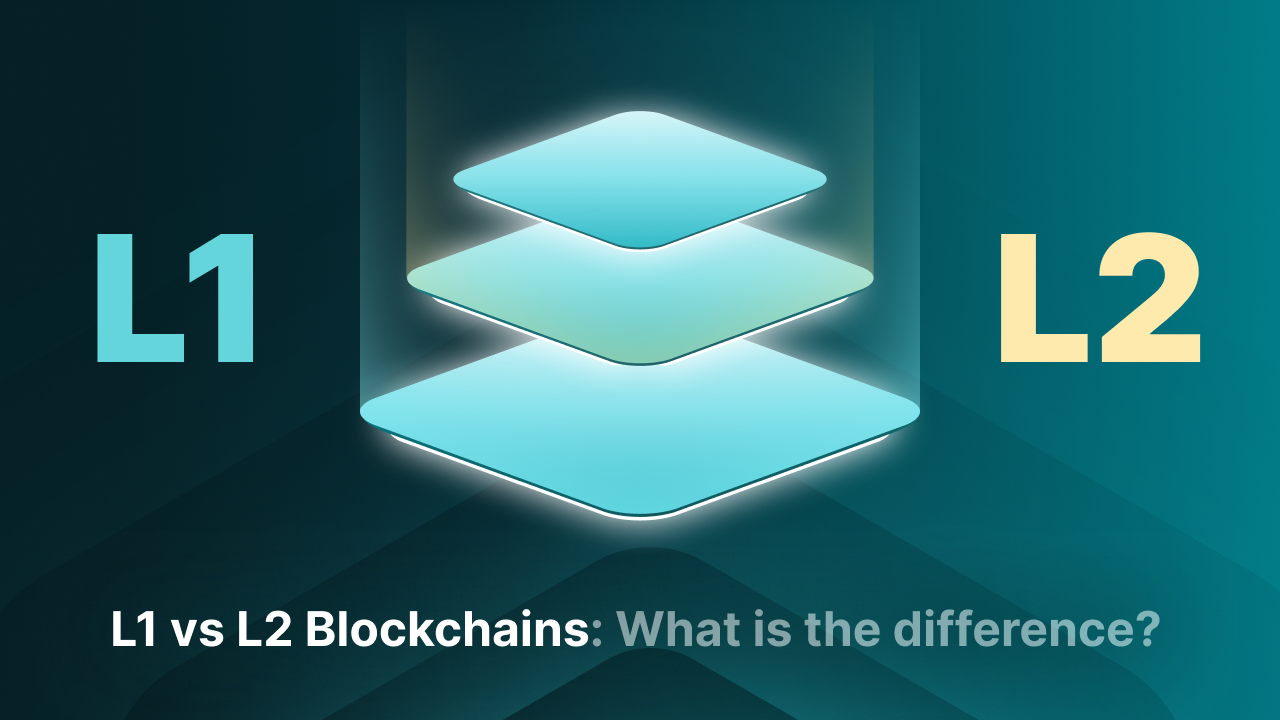
Visionary developers created efficient layer two solutions to help reduce the limits of layer one. Layer two creates a secondary, optimised framework on top of an already existing layer one blockchain. Instead of forcing layer one to process every action from the user by itself, the layer two dynamically collects all actions from the users and processes the transactions in bulk outside of layer one. Once layer two completes the processing of a large number of transactions, it sends a summary of the total number of transactions at high speed back to layer one as a secure proof. By doing this, layer two has created a workaround to enhance the operational throughput of the network, while significantly lowering costs for retail users. Layer two networks provide an impenetrable level of security and deep liquidity using the foundations of layer one.
The rollup is currently the most widely adopted technology driving the scaling revolution. Rollups work by taking hundreds or even thousands of individual, off-chain user transactions and seamlessly bundling them together into one single, highly compressed data batch. From a purely economic perspective, this drastically and permanently alters the overall fee structure for everyday users. Instead of paying for a full transaction, the total cost a user pays is simply the very small fee required to execute their specific action on the secondary network, plus a tiny fraction of the expensive Layer 1 data storage fee, which is divided equally among all the hundreds of transactions crammed into that one specific batch. By cleverly spreading the heavy, unavoidable base layer settlement cost across thousands of different users whose activities are bundled into a single network operation, the individual cost drops exponentially to mere fractions of a cent. Whether developers are utilizing optimistic rollups that assume transactions are completely valid by default until proven otherwise, or they are relying on cutting-edge zero-knowledge rollups that use advanced cryptography to mathematically prove transaction validity instantly, the end result for the user is exactly the same. Layer 2 networks successfully provide the ultra-cheap, highly responsive execution environment that is strictly necessary for high-frequency applications to finally thrive and reach mainstream adoption.
Core Differences and Synergistic Interactions
When you place these two distinct network architectures side by side and analyze them deeply, their individual roles within the broader financial ecosystem become incredibly clear and highly specialized. The primary difference fundamentally boils down to exactly where the actual, day-to-day transaction execution takes place versus where the final, irreversible economic settlement happens. Layer 1 is entirely and unapologetically focused on maintaining supreme network security, ensuring widespread global decentralization, and establishing undeniable algorithmic consensus among all participants. Because of this monumental responsibility, Layer 1 programmatic upgrades move at a deliberately slow, highly cautious pace. The core developers know that even the smallest, seemingly insignificant bug deployed at the base layer could instantly jeopardize billions of dollars in foundational economic value. Layer 2, conversely, acts as the agile, high-speed, user-facing execution environment. It is engineered from the ground up specifically to deeply optimize for massive network scalability, frictionless user experience, and extreme capital efficiency.
It is absolutely crucial to understand that these two architectural layers do not compete with one another; rather, they deliberately form a highly synergistic relationship that successfully allows the entire digital asset ecosystem to function smoothly and seamlessly. The Layer 2 network relies entirely and completely on the Layer 1 to securely anchor its compressed transaction data and effectively prevent any bad actors or malicious validators from manipulating the secondary system. Without the immense, battle-tested security of the foundational base chain backing it up, the secondary network would be incredibly vulnerable to catastrophic exploits and immediate liquidity drains. Conversely, the Layer 1 deeply relies on the Layer 2 to constantly act as a highly effective pressure release valve. Without these external scaling solutions successfully soaking up the overwhelming, day-to-day retail user demand, the base network would very quickly become completely unusable for average human participants due to crushing, unaffordable transaction fees and frustratingly slow processing times.
The Developer and Investor Perspective
For ambitious software builders currently constructing the next generation of revolutionary decentralized applications, fully understanding this critical architectural split is fundamentally essential. Developers must carefully, objectively weigh all of the associated trade-offs before permanently deploying their underlying smart contract code. If a development team is actively building a massive decentralized central bank or a highly secure financial vault requiring absolute, impenetrable security above all other considerations, deploying their application directly onto a robust, time-tested Layer 1 might actually be the correct and safest choice. However, if a completely different team is launching a fast-paced, highly interactive multiplayer digital game or a decentralized social media platform where users execute dozens of tiny micro-transactions every single minute, forcing those specific users to pay expensive base layer fees would result in an instant, catastrophic failure. In that particular scenario, launching exclusively on a high-throughput, low-cost Layer 2 is the absolute only viable path to achieving any sort of long-term commercial success.
Finally, from a broader, macroeconomic investment standpoint, the overarching narratives heavily driving these two distinct network types are fundamentally different but still heavily intertwined. Layer 1 digital assets are now frequently viewed by institutional funds as the pristine reserve currency of the broader ecosystem, steadily capturing immense value through vital network security fees and constant base layer settlement demand. Meanwhile, Layer 2 network assets are strictly evaluated based on their raw, daily transaction volume, aggressive user acquisition metrics, and their proven ability to attract rich, diverse, and sticky application ecosystems. As the entire digital asset space aggressively continues its relentless, inevitable march toward true, global mass adoption, the seamless, invisible integration of Layer 1 security and Layer 2 speed will ultimately serve as the powerful, underlying economic engine powering the decentralized future for generations to come.