The global retail industry has lost one of its greatest innovators. Toshifumi Suzuki, the man credited with transforming 7-Eleven into a worldwide convenience store empire, has died at the age of 93. According to Seven & i Holdings, Suzuki passed away from heart failure on May 18.
Often referred to as the “father of the convenience store industry,” Suzuki did far more than expand a retail chain. He reshaped how modern consumers shop, eat, pay bills, and interact with neighbourhood stores. His ideas changed convenience retail forever and influenced businesses across the globe.

Credits: The New York Times
From Rural Japan to Retail Greatness
Born in Nagano Prefecture in 1932, Suzuki’s rise was far from ordinary. He joined Japanese supermarket operator Ito-Yokado in the 1950s, beginning what would become one of the most influential careers in retail history.
The turning point came during a business trip to the United States in the early 1970s. While many executives saw small American convenience stores as simple corner shops, Suzuki saw the future. He became fascinated by the Texas-based Southland Corporation and its 7-Eleven stores.
At the time, Japan’s urban population was growing rapidly, lifestyles were becoming busier, and consumers increasingly valued speed and accessibility. Suzuki realised that the American convenience-store model could thrive in Japanese cities if adapted intelligently to local habits.
In 1973, he secured licensing rights to bring the brand to Japan. A year later, the first Japanese 7-Eleven store opened in Tokyo’s Toyosu district. Few could have predicted the retail revolution that would follow.
Reinventing the Convenience Store
Suzuki’s brilliance lay in understanding that convenience stores could become far more than places to buy snacks and drinks.
Instead of treating stores as miniature supermarkets, he transformed them into essential neighbourhood hubs tailored to daily life. Under his leadership, Japanese 7-Eleven outlets began offering services that were revolutionary at the time — utility bill payments, parcel shipping, ticket bookings, and 24-hour ATM access.
But perhaps Suzuki’s most groundbreaking contribution was supply-chain innovation.
He pioneered an advanced, data-driven inventory system that tracked customer buying behaviour in real time. Stores could be restocked multiple times a day with fresh rice balls, bento boxes, sandwiches, and ready-to-eat meals based on local demand patterns.
This hyper-efficient system minimised waste while ensuring freshness — a model that retailers worldwide would later attempt to replicate.
Suzuki understood something many retailers missed: convenience was not just about location. It was about reliability, speed, and anticipating what customers wanted before they even asked for it.
When Japan Took Over America’s Retail Icon
By the late 1980s, an ironic twist had emerged. While 7-Eleven Japan was booming, its original American parent company was struggling financially.
Southland Corporation eventually filed for bankruptcy protection, creating a dramatic reversal of fortunes. In one of the most symbolic moments in retail history, Suzuki engineered a buyout in 1991 that effectively turned the original American creator of 7-Eleven into a subsidiary of the Japanese operation.
It was a remarkable achievement — a Japanese businessman not only saving an iconic American brand but transforming it into a global powerhouse.
Suzuki later consolidated the business empire under Seven & i Holdings in 2005, serving as chairman and CEO until his retirement in 2016.
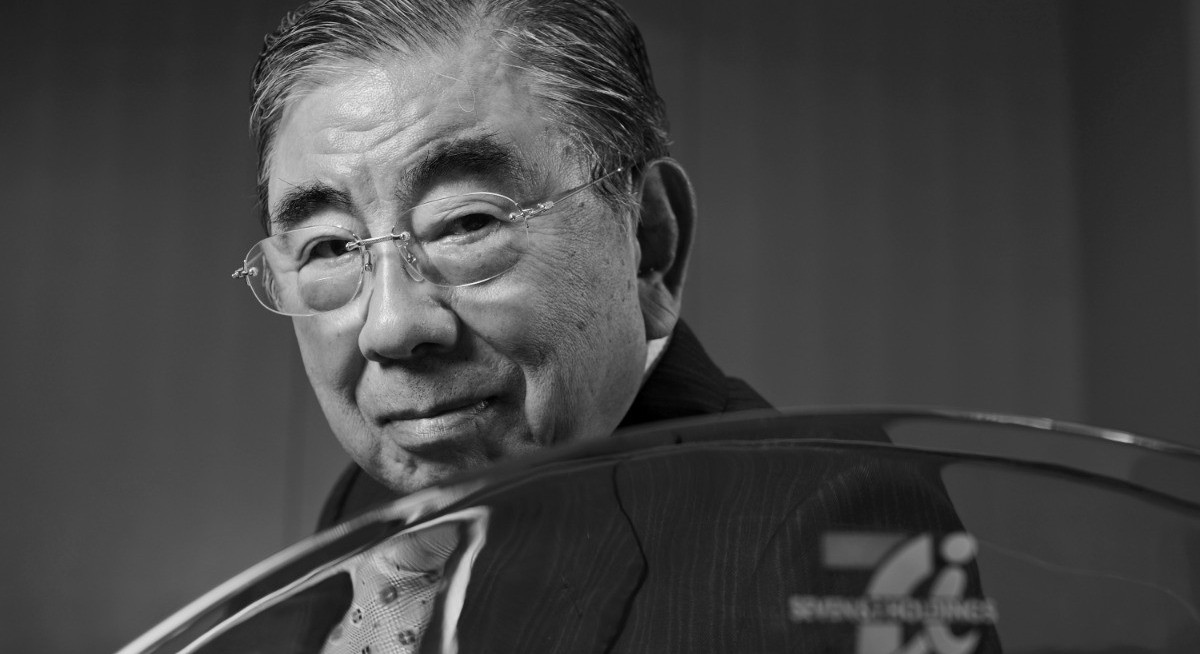
Credits: The Edge Singapore
A Legacy Beyond Retail
Today, 7-Eleven stores operate across numerous countries and have become deeply embedded in urban life. From Japan to the United States and across Asia, the brand’s influence can be seen in modern convenience retail strategies everywhere.
Yet Suzuki’s impact stretches beyond store shelves. He helped pioneer the idea that retail spaces should seamlessly integrate into everyday life, offering services, technology, and efficiency under one roof.
Long before phrases like “customer experience” and “data-driven retail” became business buzzwords, Suzuki was already implementing them at scale.
His legacy is not simply the growth of a company, but the transformation of an entire industry. Millions of people around the world may never know his name, yet they interact with his ideas every single day whenever they walk into a convenience store.
Toshifumi Suzuki didn’t just build a retail empire — he changed the rhythm of modern urban living itself.