Artificial intelligence is moving into agriculture, and Halter is part of that shift. The company has raised fresh funding led by Founders Fund, the firm backed by Peter Thiel. As reported by Bloomberg, the deal values Halter at $2 billion.
At its core, Halter is trying to change how farmers manage cattle. Instead of fences and manual herding, it uses GPS collars and software to guide animals.
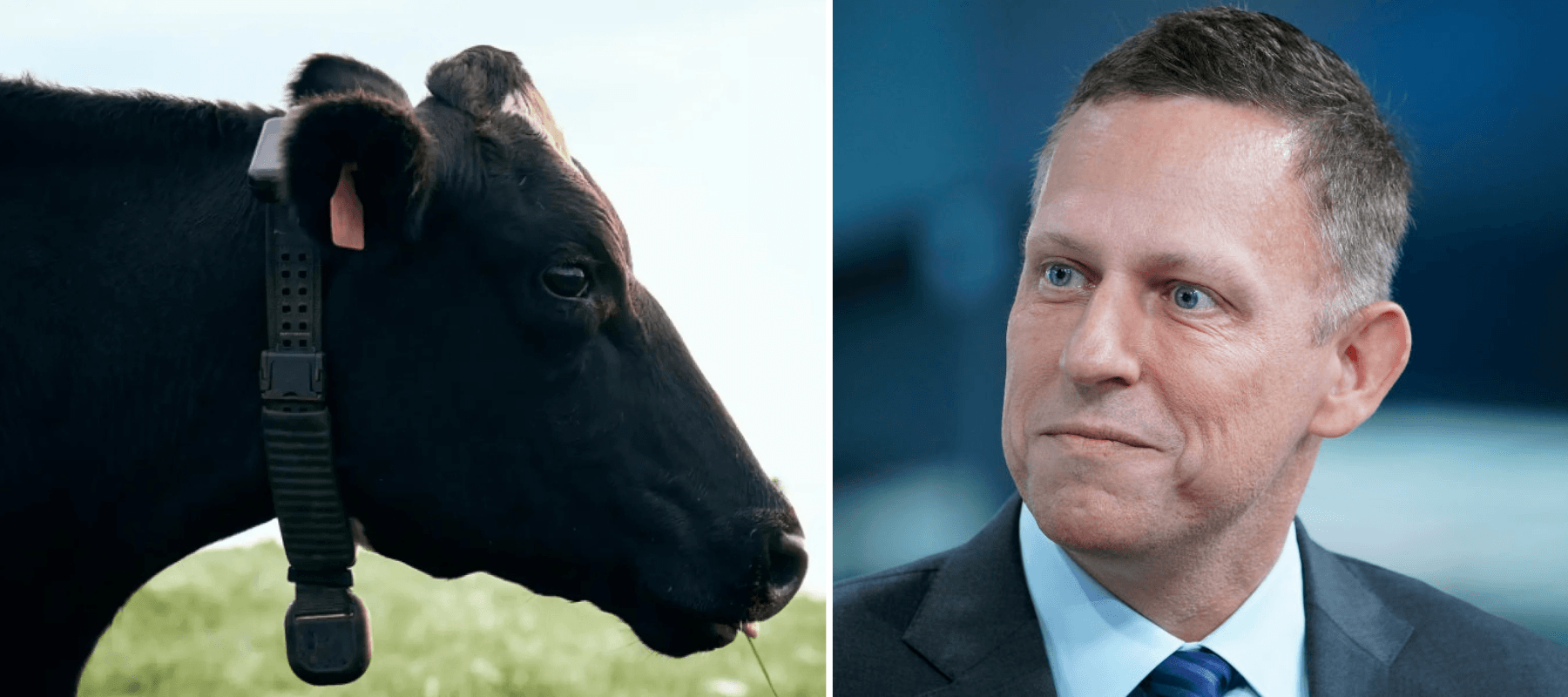
Each cow wears a collar fitted with GPS and solar-powered hardware. The device gives gentle sound and vibration cues. These signals guide the animal’s movement. Over time, cows learn to respond to these cues.
Farmers control the system through a mobile app. They can set virtual boundaries or move the herd to a new area. For example, a farmer can guide cattle toward fresh grass or a milking station with a few taps. There is no need for physical fences or extra labour.
This approach reduces daily effort. It also gives farmers more control over where and when animals move.
How Halter is Automating Livestock Health via the Cowgorithm
Halter calls its software system the “Cowgorithm.” This is the brain behind the collars. It collects data from each animal and uses machine learning to make decisions.
The system can move large groups of cattle at once. It does not treat each cow in isolation. Instead, it looks at herd behaviour and patterns. This allows smoother and more natural movement.
The name may sound playful, but the goal is serious. It aims to automate tasks that once required constant human attention.
The collars do more than guide movement. They also track key health and behaviour signals. This includes digestion, activity levels, and fertility cycles.
The system collects this data in real time. It then analyses it using models trained on large datasets. If a cow shows unusual behaviour, the farmer gets an alert.
This helps with early detection of illness. It also improves breeding decisions. Farmers no longer have to rely only on visual checks. They get a steady stream of data instead.
Over time, this can lead to healthier animals and better yields.
Virtual fencing at scale
One of the biggest changes is the move away from physical fences. With Halter’s system, farmers can create “virtual fences” using software.
In the United States, farmers have already created more than 11,000 miles of these virtual boundaries. This replaces the need for wooden or wire fences.
The cost savings can be large. Building and maintaining fences takes time and money. Virtual fencing cuts both. It also gives more flexibility. Farmers can change boundaries at any time without extra work.
This matters on large farms, where land use often shifts with seasons and weather.
A subscription model
Halter runs on a subscription basis. Farmers pay between $5 and $8 per animal each month. This fee covers the hardware, software, and ongoing support.
The model ties revenue to the number of animals in the system. As farms grow, so does Halter’s income. At the same time, farmers become more dependent on the platform.
Once a farm adopts the system, it becomes part of daily operations. This leads to strong customer retention.
Why are investors interested in Halter?
Halter’s latest funding round has doubled its valuation from $1 billion to $2 billion. This reflects rising interest in agricultural technology. The company’s founder has a background in aerospace, including work at Rocket Lab. That experience shows in the system’s design, which blends hardware, software, and data.
Investors see agriculture as a sector ready for change. Farming still relies on manual processes in many areas. Tools that save time and cut costs can gain traction fast.
AI also adds a new layer of insight. It helps farmers make better decisions, not just faster ones.
A shift in farming
Halter’s approach points to a broader trend. Agriculture is moving toward automation and data-driven management. Tasks that once required physical effort now rely on software.
This does not remove the farmer from the process. Instead, it changes the role. Farmers spend less time on routine work and more time on planning and oversight.
There are still challenges. Adoption takes time, and farmers must trust the system. Connectivity and cost can also be barriers in some regions.
Even so, the direction is clear. As AI tools improve, they will become a larger part of farm operations. Halter is one example of how that future may look.