US President Donald Trump has once again turned up the heat on India, warning that Washington could sharply raise tariffs on Indian imports if New Delhi does not cooperate on what he described as the “Russian oil issue”. Speaking to reporters on Monday, Trump suggested that India’s continued purchase of Russian crude remains a sticking point in bilateral relations and could trigger swift trade retaliation.
“We can raise tariffs on them very quickly,” Trump was heard saying in an audio clip from the briefing. Referring to Prime Minister Narendra Modi, he added, “Modi is a very good guy and he knew I was not happy. And it was important to make me happy.”
The remarks signal a renewed hardline stance from the Trump administration at a time when India and the US are engaged in ongoing trade negotiations.
Background: Tariffs Already at 50%
Trump’s latest warning comes against the backdrop of steep tariffs already imposed on Indian goods. In August 2025, the US doubled tariffs on Indian imports to 50%, explicitly citing India’s oil trade with Russia as a key reason.
The administration has long argued that purchases of discounted Russian crude indirectly help Moscow finance its war in Ukraine. Trump reiterated this position, saying the US could further raise tariffs if India does not “help” on the issue of Russian oil.
According to Reuters, the President made it clear that trade penalties remain a live option, underscoring the transactional nature of his foreign economic policy.
Modi, Assurances, and India’s Denial
Trump’s comments also revive an earlier controversy. In October, weeks after the 50% tariffs took effect, the US President claimed that Prime Minister Modi had “assured” him India would stop buying Russian oil.
“There will be no oil. He’s not buying oil,” Trump had said at the time.
India firmly denied this assertion, stating that no such conversation took place between the two leaders. New Delhi has consistently maintained that its energy procurement decisions are driven by market conditions and the needs of Indian consumers, not geopolitical pressure.
Oil at the Center of Global Strategy
The timing of Trump’s remarks is notable. The President was outlining US actions following the capture of Venezuelan leader Nicolas Maduro, with oil playing a central role in Washington’s strategy toward Venezuela as well.
Energy, it appears, has become a key lever in Trump’s global playbook—used to pressure adversaries like Russia and to influence partners such as India.
US officials have repeatedly alleged that India has been “profiteering” from Russian oil by buying at discounted prices and reselling refined products at higher rates, claims New Delhi has pushed back against.
A Relationship of Pressure and Praise
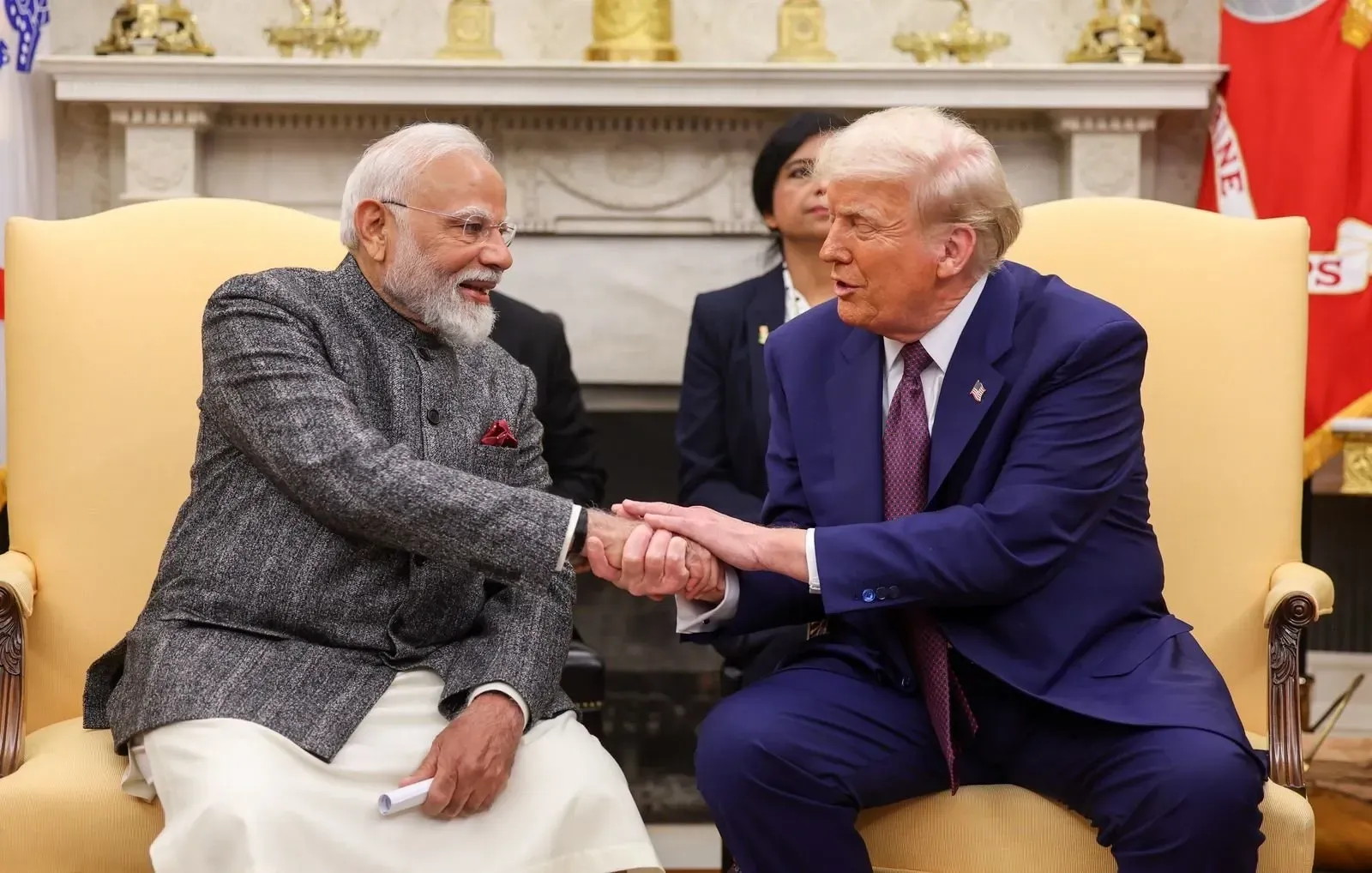
Despite the tough rhetoric, Trump’s comments also reflected the paradoxical nature of India-US ties under his leadership. Even while threatening higher tariffs, he praised Modi personally and highlighted what he has previously called a “special relationship” between the two countries.
After the August tariff hike, Trump had said he would “always be friends” with Modi. The Indian Prime Minister, in turn, publicly said he “appreciated” Trump’s positive assessment of bilateral ties, signalling a willingness to keep diplomatic channels open despite policy disagreements.
What’s at Stake for India
Russia remains India’s largest oil supplier, a position cemented after Western sanctions reshaped global energy flows. For India, discounted Russian crude has helped manage inflation and protect consumers in a volatile global market.
However, Trump’s renewed tariff threat raises the risk of further economic fallout. Higher US tariffs could hit key Indian export sectors and complicate broader trade talks, potentially adding friction to what has otherwise been a strategically important partnership.
As Washington intensifies pressure over Russian oil, New Delhi faces a delicate balancing act—defending its economic interests while navigating an increasingly unpredictable US trade posture.