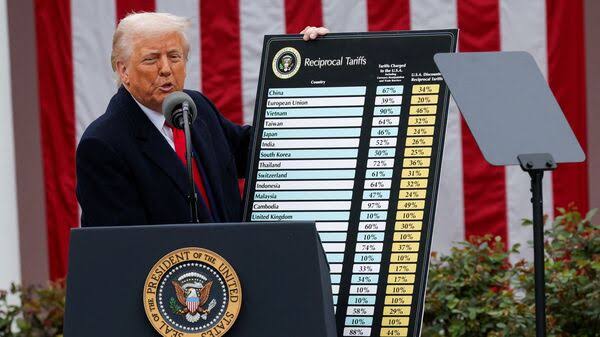
President Donald Trump has once again warned that the United States will impose tariffs on semiconductor imports from companies that continue to manufacture abroad rather than invest in local production. The proposed duties, described as “fairly substantial,” are part of a broader push to reduce reliance on overseas supply chains and bolster domestic manufacturing capacity.
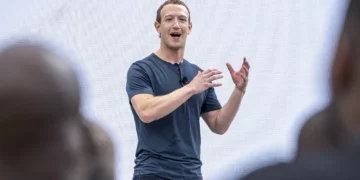
The announcement came during a White House dinner on Thursday, where Trump met with more than two dozen technology leaders, including Apple CEO Tim Cook, Meta CEO Mark Zuckerberg, Oracle CEO Safra Catz, OpenAI’s Sam Altman, and Google co-founder Sergey Brin.
Apple Positioned for Exemption
Trump made clear that companies investing heavily in U.S. operations would avoid the new tariffs. Apple, which earlier this year pledged $500 billion for domestic projects and later added another $100 billion, appears to be in a strong position to benefit from that exemption.
The President pointed to Cook as an example of an executive whose company has aligned with Washington’s expectations for investment in critical industries.
Longstanding Push for Onshoring Chips
The United States has spent years working to rebuild its semiconductor production capacity, a sector historically dominated by Asia. The urgency intensified after the pandemic exposed global supply chain weaknesses, particularly in chips essential to electronics, vehicles, and defense systems.
Since 2020, industry giants such as TSMC and Samsung Electronics have committed to multibillion-dollar U.S. projects, building advanced plants in states like Arizona and Texas. These investments are seen as crucial to national security and are expected to qualify for exemptions under Trump’s plan.
Tariff Details Remain Unclear
While Trump emphasized that tariffs are imminent, he avoided specifics about their scope or structure. He noted that companies “building or planning” facilities in the U.S. would not be targeted, but left unanswered questions about timelines, product coverage, and enforcement mechanisms.
Industry experts suggest that the uncertainty could complicate corporate planning. Many companies rely on global partnerships and intricate supply chains, raising questions about how Washington will define compliance.
A White House Dinner with Tech Leaders
The dinner served not only as a platform for Trump to deliver his tariff message but also as a rare gathering of influential figures across the tech landscape.
Executives engaged with administration officials on topics beyond semiconductors, including artificial intelligence (AI) and broader economic growth. Attendees such as Altman and Brin acknowledged the administration’s focus on AI policy, reflecting an increasingly collaborative tone between Silicon Valley and the White House.
Musk’s Notable Absence
Tesla and SpaceX CEO Elon Musk, who has had a tense relationship with Trump in recent months, was not at the event. Musk later stated on X that he had received an invitation but was unable to attend, sending a representative instead. His absence underscored the complex ties between Trump and one of the most prominent figures in the tech world.
First Lady’s AI Education Initiative
Earlier in the day, First Lady Melania Trump hosted the second session of the White House Task Force on Artificial Intelligence Education. Joined by senior officials and industry leaders, she emphasized preparing the next generation to thrive in an AI-driven economy.
While championing AI’s potential for education and innovation, she also stressed the importance of responsible development. Her remarks highlighted the administration’s dual strategy of embracing cutting-edge technologies while urging caution over risks.
Balancing Pressure and Incentives
Trump’s tariff warning reflects a two-pronged approach: applying pressure through trade penalties while offering relief and advantages to companies that commit to U.S. investment. The policy is designed to accelerate reshoring of critical industries while strengthening America’s competitive edge in AI and emerging technologies.
For companies like Apple, TSMC, and Samsung, this direction represents opportunity. For others, however, the lack of clear rules could mean facing costly trade barriers in the near future.