Artificial intelligence is no longer just powering chatbots, search engines, and futuristic apps — it is now becoming a key subject of global diplomacy.
In a major development that could reshape the global technology landscape, the United States and China are reportedly exploring the possibility of launching official discussions focused on AI. The move comes as tensions between the two superpowers continue to grow over trade, semiconductors, and technological dominance.
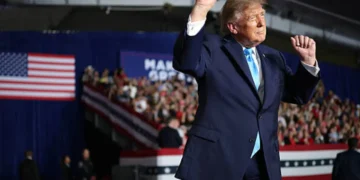
According to a report by the Wall Street Journal, the proposed AI talks may be included in next week’s summit in Beijing between US President Donald Trump and Chinese President Xi Jinping.
If the discussions materialize, they could mark the beginning of a new chapter in the US-China relationship — one where artificial intelligence becomes as strategically important as trade deals, military power, and global influence.

Credits: Reuters
The New Cold War Is Being Fought With AI
For years, Washington and Beijing have battled over tariffs, supply chains, telecom infrastructure, and semiconductor access. But AI has quickly emerged as the most important — and most unpredictable — front in the rivalry.
Both countries are racing to dominate technologies that could define the next decade, from generative AI and robotics to autonomous weapons and advanced computing systems. The stakes are enormous. Whoever leads in AI could gain a massive edge in economic growth, defense capabilities, scientific research, and global influence.
The United States currently holds a strong lead in cutting-edge AI innovation, thanks to companies like OpenAI, Google, Meta, and Anthropic. Meanwhile, China has rapidly expanded its AI ecosystem with support from tech giants such as Baidu, Alibaba, Tencent, and SenseTime, backed heavily by state-led investments.
What was once a corporate race has now evolved into a geopolitical showdown.
Trump Wants To Remind China Who’s Ahead
President Trump has already made it clear that the US sees itself as the global leader in artificial intelligence.
Earlier this week, Trump said he plans to remind Xi Jinping that America remains ahead in AI as both nations continue to navigate tensions surrounding technology and trade. The statement reflects Washington’s growing confidence following rapid advancements in generative AI and large-scale enterprise adoption across industries.
At the same time, the US has tightened restrictions on advanced chip exports to China in an effort to slow Beijing’s progress in high-performance computing and AI model development.
That has turned AI into more than just a technological competition — it is now deeply tied to national security and economic strategy.
Treasury Secretary Scott Bessent To Lead Proposed Talks
The Wall Street Journal report stated that US Treasury Secretary Scott Bessent is expected to lead the American side in the proposed discussions. China, however, has not yet named its counterpart.
The Treasury Department’s involvement suggests these talks may stretch far beyond technology alone. AI is increasingly influencing financial markets, industrial policy, global investments, and international supply chains.
The discussions could potentially cover everything from AI regulations and safety standards to export controls and cross-border technology investments.
Even the possibility of such talks shows how seriously governments are beginning to treat artificial intelligence.
Cooperation Or Confrontation?
Despite the fierce competition, both countries also understand that AI poses risks too big to ignore.
Experts worldwide have raised alarms over misinformation, deepfakes, cyber threats, job displacement, and the rise of autonomous military systems powered by AI. Without some level of international coordination, the rapid development of the technology could create serious global challenges.
That is what makes the proposed talks so significant.
The US and China may be rivals, but they also recognize that completely unchecked AI development could become dangerous for everyone. Establishing direct communication channels on AI could help prevent misunderstandings and reduce risks in an increasingly tense geopolitical environment.
Still, deep mistrust remains. Relations between the two nations continue to be strained over tariffs, semiconductor bans, Taiwan, and broader strategic competition. Any meaningful cooperation on AI will likely be difficult and highly complex.

Credits: 24 News HD
Why The World Is Watching Closely
While Reuters said it could not independently verify the Wall Street Journal report, the development underscores one reality: artificial intelligence is now at the center of global power politics.
The outcome of these potential talks could influence everything from the future of AI regulation and chip supply chains to military technology and international business.
More importantly, it signals that the battle for AI supremacy is no longer confined to Silicon Valley or Chinese tech hubs. It is now unfolding at the highest levels of global diplomacy.
And as Washington and Beijing prepare for a potentially pivotal summit, the world will be watching to see whether AI becomes the next major flashpoint between the two superpowers — or the rare issue that pushes them toward dialogue instead of confrontation.