A long-running legal battle between Indian startup Devas Multimedia and Antrix Corporation, the commercial arm of the Indian Space Research Organisation (ISRO), has taken another turn in the United States. A US appeals court has upheld a 2020 order confirming a $565.2 million International Chamber of Commerce (ICC) arbitration award against Antrix. With interest accumulating over the years, the compensation claim is now worth more than $1.2 billion.
The US Court of Appeals for the Ninth Circuit, in an opinion issued on August 12, ruled that a federal court in Washington had jurisdiction to consider the arbitration award. The court rejected Antrix’s argument that it should be protected from US proceedings as a foreign sovereign entity.
Credits: Swarajya
Why the US Court Accepted the Case
The Ninth Circuit relied on an exception under the Foreign Sovereign Immunities Act (FSIA). The court held that Antrix could not claim immunity because the dispute involved an arbitration award governed by a treaty applicable to the United States.
The court also pointed to the New York Convention, an international framework that allows arbitration awards to be recognised and enforced across participating countries. India is a signatory to the convention.
Antrix had argued that the dispute should be dealt with in India. However, the appeals court noted that Indian courts could not order the seizure of assets located in the United States to enforce an arbitration award.
Antrix had also agreed in the original contract that an arbitration award could be entered in any court of competent jurisdiction, weakening its argument that proceedings in the US were unexpected.
Appeals Court Gives Antrix Partial Relief
While the ruling largely supports Devas’s efforts to enforce the award, the Ninth Circuit also granted Antrix some relief.
The court found that the district court had gone too far by allowing Mauritius-based shareholders of the now-liquidated Devas Multimedia to seize Antrix assets in the US while confirming the ICC award.
More importantly, the appeals court sent back to the district court the question of whether the US can enforce an arbitration award that Indian courts have already set aside.
This issue is crucial because the Delhi High Court had annulled the ICC award, and the Indian Supreme Court later upheld the relevant decisions. The question now is whether that Indian ruling prevents US courts from recognising and enforcing the arbitration award.
How the Devas-Antrix Dispute Began
The controversy dates back to a 2005 agreement between Devas Multimedia and Antrix. Under the deal, ISRO was supposed to lease two communication satellites to Devas for 12 years for around Rs 167 crore.
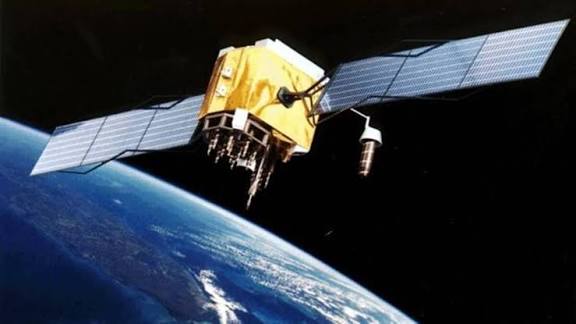
Devas planned to use the S-band transponders on the GSAT-6 and GSAT-6A satellites to provide multimedia services to mobile users in India.
The agreement was cancelled in February 2011 by the then UPA government. Authorities cited the need to reserve the spectrum for strategic and security requirements. The deal subsequently came under intense scrutiny and was described as a controversial or “sweetheart” arrangement.
After the NDA government came to power in 2014, Indian agencies investigated the transaction. Meanwhile, Devas and its foreign investors began pursuing compensation through international arbitration.
The ICC awarded Devas $565.2 million in 2015. Deutsche Telekom separately received around $101 million, while Mauritius-based investors were awarded approximately $111 million through international proceedings.
Credits: Moneycontrol
A Battle Far From Over
The dispute has continued across multiple jurisdictions for more than a decade. Devas was ordered to be liquidated by India’s National Company Law Tribunal in 2021 after allegations of fraud, a decision upheld by the Supreme Court in 2022.
The US litigation also took several twists. In 2023, the Ninth Circuit initially ruled in Antrix’s favour. However, the US Supreme Court overturned that approach in June 2025, holding that a foreign entity can be sued in US courts when an applicable FSIA immunity exception exists and proper service has been made.
The latest Ninth Circuit ruling therefore represents another important victory for Devas, but it does not end the dispute. The district court must still determine whether the ICC award can be enforced in the US despite its annulment by Indian courts.
For now, a decade-old satellite deal has evolved into a billion-dollar international legal battle spanning India, the US and multiple arbitration forums.