WeWork India received a major legal boost on December 1 after the Bombay High Court upheld the Securities and Exchange Board of India’s (SEBI) approval for its ₹3,000 crore initial public offering (IPO). The ruling comes after multiple petitions alleged that SEBI had overlooked critical disclosure lapses in the draft red herring prospectus (DRHP). With the court dismissing the objections, the path now seems clearer for the flexible workspace operator’s public market journey.

Credits: LiveLaw
The Legal Challenge: Claims of Disclosure Failures
According to reports by Bar & Bench and Live Law, petitioners had argued that WeWork India and SEBI failed to disclose material information, including ongoing criminal proceedings under the Prevention of Money Laundering Act (PMLA). One petitioner, Vinay Bansal, claimed the DRHP contained misleading statements and omitted key risks that investors needed to make informed decisions.
Bansal further alleged that the company had overstated its financial health and growth projections despite accumulated losses and declining net worth. Another petition filed by Hemant Kulshrestha raised similar concerns and argued that investors must not suffer due to gaps in disclosures or ambiguity regarding the company’s litigation history.
Court Rejects Pleas and Imposes Penalty
A division bench of Justices R.I. Chagla and Farhan Parvez Dubash dismissed the petitions, stating there was no basis to interfere with SEBI’s decision or WeWork India’s IPO approval. The court also ordered Bansal to pay a penalty of ₹1 lakh to the Maharashtra Legal Services Authority (MLSA) within two weeks, citing lack of merit in his plea. Kulshrestha’s petition was dismissed as well, although no fine was imposed in that case.
The bench emphasized that SEBI’s approval process involves a comprehensive examination of disclosures, and unless clear evidence of wrongdoing is presented, judicial intervention is unwarranted.
Concerns Over WeWork’s Global Branding and Licensing Structure
One of the notable points raised by petitioners centered around WeWork India’s relationship with the global WeWork brand. Bansal argued that the prospectus created an impression that the Indian entity enjoyed financial backing or operational assurance from the global WeWork network, which has faced bankruptcy challenges abroad.
However, WeWork India primarily licenses brand rights rather than being part of an integrated global structure. Petitioners claimed that this difference was not sufficiently highlighted, potentially misleading investors into believing the IPO was backed by international balance sheets. The court, however, found no violation strong enough to invalidate SEBI’s approval.
Investor Response and IPO Details
WeWork India filed its DRHP on January 31, with the subscription window opening from October 3 to October 7. By the final day, investor sentiment appeared optimistic as the offer was subscribed 1.15 times, buoyed mainly by interest from qualified institutional buyers (QIBs). QIBs oversubscribed their quota 1.79 times, retail investors contributed 61% of their reserved portion, while non-institutional investors subscribed to 23%.
The company officially debuted on Indian stock exchanges on October 10, marking a milestone moment not just for the company but for India’s evolving commercial real estate and coworking landscape.
What This Means Going Forward
The Bombay High Court’s ruling removes a significant overhang from WeWork India’s public listing narrative. While questions around financial sustainability and brand positioning may still exist within the market, the legal clarity offers the company a cleaner runway as it executes its growth strategy post-listing.
With investor interest showing early signs of confidence, the big question now is whether WeWork India can translate its IPO momentum into long-term profitability and shareholder value.
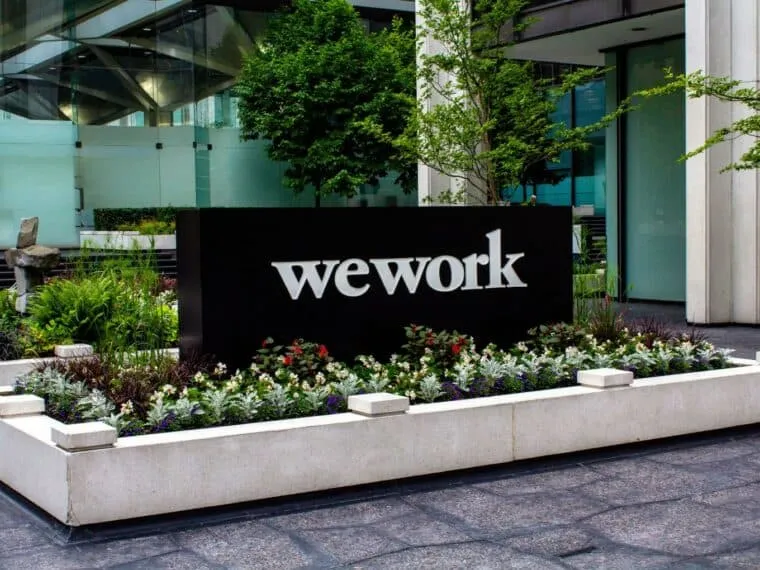
Credits: TechShots
Conclusion:
In conclusion, the Bombay High Court’s decision to uphold SEBI’s approval for WeWork India’s IPO marks a significant milestone in the company’s public market journey. With legal hurdles cleared and investor participation showing early confidence, WeWork India now has the opportunity to strengthen its position in the rapidly evolving coworking sector. However, the company will still need to demonstrate transparency, financial discipline, and operational resilience to justify investor faith post-listing. As the dust settles, the focus now shifts from courtroom scrutiny to market performance — where WeWork India must prove that its growth story matches its market ambitions.