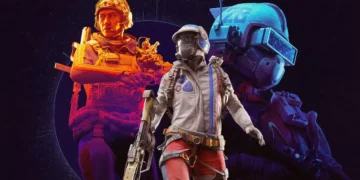
The White House is facing backlash after using imagery from Microsoft’s Halo video game series to promote immigration enforcement efforts. The move, which came shortly after the announcement of Halo: Combat Evolved’s remake, has been widely criticized for being insensitive, inappropriate, and potentially dehumanizing.
The controversy began when GameStop shared a playful post on X (formerly Twitter) celebrating the arrival of Halo on the PlayStation 5 — a major milestone for the formerly Xbox-exclusive franchise. The post jokingly declared “the end of the console wars,” referencing the long-standing rivalry between PlayStation and Xbox.
Soon after, the official White House account joined in, posting an AI-generated image of President Donald Trump dressed as Master Chief, Halo’s iconic protagonist. The image appeared to nod to Trump’s claims about ending multiple global conflicts during his presidency. While the post was likely meant as lighthearted or symbolic, it immediately drew criticism for blurring the boundaries between political messaging and entertainment culture.
Many social media users called the post unprofessional, arguing that it trivialized serious issues through meme-style content. Others accused the administration of misusing popular media to bolster its image.
Homeland Security’s Post Intensifies the Backlash
The controversy deepened when the Department of Homeland Security (DHS) joined the online conversation. Hours after the White House post, DHS shared a new image featuring Halo artwork accompanied by the phrase “Destroy the Flood” and a link to an Immigration and Customs Enforcement (ICE) recruitment page.
In the Halo universe, “the Flood” represents a parasitic alien race that consumes entire civilizations. The use of this term in the context of immigration enforcement immediately sparked outrage. Critics said the comparison equated immigrants with a hostile alien threat, evoking historically harmful propaganda that portrayed certain groups as “invaders” or “pests.”
The post was condemned by historians, activists, and human rights organizations for promoting dehumanizing imagery. Many pointed out that such symbolism has been used in the past to justify exclusionary and violent policies, and warned that this kind of rhetoric from a government agency was dangerous.
What may have started as an attempt to create a viral moment quickly turned into a major controversy about ethics, public communication, and the misuse of pop culture in political messaging.
Microsoft’s Response — or Lack Thereof
Amid growing public criticism, Microsoft, which owns the Halo franchise, has chosen not to comment on the matter. The company’s silence has frustrated fans and digital rights advocates who expected Microsoft to defend its intellectual property.
Observers have noted that the tech giant has historically been quick to enforce copyright protection in less consequential cases, such as fan projects, but has remained quiet when government agencies misuse its content. Some have compared Microsoft’s reaction to Nintendo’s similar silence years ago when federal agencies used Pokémon characters in unrelated promotional campaigns.
The lack of response has fueled debate about corporate accountability, with many questioning whether major entertainment companies have an obligation to speak out when their creations are used to promote divisive or harmful narratives.
Fan Community Voices Outrage
The Halo fan community has been vocal in its disapproval of the government’s use of the game’s imagery. While official discussion forums like the Halo Discord have reportedly limited political debates, independent fan platforms have allowed open conversation about the controversy.
Moderators of the Halo subreddit temporarily suspended their usual ban on political content, citing the relevance of the issue to the franchise itself. The discussion threads were quickly filled with criticism of both the White House and DHS, with fans expressing disappointment and concern over the association between Halo and government propaganda.
Many fans emphasized that Halo’s narrative themes — centered on unity, sacrifice, and defending humanity — stood in stark contrast to the anti-immigration undertones of the government’s posts. Others warned that such political use of entertainment could damage the reputation of the game and its community.
GameStop Draws Further Criticism
Adding another twist, GameStop — which initially posted the joke that sparked the conversation — retweeted the White House’s image of Trump as Master Chief. The company added a follow-up meme featuring Senator JD Vance edited as Cortana, Master Chief’s AI companion.
The move drew immediate backlash. Social media users accused GameStop of promoting divisive propaganda and using controversy for attention. The retailer has not commented on whether its retweet was intended as satire or support, leaving many confused and frustrated.