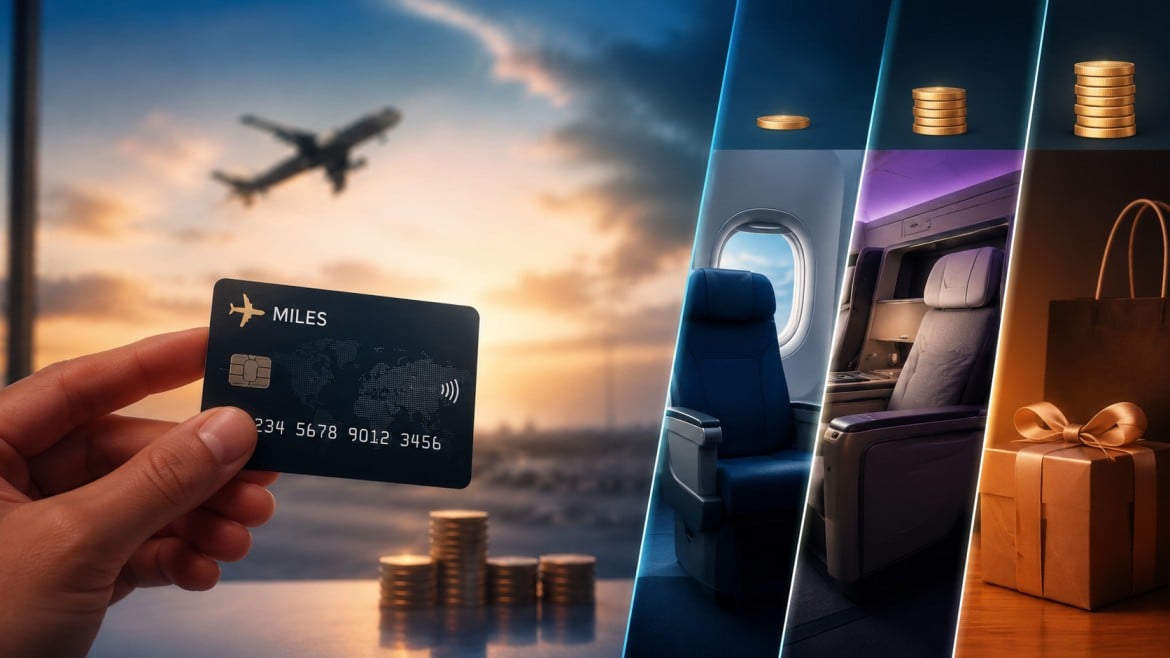
Airlines like to market miles as rewards, but they behave very differently from cash. Ten thousand miles in one loyalty programme can buy a return flight, while the same number elsewhere may not even cover a one way ticket. A traveller who redeems points for a business class seat might receive several times more value than someone using the same balance for gift cards or online shopping. Even within a single airline, the buying power of miles can change from one day to the next.
That changing value often surprises travellers who assume loyalty points work like money sitting in a bank account. In reality, airline miles operate more like private currencies created and controlled by airlines. Every carrier decides how many miles a flight will cost, how many reward seats will be released and how points can be redeemed. Those decisions mean the value of miles is constantly moving, even if the number displayed in a customer’s account never changes.
As airline loyalty programmes have grown into multi billion dollar businesses, understanding how miles are priced has become almost as important as earning them. For frequent travellers, the difference between a good redemption and a poor one can amount to hundreds, or even thousands, of dollars from exactly the same points balance.
MILES ARE NOT MONEY
Unlike traditional currencies, airline miles have no fixed exchange rate. Their value depends entirely on how an airline prices its rewards at any given time. That makes miles a floating currency whose purchasing power changes according to airline policies rather than central banks or financial markets.
Most major airlines have moved away from fixed award charts in favour of dynamic pricing. Instead of charging a set number of miles for every route, airlines adjust redemption costs according to demand, travel dates, ticket prices and remaining seat availability.
A domestic flight that requires 7,500 miles on a quiet Tuesday morning could easily cost 20,000 miles or more during a holiday weekend. The traveller is still booking the same route on the same airline, yet the value received from every mile changes simply because demand has increased.
This pricing model mirrors how airlines already sell cash tickets. When more people want to travel, ticket prices rise. Award tickets increasingly follow the same pattern, with mileage requirements climbing alongside fares.
That means travellers cannot judge the value of miles simply by looking at their account balance. Two people holding exactly 50,000 miles could receive very different value depending on when, where and how they choose to redeem them.
WHY SOME MILES GO FURTHER
Not all airline loyalty programmes offer the same value. Every airline builds its own redemption rules, airline partnerships and pricing structure, making some currencies much stronger than others.
American Airlines AAdvantage miles, for example, often deliver higher average redemption values than several competing programmes because of access to partner airlines and competitive award pricing on selected routes. United MileagePlus and Delta SkyMiles remain widely used, although their redemption values can vary considerably depending on travel dates and destination.
Transferable credit card rewards add another layer of flexibility. Programmes such as Citi ThankYou Points, American Express Membership Rewards, Chase Ultimate Rewards and Capital One Miles allow customers to transfer points into multiple airline partners rather than being tied to a single carrier.
This flexibility lets travellers compare redemption rates before moving their points. If one airline charges 15,000 miles for a domestic flight while another partner offers the same journey for 8,000 miles, transferring points to the lower priced programme can almost double the value received.
Premium cabin travel often produces the largest differences in value.
Economy tickets usually deliver modest returns because airlines frequently adjust mileage prices to stay close to cash fares. Business and first class seats work differently. Their cash prices can reach several thousand dollars, while award pricing often rises at a slower pace.
That is why experienced travellers frequently reserve points for premium cabins rather than economy travel. A business class ticket selling for several thousand dollars may require only twice the miles needed for an economy seat, creating a much stronger return per mile redeemed.
The opposite is usually true for non travel rewards. Redeeming airline miles for gift cards, merchandise, magazine subscriptions or shopping credits generally produces much lower value than booking flights. While those options provide convenience, they rarely make full use of what the loyalty currency can buy.
THE HIDDEN RISKS OF HOLDING MILES
Many travellers focus on collecting miles without thinking about how their value can change over time. Unlike money held in a savings account, airline miles do not earn interest and are not protected from programme changes.
Airlines regularly update redemption prices, sometimes without much notice. A route that once required 50,000 miles may later cost 70,000 or 90,000 miles, even if the cash fare remains largely unchanged. When that happens, travellers effectively lose purchasing power despite holding exactly the same number of miles.
Limited award availability creates another challenge. Airlines release only a certain number of seats that can be booked using miles. Once those seats disappear, customers may face much higher redemption prices or find no award availability at all.
This shortage becomes especially noticeable during school holidays, major sporting events and popular travel periods when demand rises sharply. Even travellers with large mileage balances may struggle to secure the flights they want unless they book well in advance or remain flexible with travel dates.
Airline partnerships also shape the value of miles. Some loyalty programmes allow members to redeem points across large airline alliances, opening access to hundreds of destinations. Others have fewer partner airlines, limiting redemption choices and making it harder to extract strong value.
Credit card issuers have recognised this difference by building transferable rewards systems instead of linking customers to one airline. A flexible points balance gives cardholders more options when redemption prices differ between programmes.
The rapid growth of travel rewards credit cards has also changed how miles enter the system. Airlines no longer rely mainly on passengers flying to issue points. Millions of miles are now earned through grocery shopping, restaurant spending, fuel purchases and monthly household bills. Banks purchase large quantities of miles from airlines before distributing them through card rewards, creating an important source of revenue for airline loyalty businesses.
That growth has increased competition among loyalty programmes, but it has also made redemption pricing more fluid. As more points circulate, airlines retain full control over how many miles are required for each reward.