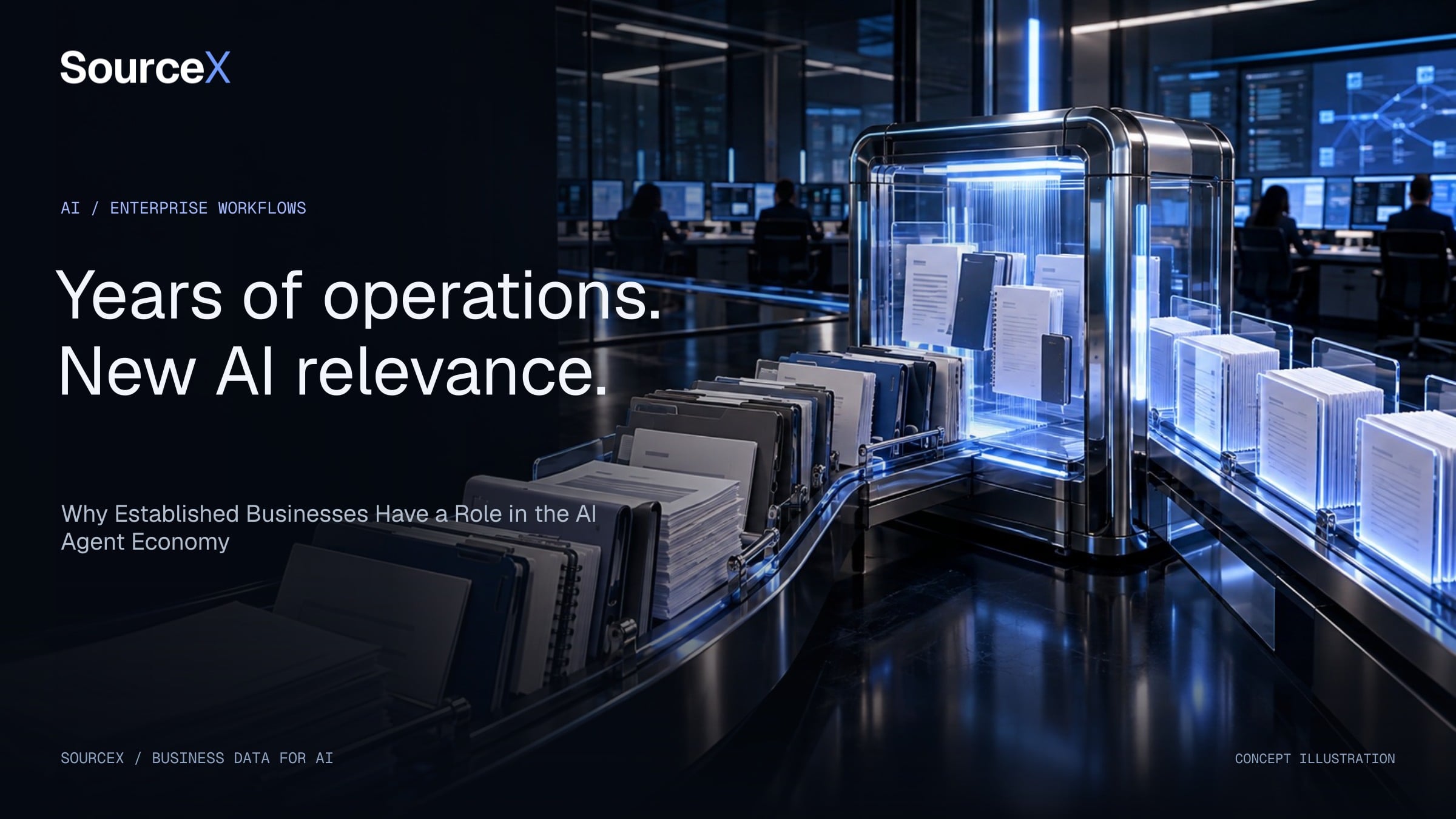
Concept illustration — Years of operations. New AI relevance.
A company does not need to build a foundation model to have something relevant to AI development. It may have spent a decade doing a particular kind of work and recording how that work unfolded.
Its teams answered difficult support questions, handled operational exceptions, reviewed engineering changes and documented internal procedures. Some of that history may be useful to a developer trying to understand or test a similar workflow, provided a suitable license and the necessary protections are possible.
That creates a question for founders and business networks: which established companies have operational knowledge worth assessing?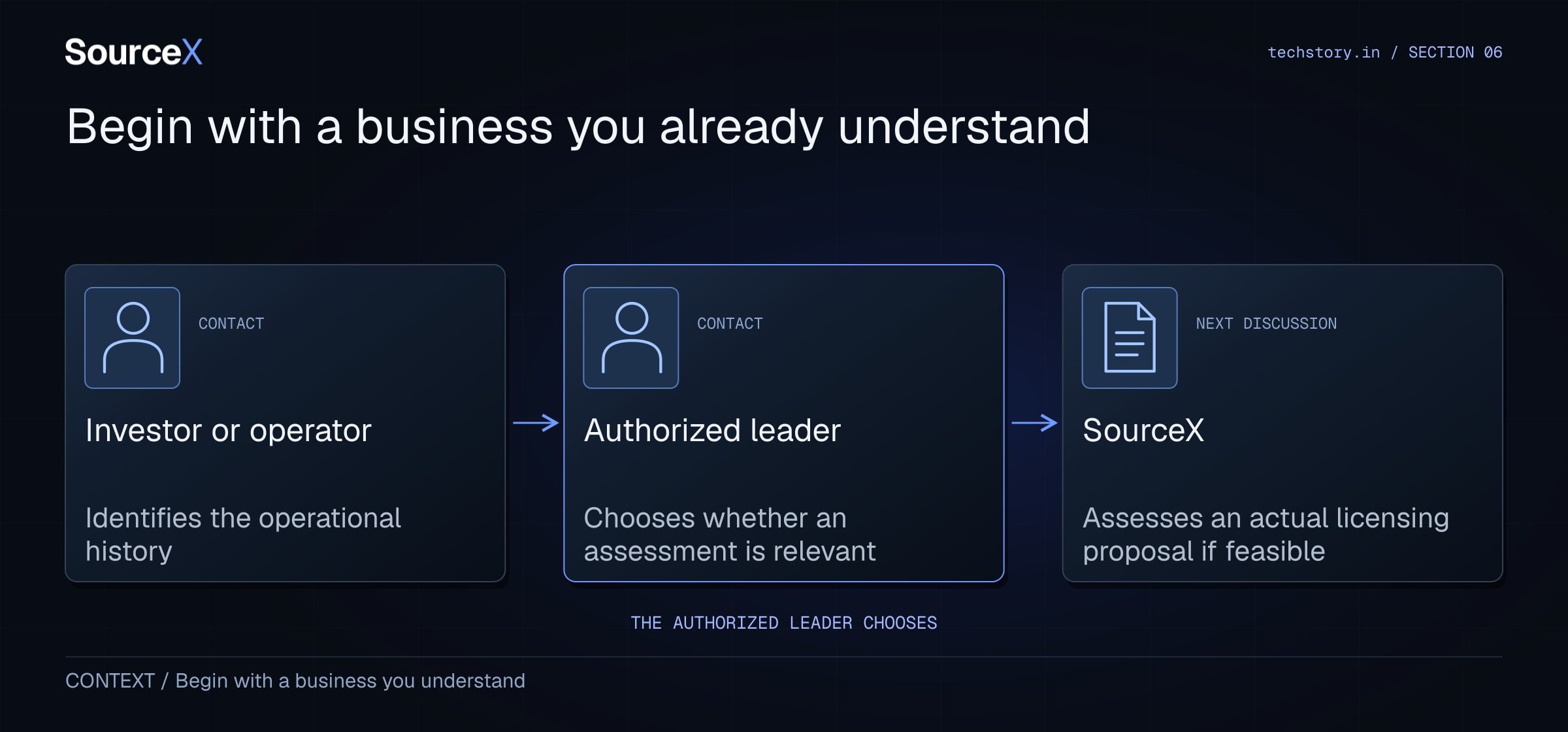
The experience is already there
Imagine a hypothetical business software company that grew to 120 employees. Over several years, its teams handled implementation problems across many customer environments. The product documentation records how deployment should work. The support history may also explain what the team did when reality differed from the manual.
Illustration — An established company already has a work history. Illustrative business from the article, not a SourceX customer or a licensing offer.
That difference can matter when considering examples for AI training or evaluation. The relevant material might capture incomplete requests, competing constraints and the point where a person needed to approve the next step.
The example is illustrative. It is not a SourceX customer story, an offer to buy those records or a suggestion that all such material can be shared. Its purpose is to show why ordinary business history can raise a useful assessment question.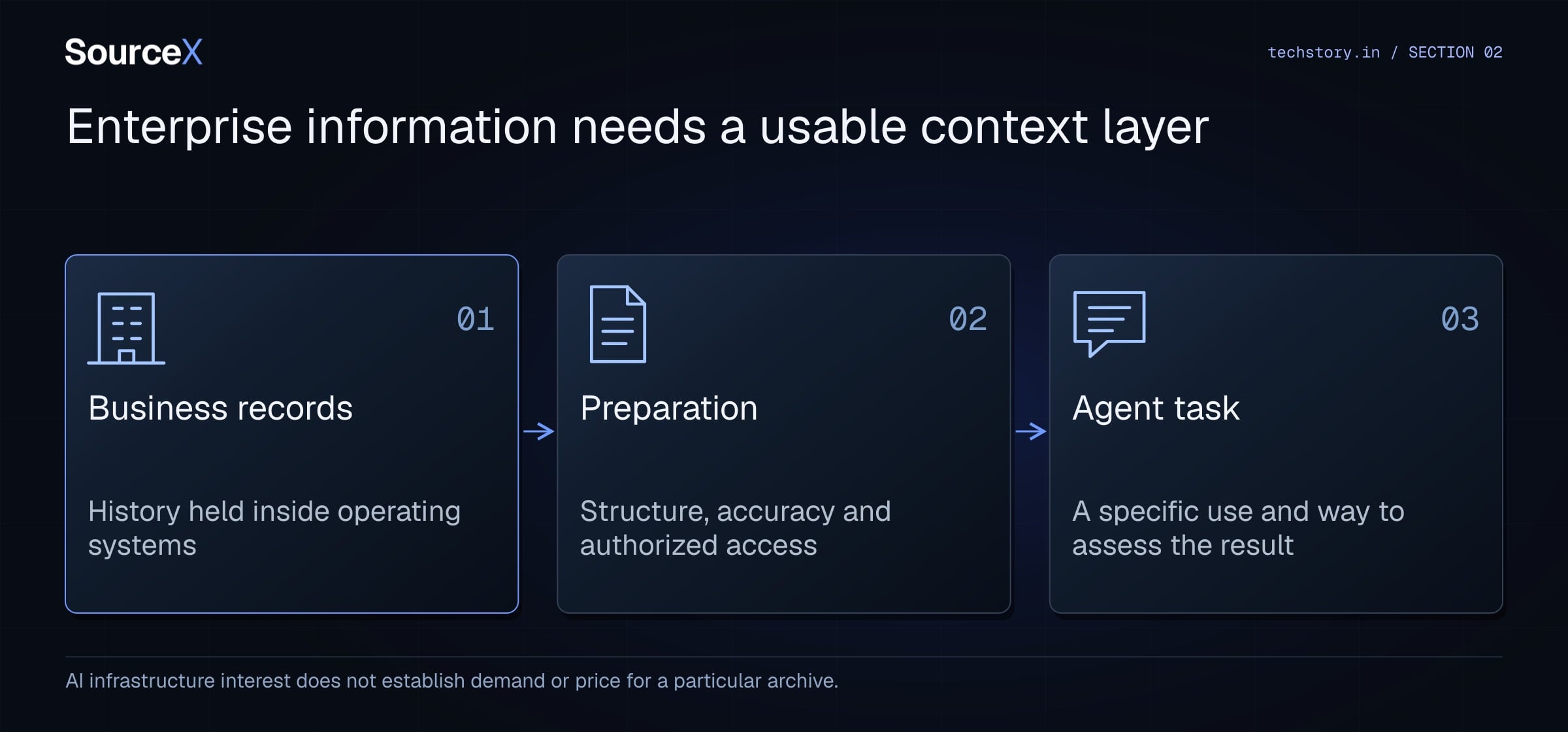
AI infrastructure is paying attention to business context
NVIDIA’s AI Data Platform describes infrastructure for preparing and connecting enterprise information to agentic applications. It is evidence of investment in the data layer around AI, rather than evidence of a particular dataset’s market price.
Illustration — Enterprise information needs a usable context layer. AI infrastructure interest does not establish demand or price for a particular archive.
The practical issue is understandable. An application working inside a business needs relevant, accurate context. A developer assessing the quality of such an application also needs a way to tell whether it handled the task appropriately.
Historical records may contribute to some of those uses. They still need to be examined against a specific purpose. The word proprietary does not by itself make a collection useful or valuable.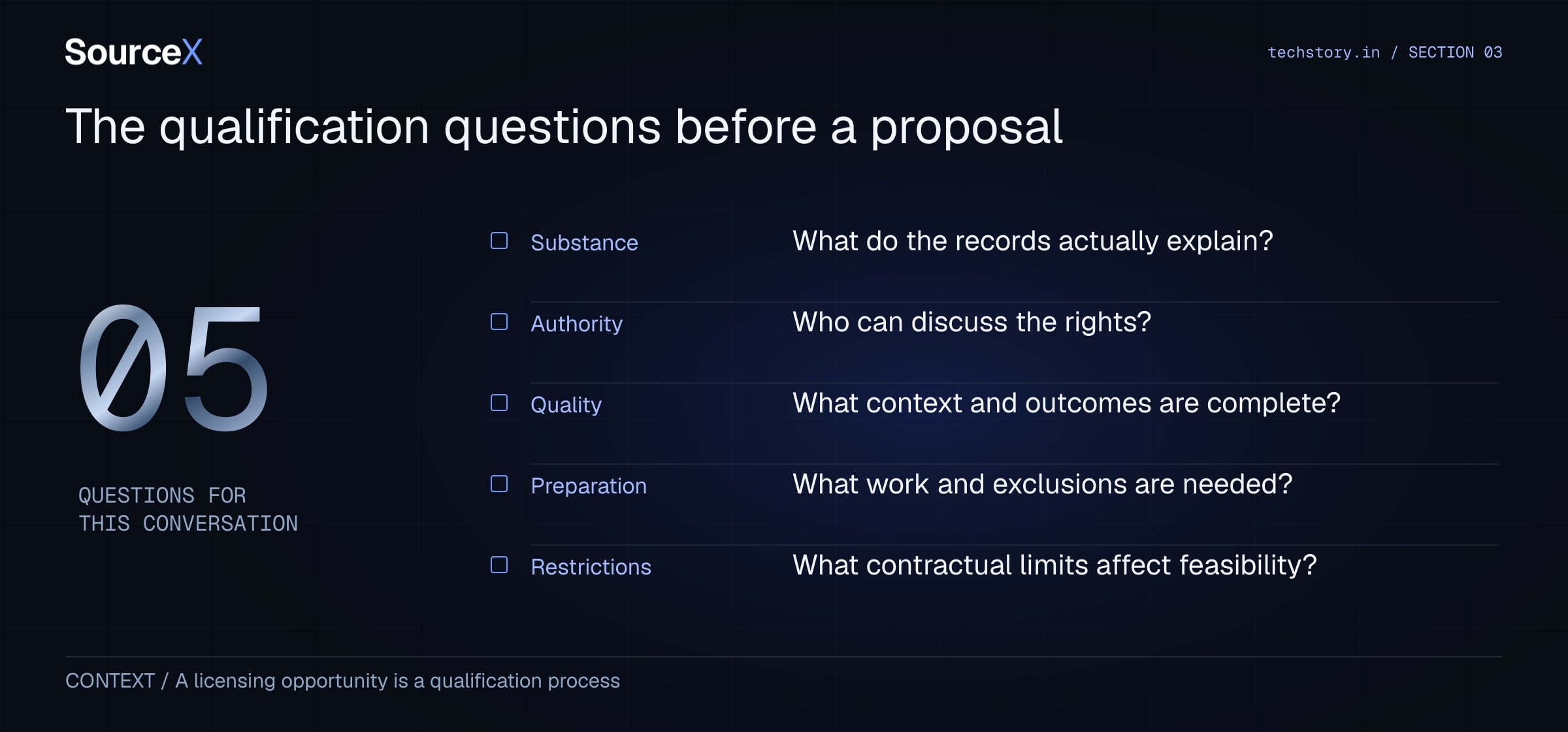
A licensing opportunity is a qualification process
An initial assessment should establish what the company has, what the records explain and who can discuss the rights. Data quality, completeness, preparation costs and contractual restrictions all affect whether a proposal is feasible.
Illustration — The qualification questions before a proposal.
Company histories can also be fragmented. An acquired business may have moved records into a new system. A services company may possess files created for clients that control important rights. A wound-down company’s records may be subject to retention or disposal obligations.
These circumstances call for a careful review. They are reasons to begin with a descriptive inventory and the authorized decision-maker, rather than sending an archive around a network.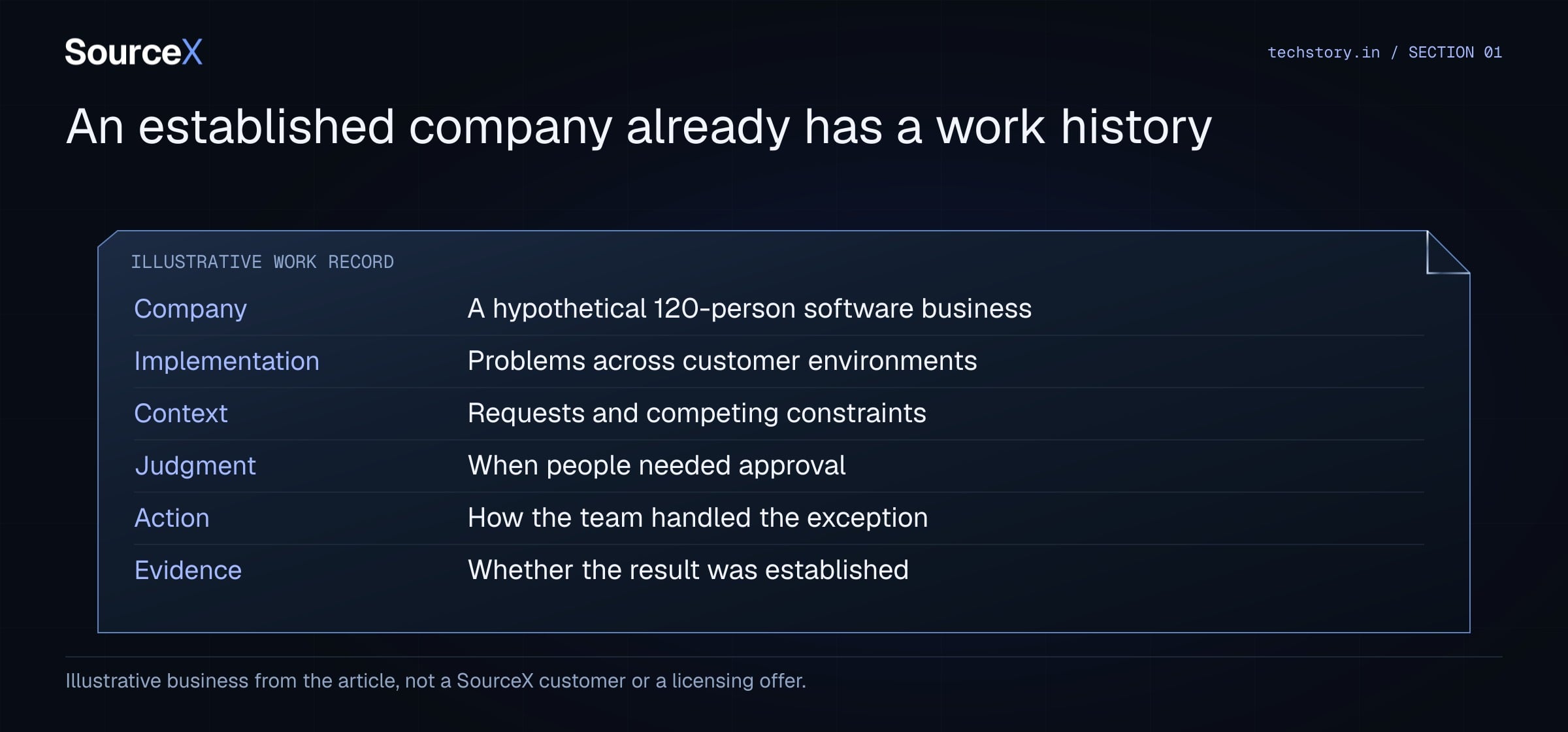
Where SourceX fits
SourceX pays qualifying companies to license approved operational data for AI training and evaluation. It handles agreements, preparation, delivery and payout under the relevant terms. The business approves what is licensed and how it may be used.
Illustration — SourceX manages the defined licensing process. Company and data criteria apply, including the stated English-language condition for Indian businesses.
Its published company criteria include 50 or more full-time employees at peak, supported geography and appropriate rights. For Indian companies, the sourcing criteria include at least 90% of the data being in English. Companies still need to pass the rest of the qualification process.
This creates a possible role for people who know business owners well. An investor, advisor, agency principal or former operator may be able to identify a company whose history fits the initial criteria and whose leadership wants to explore the opportunity.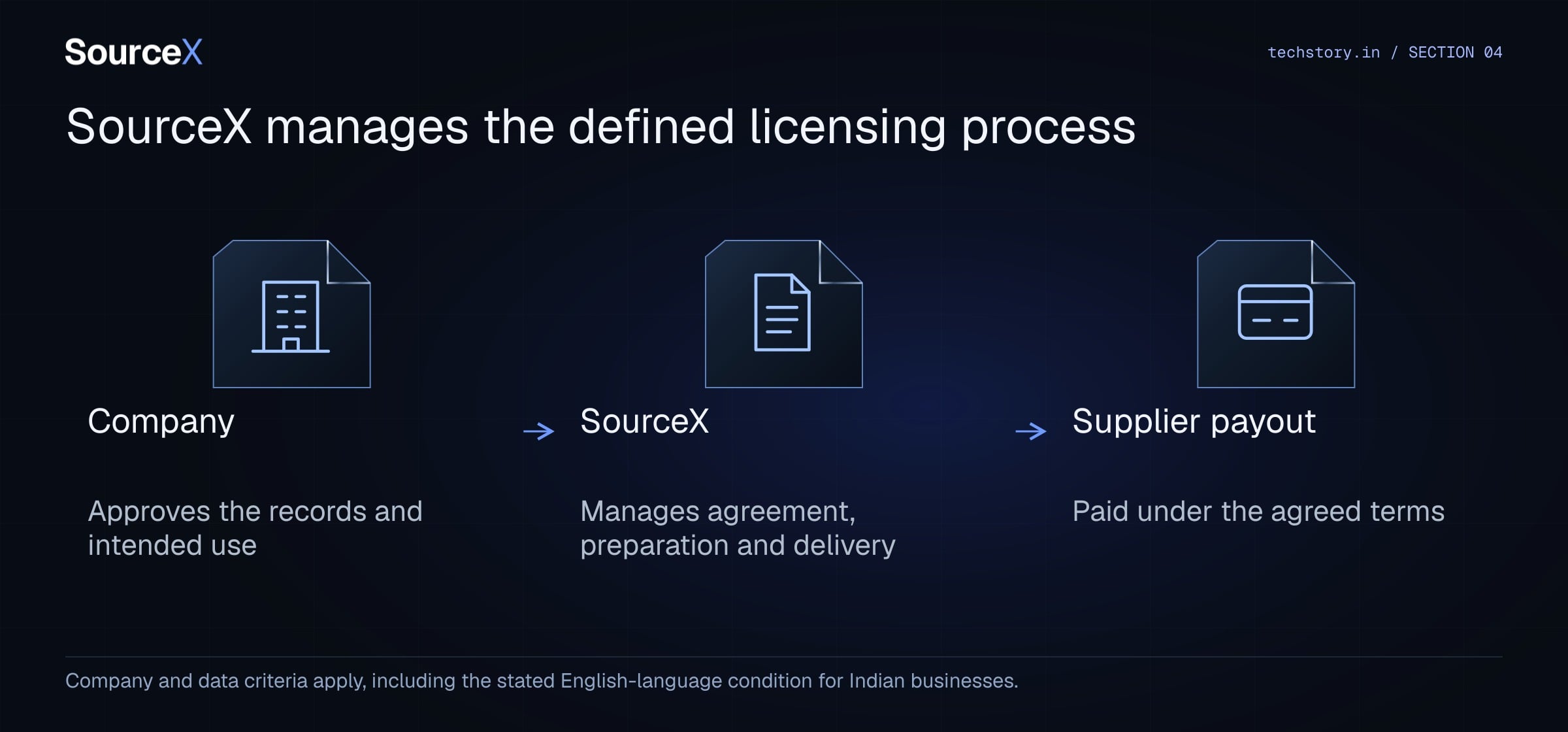
What an eligible introduction can earn
Under the SourceX referral program, the default reward is 25% of the actual supplier compensation SourceX pays the referred company, capped at $100,000 cumulatively per company. The partner reward is separate from the supplier’s agreed payout.
Illustration — A useful introduction is the start of a conditional reward. The maximum is not typical earnings. Required acceptance, payments, finance and partner conditions must be met.
The maximum is not a typical result or an earnings promise. A reward becomes payable only when the qualifying transaction and the required buyer acceptance, cleared payment, supplier payment and finance conditions are met, with required partner details supplied. Signed agreements may set different terms.
Partners should follow the current account, agreement and attribution process, disclose their potential compensation and obtain permission for the introduction. Existing relationships and duplicate referrals can affect eligibility.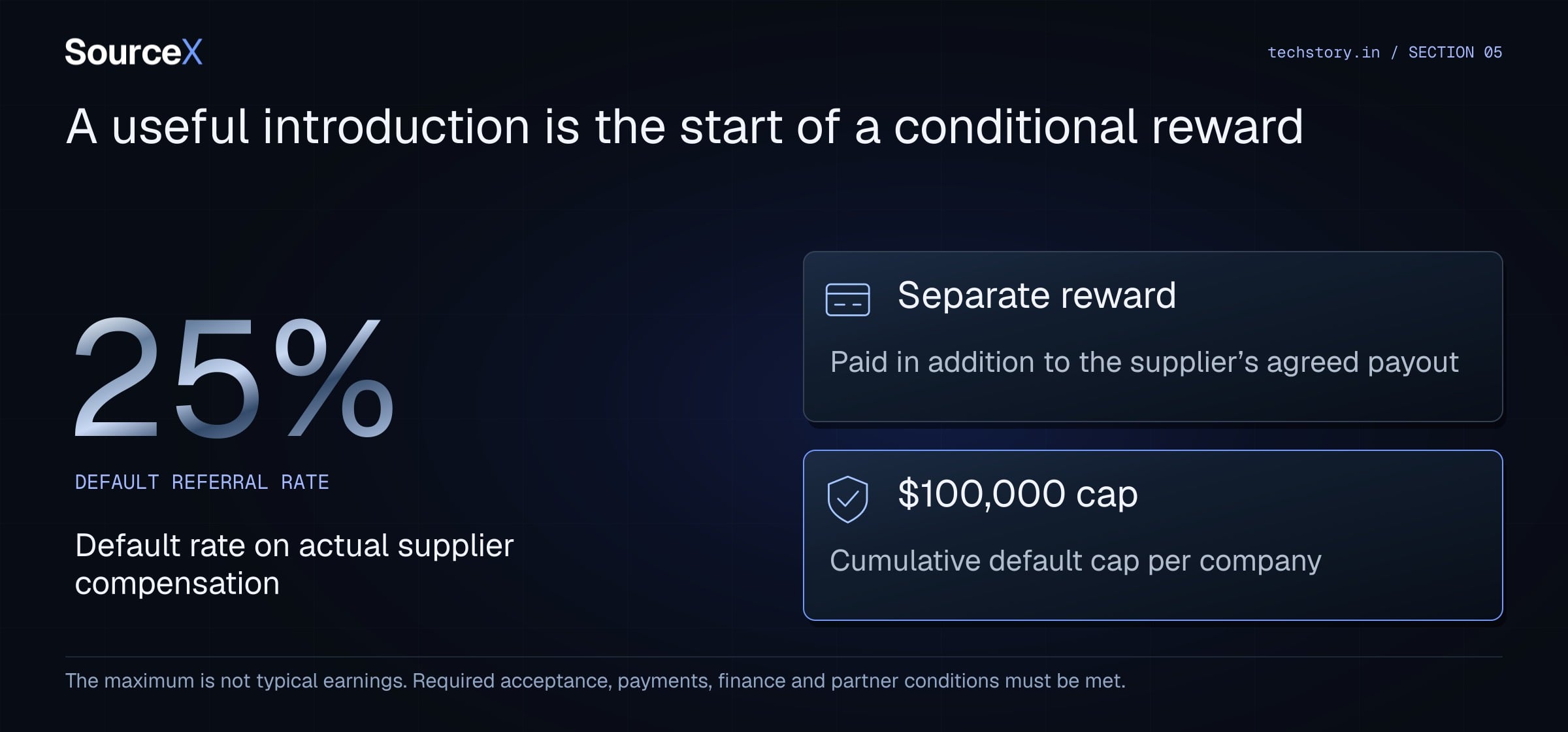
Begin with a business you understand
Choose a company whose operating history you know. Identify the kind of work its systems may document. Ask an authorized leader whether a paid licensing assessment would be relevant.
Illustration — Begin with a business you already understand.
That conversation does not require a new product launch or a speculative valuation. It gives an established business a way to examine whether years of its existing work can support an approved AI use and a concrete commercial agreement.
About the Founder
Noah Loul is the founder of SourceX, helping businesses monetize their proprietary data autonomously for AI training and development. His ambition is to build the world’s largest data infrastructure, powering today’s AI and tomorrow’s superintelligence.