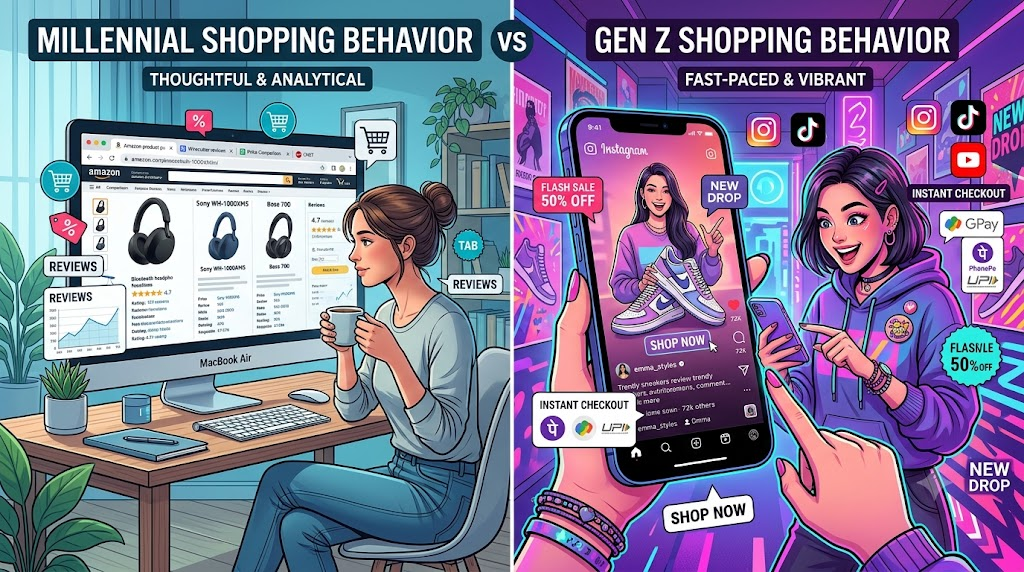
A Millennial is likely to compare prices, read reviews, and think twice before making a purchase. A Gen Z shopper, on the other hand, often discovers a product through a Reel or influencer post and checks out within minutes. They may use the same shopping apps, but their buying journeys are completely different.
For brands, this shift matters. A strategy that works for Millennials may fail to connect with Gen Z, and treating both generations the same way in marketing and checkout design risks losing one of them. It comes down to how each generation discovers products, builds trust, and decides when to buy.
Comparing Millennial and Gen Z Shopping Behaviour
| Behaviour | Millennials | Gen Z |
| Time spent on phone daily | Around 4 hours | Around 7 hours |
| Shopping decision style | Deliberate, research-led | Quick, impulse-driven |
| Primary discovery source | Shopping websites and reviews | Reels, influencers, peer content |
| Response to discounts | Value-conscious, plans around sales | Highly responsive, buys on impulse |
| Big-ticket purchases | Waits for income stability | Buys premium items early, often on EMI |
Key Differences Between Gen Z and Millennial Shoppers
While both generations shop online regularly, their expectations and buying behaviour differ in important ways. From product discovery to payment preferences and brand loyalty, these differences are shaping how businesses market, sell, and build lasting customer relationships.
Decision-Making Speed
Millennials were the first generation to bring shopping online, but they still carry habits from a pre-smartphone world. Many open multiple tabs, compare listings across two or three platforms, and read through reviews before adding anything to the cart. That caution comes from having shopped both offline and online long enough to know that not every listing matches what arrives at the door.
Gen Z skips most of that. Having grown up mobile-first, this generation treats a slow checkout as a dealbreaker rather than an inconvenience. If a purchase takes more than a few taps, they move on to a brand that makes it easier. Shopping does not feel like a separate task for them; it happens mid-scroll, between messages, without ever opening a dedicated shopping app first.
- Millennials – Compare across platforms, read reviews, and decide over hours or days
- Gen Z – Decide within minutes, often mid-scroll, with little tolerance for a slow checkout
Response to Discounts and Offers
Millennials plan around known sale periods and stick to brands they already trust, often shopping with the same two or three platforms out of habit. Their loyalty tends to build slowly and stay steady once earned.
Gen Z reacts differently to price. Flash sales, limited-time drops, and visible countdowns pull them in even without brand familiarity. Many young shoppers actively hunt for deals and offers before checkout, not because they are budget-conscious in the way Millennials are, but because chasing a good find has become part of the shopping experience itself.
- Millennials – Shop around planned sale periods, favour familiar and trusted platforms
- Gen Z – Respond to flash sales and countdowns, and buy on impulse even from unfamiliar brands
Product Discovery Channels
Ask a Millennial where they discovered a product, and the answer is often a shopping site, a search result, or a comparison article. Ask a Gen Z shopper, and the answer is usually a person, a creator, a friend’s story, or a Reel that showed up without being searched for at all.
This changes what convinces each generation to buy. Millennials respond to detailed reviews, ratings, and specifications. Gen Z responds to how a product looks in someone else’s hands, whether that person feels relatable rather than like an advertisement.
- Millennials – Discover through search engines, shopping sites, and comparison articles
- Gen Z – Discover through creators, Reels, and peer recommendations rather than active search
Timing of High-Value Purchases
Millennials typically waited for career stability before buying premium devices or big-ticket items, treating such purchases as a milestone. Gen Z rarely waits that long. Flexible payment options such as EMI, trade-ins, and Buy Now Pay Later have moved premium products onto Gen Z wishlists years earlier than they appeared for Millennials at the same age, since the cost is spread out rather than paid upfront.
- Millennials – Save up and wait for income stability before a big-ticket purchase
- Gen Z – Buy premium products earlier, aided by EMI, trade-in, and Buy Now Pay Later options
Purpose Behind Shopping
For Millennials, online shopping was originally about convenience, replacing trips to the store with a few clicks. For Gen Z, a purchase is closer to a form of self-expression. What they buy, and where they are seen buying it, says something about who they are, which is part of why individuality and brand identity carry more weight for this generation than for the one before it.
- Millennials – Shop mainly for convenience, valuing time saved over self-expression
- Gen Z – Shop as a form of identity and self-expression, not just a functional task
Wrapping Up
The difference between Millennial and Gen Z shopping is not that one generation shops more than the other; it is that they trust different signals and move at different speeds. Millennials still lean on comparison and research built from years of online and offline shopping. Gen Z moves on instinct, influence, and instant access, shaped by growing up with a phone in hand. Brands that recognise this split, rather than marketing to both with the same message, are the ones that will hold onto both audiences.