Before Apple and Samsung cemented their dominance, there was a time when LG was one of the biggest names in smartphones. From introducing innovative camera technologies to experimenting with daring form factors, the company consistently pushed boundaries. Yet innovation alone wasn’t enough to survive one of the most competitive consumer technology markets. After years of mounting losses, LG decided to exit the smartphone business, bringing an end to an era that had shaped the Android ecosystem for over a decade.
For years, LG Electronics was synonymous with innovation in consumer technology. Whether it was televisions, home appliances, displays, or smartphones, the South Korean giant earned a reputation for experimenting with bold ideas before many of its rivals. In the smartphone market especially, LG was once among the world’s biggest manufacturers, competing directly with Samsung, Apple, HTC, Sony, Motorola, and Nokia during one of the industry’s most exciting periods.
However, in April 2021, LG officially announced that it would shut down its smartphone business after nearly six years of continuous financial losses amounting to approximately $4.5 billion. The decision marked the end of a mobile division that had introduced several groundbreaking technologies but ultimately failed to translate innovation into sustainable profits.
The move wasn’t merely about abandoning smartphones. It reflected broader changes in the global technology industry, where only a handful of companies have managed to survive intense competition, shrinking profit margins, and rapidly changing consumer expectations.
Credits: The Hindu
LG’s Journey from Mobile Pioneer to Global Smartphone Brand
Long before smartphones became everyday essentials, LG was already a significant player in the mobile phone industry. During the feature phone era, the company built a reputation for producing stylish, durable, and feature-rich devices that appealed to consumers across Asia, Europe, and North America.
When Android emerged as a major operating system in the late 2000s, LG embraced the platform early. The company launched numerous Android-powered devices covering every price segment, from affordable entry-level phones to premium flagship models.
Its breakthrough came during the early 2010s.
By 2013, LG had become the world’s third-largest smartphone manufacturer behind Samsung and Apple. The success was driven by devices such as the Optimus G series and later the acclaimed LG G2, which earned praise from critics and consumers alike.
The G2 stood out because it challenged smartphone design conventions. Instead of placing power and volume buttons on the sides, LG positioned them on the back beneath the camera module. While unconventional, the design made sense ergonomically and showcased the company’s willingness to rethink smartphone usability.
The success of the G2 helped establish LG as one of Android’s most respected brands.
Innovation Was Always LG’s Greatest Strength
Unlike many smartphone companies that preferred gradual upgrades, LG often took risks by introducing entirely new concepts.
Several innovations first popularized by LG eventually became industry standards.
Ultra-Wide Cameras Before Everyone Else
Today, almost every premium smartphone features an ultra-wide camera. Apple, Samsung, Google, Xiaomi, and OnePlus all consider it an essential part of their camera systems.
LG, however, was among the earliest companies to embrace the concept.
Beginning with the LG G5 and later expanding across multiple models, the company demonstrated that users wanted more flexibility rather than simply increasing megapixel counts. The ultra-wide lens allowed photographers to capture landscapes, architecture, and group photos more effectively than traditional cameras.
What initially appeared experimental eventually became a must-have smartphone feature.
Manual Camera Controls
Long before computational photography dominated smartphone imaging, LG catered to photography enthusiasts by offering professional-grade manual controls.
Users could adjust:
- ISO
- Shutter speed
- White balance
- Focus
- Exposure compensation
These controls made LG phones particularly popular among mobile photographers and videographers.
High-Quality Audio
LG also distinguished itself through audio performance.
Its premium smartphones frequently included Hi-Fi Quad DAC technology, delivering significantly better wired headphone performance than many competitors.
For audiophiles, LG devices became some of the best smartphones ever produced.
Premium Displays
Although Samsung dominated OLED production, LG’s display expertise remained world-class.
Its smartphones consistently offered sharp screens with excellent color accuracy, while the company simultaneously became one of the world’s leading television panel manufacturers.
A Company That Was Never Afraid to Experiment
Perhaps LG’s defining characteristic was its willingness to attempt ideas others considered too risky.
While competitors focused on incremental improvements, LG repeatedly explored unconventional hardware.
Modular Smartphones
The LG G5 introduced one of the industry’s boldest concepts.
Instead of treating smartphones as sealed devices, LG created a modular design where the lower section could detach, allowing users to attach accessories such as enhanced camera grips or audio modules.
Although the ecosystem never gained widespread support, the concept demonstrated genuine innovation.
Dual Screens
Years before foldable phones became commercially viable, LG experimented with dual-screen accessories.
Rather than creating one expensive flexible display, the company developed cases containing a second display.
This enabled multitasking, gaming, document editing, and productivity without the high manufacturing costs associated with foldable OLED panels.
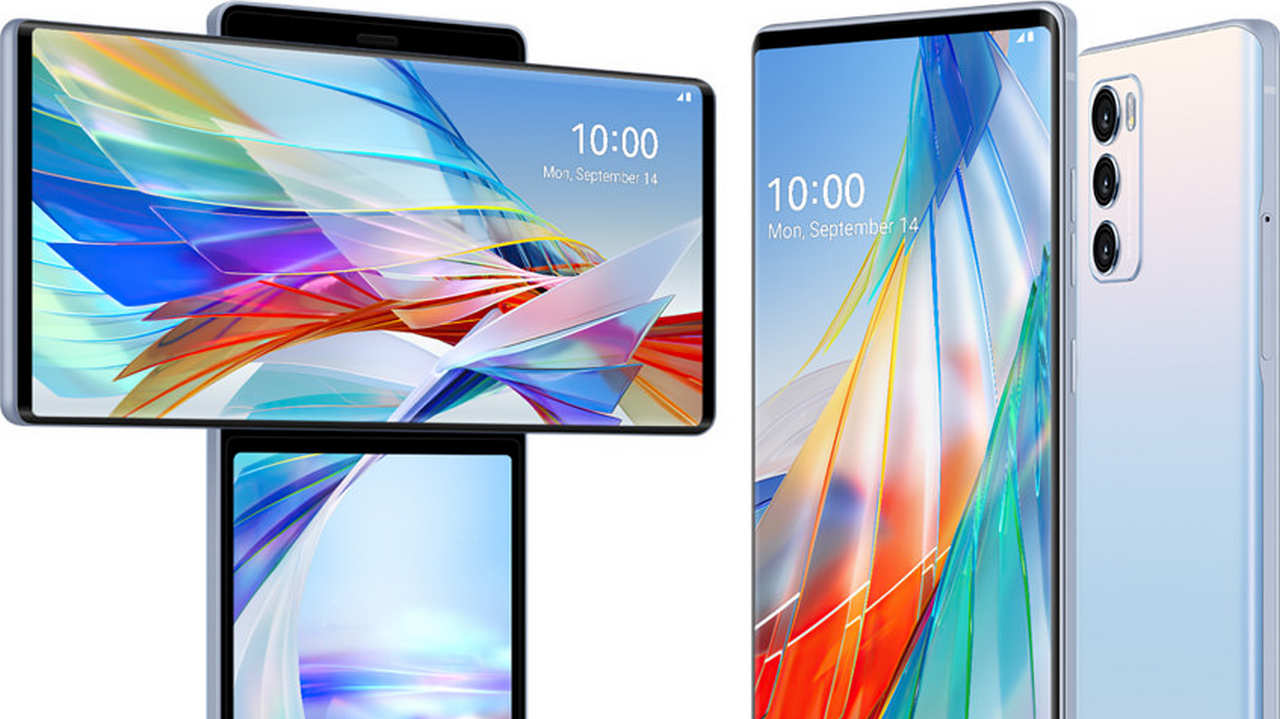
The LG Wing
Perhaps the company’s most memorable final smartphone was the LG Wing.
Instead of folding, the main display rotated sideways into a T-shape, revealing a second screen underneath.
The design enabled unique multitasking experiences such as:
- Watching videos while messaging
- Navigation alongside music controls
- Video recording with dedicated camera controls
- Gaming with separate virtual controllers
Although sales remained limited, the Wing showcased LG’s engineering creativity at a time when most manufacturers produced nearly identical rectangular smartphones.
Ironically, one of LG’s most imaginative devices arrived only months before the company announced its exit from the smartphone market.

Credits: Forbes
Why Innovation Wasn’t Enough
Despite introducing numerous firsts, LG struggled with execution.
Many promising ideas failed because they arrived before consumers were ready or lacked sufficient software support.
Several factors contributed to the company’s decline.
Hardware Quality Problems
Some flagship LG smartphones developed reputations for reliability issues.
Perhaps the most infamous was the “bootloop” problem affecting models like the LG G4 and LG V10.
Devices would repeatedly restart and become unusable, frustrating customers and damaging consumer confidence.
Even though LG attempted repairs and replacements, the damage to its reputation proved lasting.
Inconsistent Software
While LG’s hardware often impressed reviewers, its software experience frequently lagged behind competitors.
Users criticized:
- Slow Android updates
- Interface inconsistencies
- Pre-installed applications
- Performance optimization
Meanwhile, Google improved Pixel software while Samsung dramatically refined One UI.
LG gradually fell behind.
Weak Marketing
Another major challenge involved brand positioning.
Samsung invested billions into global marketing campaigns.
Apple cultivated unmatched brand loyalty.
Chinese manufacturers aggressively promoted value-for-money smartphones.
LG, by comparison, often struggled to communicate why consumers should choose its devices.
Excellent products sometimes received surprisingly little marketing support.
Confusing Product Strategy
LG released numerous smartphone series simultaneously.
Consumers had to choose among:
- G Series
- V Series
- Q Series
- K Series
- Stylo
- Velvet
- Wing
Frequent naming changes and overlapping features made the lineup confusing.
Samsung, in contrast, simplified its portfolio into clearly identifiable Galaxy S, Galaxy Note, Galaxy A, and Galaxy M families.
The Financial Reality
By 2021, LG’s smartphone business had become financially unsustainable.
The company had accumulated approximately $4.5 billion in operating losses over six consecutive years.
Every attempt at recovery failed.
Management explored several options, including:
- Selling the division
- Forming partnerships
- Restructuring operations
- Downsizing production
Reports suggested discussions were held regarding partial sales of the business, but negotiations ultimately collapsed.
With no viable turnaround strategy, shutting down became the most practical decision.
LG announced that it would wind down the mobile division by the end of July 2021.
)
Credits: Firstpost
The Smartphone Market Had Changed Dramatically
LG’s decline cannot be understood without examining broader industry trends.
The smartphone market matured considerably during the late 2010s.
Earlier, consumers upgraded devices every one or two years.
Later, phones became more durable and powerful, extending replacement cycles to three, four, or even five years.
This reduced overall sales growth.
At the same time, competition intensified.
Samsung’s Dominance
Samsung expanded aggressively across every price category.
From budget Galaxy A phones to flagship Galaxy S and Galaxy Note devices, Samsung maintained an extensive product portfolio backed by massive marketing budgets.
Its economies of scale also enabled more competitive pricing.
Apple’s Premium Ecosystem
Apple strengthened customer loyalty through seamless integration across iPhones, iPads, Macs, Apple Watches, and services.
Switching away became increasingly difficult.
The iPhone also retained higher resale values than most Android competitors.
Chinese Manufacturers Changed Everything
Perhaps the biggest disruption came from Chinese brands.
Companies like Xiaomi, Oppo, Vivo, and Realme offered flagship-like specifications at significantly lower prices.
Consumers could purchase smartphones with:
- High refresh-rate displays
- Multiple cameras
- Fast charging
- Large batteries
- Premium designs
—all for substantially less than traditional flagship devices.
LG struggled to compete against these aggressive pricing strategies.
Pandemic Pressures Accelerated Existing Problems
The COVID-19 pandemic further complicated matters.
Global smartphone shipments fell by roughly 10% during 2020 as lockdowns disrupted manufacturing, logistics, retail operations, and consumer spending.
While every manufacturer faced challenges, companies with already struggling businesses suffered the most.
LG’s mobile division entered the pandemic weakened by years of declining sales, making recovery even more difficult.
The Official Reason Behind the Exit
LG stated that leaving the smartphone market would allow it to focus resources on faster-growing businesses.
Rather than continuing to invest billions into an unprofitable division, the company chose to prioritize sectors where it already possessed competitive advantages.
These included:
- Electric vehicle components
- Connected devices
- Smart home technologies
- Artificial intelligence
- Robotics
- Business solutions
The decision reflected a shift toward industries expected to experience substantial long-term growth.
LG’s Expanding Electric Vehicle Business
One of the biggest beneficiaries of LG’s strategic shift has been its automotive technology division.
Around the time of the smartphone exit, LG established a joint venture with Canadian automotive supplier Magna International.
The partnership focuses on manufacturing key components for electric vehicles, including:
- Electric motors
- Inverters
- On-board chargers
- Integrated drive systems
As global automakers accelerate EV production, this business offers significantly stronger long-term growth potential than smartphones.
LG also supplies batteries, infotainment systems, displays, sensors, and electronic components to numerous automotive manufacturers.

Credits: Reuters
Home Appliances and TVs Remain Core Strengths
Although smartphones attracted public attention, they represented only a small portion of LG’s overall business.
The mobile division accounted for just around 7.4% of company revenue.
Its more profitable businesses include:
Premium Televisions
LG is one of the world’s largest television manufacturers.
The company has led OLED television development for years and continues investing in Mini-LED and next-generation display technologies.
Smart Home Appliances
LG remains a global leader in:
- Refrigerators
- Washing machines
- Air conditioners
- Microwave ovens
- Vacuum cleaners
Increasing integration of AI and IoT capabilities has further strengthened these businesses.
Commercial Electronics
The company also produces displays, medical equipment, industrial solutions, and commercial electronics for businesses worldwide.
These segments generate stronger and more consistent profits than smartphones.
What Happened to Existing LG Phone Users?
LG assured customers that existing smartphones would continue receiving customer support and software updates according to regional availability.
Phone inventories remained on sale until stocks were exhausted.
Warranty support continued through authorized service centers.
Although software support eventually concluded, the company ensured customers would not be abandoned immediately after the announcement.
Who Benefited from LG’s Exit?
Industry analysts expected several smartphone companies to gain market share.
Samsung
Samsung became the biggest beneficiary, particularly in North America, where LG had maintained a loyal customer base.
Many former LG customers simply upgraded to Galaxy devices.
Apple
Apple also attracted premium LG users seeking long-term software support and strong ecosystem integration.
Chinese Brands
Companies including Oppo, Vivo, Xiaomi, and Motorola gained opportunities in international markets where LG previously maintained retail presence.
As competition decreased slightly, these manufacturers found additional room for expansion.
The Legacy LG Leaves Behind
Although LG no longer manufactures smartphones, its influence remains visible across today’s mobile industry.
Many technologies now considered standard either originated with LG or were significantly advanced by the company.
Its contributions include:
- Popularizing ultra-wide smartphone cameras
- Advancing manual photography features
- Delivering premium mobile audio experiences
- Experimenting with modular smartphones
- Exploring dual-screen productivity
- Developing unique rotating displays
- Consistently pushing industrial design beyond industry norms
Perhaps more importantly, LG reminded the smartphone industry that innovation does not always require following existing trends.
Some ideas failed commercially.
Others eventually became mainstream.
But very few companies demonstrated the same willingness to experiment.
Credits: HypeBeast
Lessons from LG’s Smartphone Exit
LG’s departure illustrates one of the harsh realities of the technology industry: innovation alone does not guarantee success.
A successful smartphone business requires an intricate balance of hardware engineering, software optimization, marketing, supply chain efficiency, developer support, carrier partnerships, pricing strategy, and long-term customer trust.
LG excelled in several of these areas but struggled in others. Hardware innovation often outpaced software refinement, while bold designs sometimes lacked the ecosystem needed for widespread adoption. Reliability issues, inconsistent updates, and fierce competition gradually eroded consumer confidence.
The smartphone industry has also become one of the most unforgiving markets in technology. With billions invested in research, manufacturing, advertising, and global distribution, only a handful of companies generate substantial profits. Today, Samsung and Apple dominate the premium market, while Chinese manufacturers fiercely compete on value, leaving little room for brands that cannot clearly differentiate themselves.
Conclusion
LG’s exit from the smartphone business marked the end of one of the industry’s most fascinating chapters. Once the world’s third-largest smartphone maker, the company played a crucial role in shaping Android’s evolution through daring experimentation and meaningful innovation. Devices like the LG G2, G5, V series, Velvet, and Wing demonstrated a willingness to challenge conventions that many competitors lacked.
Yet the same story also serves as a reminder that technological breakthroughs must be supported by strong execution, reliable software, effective marketing, and sustainable business strategy. Continuous financial losses eventually outweighed the value of innovation, prompting LG to redirect its focus toward faster-growing sectors such as electric vehicles, artificial intelligence, robotics, smart homes, and advanced consumer electronics.
While LG smartphones have disappeared from store shelves, their influence continues to be felt across the industry. Features once considered experimental have become standard on modern devices, proving that even companies that leave a market can shape its future. LG may no longer build smartphones, but its legacy as one of mobile technology’s boldest innovators remains firmly intact.