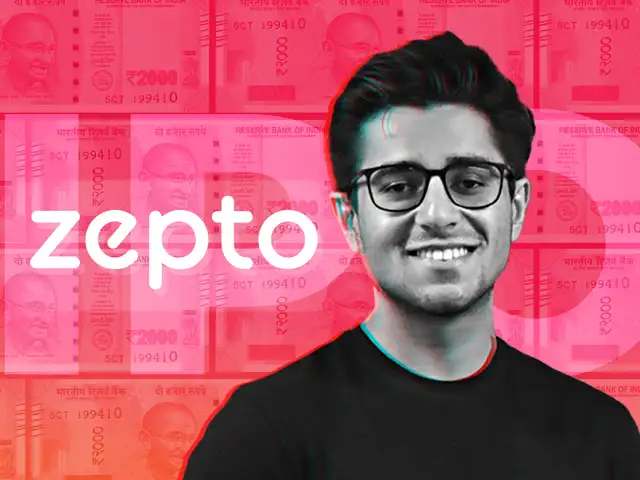
Quick commerce startup Zepto has filed draft papers with market regulator SEBI for an initial share sale worth $1.3 billion, one of the highly anticipated market debuts in the fast-growing delivery segment of India.
Mumbai-based firm will raise about ₹ 11,682 crore through IPO, which will include ₹ 11,000 crore through a fresh issue of capital. Early investors will pump in the rest via secondary sale of their shares, thus enabling them to partially exit the company and helping the company gather funds for its expansion plan.
Shareholders of Zepto approved the plan for IPO in an extraordinary general meeting on December 23. Four-year-old Zepto has given itself a decent nine-month runway-until the July-September quarter of 2026-to get ready for possibly one of the largest market listings this year.
The company has lined up an enviable smorgasbord of heavyweights to handle the offering. Morgan Stanley will act as lead banker, along with Axis Capital, HSBC, Goldman Sachs, JM Financial, IIFL Securities, and Motilal Oswal. This is a star-studded team that reflects the scale and significance of the proposed IPO.
Financial disclosures of Zepto paint a picture of explosive growth accompanied by mounting losses, typical for startups that are racing to dominate their markets. In regulatory filings with the Registrar of Companies, the company has posted revenue of ₹9,669 crore for FY25, up 129% over the previous year at a scorching pace of growth.
The growth, however, came at a steep cost: the company’s net loss more than tripled to ₹3,367 crore from ₹1,214 crore in the same period. These figures underscore how fiercely competitive it is and how much cash a company needs to burn to gain market share in India’s quick commerce segment, which peddles groceries and essentials within 10-15 minutes.
Analyzing the Zepto-Blinkit-Swiggy Rivalry
Zepto is part of one of the most competitive and capital-intensive verticals in India. The list of opponents includes the likes of Blinkit- acquired by food-tech unicorn Zomato- Swiggy’s Instamart, Flipkart Minutes, and Amazon Now.
Each player is betting big on the premise that Indian consumers will increasingly prefer ultra-fast delivery over traditional shopping methods.
It has sparked an arms race in funding. At the end of November, Zepto had close to ₹7,000 crore cash in the bank, a comfortable buffer to keep business running and expand further. That sets it up nicely against rivals, who have burned similar levels of cash.
Blinkit’s parent company Zomato, raised ₹8,500 crore in November last year, while Swiggy raised ₹10,000 crore through a qualified institutional placement after quickly depleting most of the ₹4,500 crore it raised from its IPO in 2024. The back-to-back monster fundraisers have underlined the capital-intensive nature of the quick commerce business.
Just a few months ago, Zepto closed a big $450 million funding round spearheaded by Calpers, the US pension fund. Of this, the main capital accounted for about $300 million, further padding up the war chest ahead of its public market auction.
Zepto’s Roadmap to a 2026 Listing
Recognizing the need to improve its financial profile before going public, Zepto has implemented several cost-reduction initiatives. It has undertaken layoffs, cut spending on customer acquisition, and reduced corporate overheads-all measures indicating more disciplined growth as the company steels itself for the scrutiny expected of a public-traded company.
Now that draft papers are filed, Zepto has entered the period of regulatory review and preparation. It has to answer several queries of SEBI, settle its prospectus, and go through the entire tediously complicated process of turning into a publicly listed company.
Subject to everything going according to plan, the company will join the rank of publicly traded tech outfits by late 2026.
This will be an important test of investor appetite for quick commerce businesses and could set a precedent for other companies in the sector planning similar public listings. For Zepto, though, successfully completing such an IPO would provide the ammunition to fight what has all the makings of a long and bloody war for market leadership.