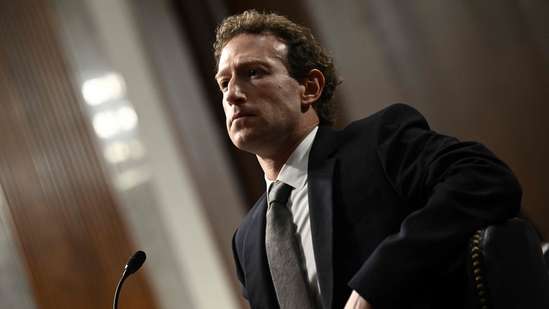
In a move that feels like the ultimate tech-industry crossover event, the White House confirmed on March 25, 2026, that it is assembling a “dream team” of tech titans to guide the nation’s artificial intelligence strategy. The newly announced President’s Council of Advisors on Science and Technology (PCAST) popularly being dubbed the “AI Council” features a roster that reads like the Forbes 400 list: Mark Zuckerberg (Meta), Larry Ellison (Oracle), and Jensen Huang (Nvidia).
This isn’t just a ceremonial committee. As the global race for AGI (Artificial General Intelligence) accelerates and the energy demands of massive data centers threaten to outpace the national grid, the administration is betting that the men who built the digital world can help secure America’s dominance in the next one.
The selection of Zuckerberg, Ellison, and Huang represents a vertical integration of the AI stack itself. Each brings a specific, indispensable pillar to the table:
-
Jensen Huang (The Architect): As the CEO of Nvidia, Huang is the gatekeeper of “compute.” In 2026, GPUs are the new oil, and Huang is the world’s most powerful driller. His presence on the council ensures that federal policy remains aligned with the realities of the semiconductor supply chain.
-
Larry Ellison (The Infrastructure Titan): Oracle’s Executive Chairman has become one of AI’s most vocal proponents, particularly regarding the massive physical infrastructure required to house it. Ellison’s recent focus on “sovereign clouds” and nuclear-powered data centers makes him the point man for the council’s energy and security initiatives.
-
Mark Zuckerberg (The Social Sovereign): After a period of relative political withdrawal, Zuckerberg’s appointment marks a significant return to the spotlight. With Meta’s “Llama” models defining the open-source AI movement, Zuckerberg provides the council with a roadmap for how AI will interface with billions of end-users and the broader developer ecosystem.
The Geopolitical Imperative: The Race Against China
The primary driver behind this high-level recruitment is the intensifying “AI Cold War” with China. Sources within the administration suggest that the council’s top priority is ensuring that American AI remains “years, not months” ahead of state-backed competitors in the East.
The panel, which also includes Google co-founder Sergey Brin and AMD CEO Lisa Su, is expected to weigh in on critical export controls. Huang’s inclusion is particularly noteworthy here; he has spent much of the last year navigating the delicate balance of complying with U.S. restrictions while maintaining Nvidia’s global market share. By bringing him into the fold, the administration is moving from a policy of “enforcement” to one of “collaborative strategy.”
The Energy Crisis: Powering the Intelligence Revolution
Beyond the software and chips, the council faces a looming physical bottleneck: Energy. The 2026 AI landscape is defined by data centers that consume more power than entire mid-sized cities.
Larry Ellison has already been vocal about the need for a radical rethink of the American power grid. Discussions within the council are expected to focus on deregulating nuclear energy development and streamlining the permitting process for “AI Power Zones.” The goal is to ensure that the U.S. doesn’t lose the AI race simply because it couldn’t keep the lights on.
“We are entering an era where the national interest is inextricably linked to the availability of gigawatts,” a White House official noted. “You cannot have world-leading AI if your data centers are waiting five years for a grid connection.”
The most fascinating subplot of this council is the personal and political realignment it represents. The relationship between the current administration and Silicon Valley particularly Mark Zuckerberg has been historically fraught with tension.
However, 2026 seems to be the year of the “Great Reset.” Zuckerberg’s appointment signals a pivot toward a more collaborative, “America-first” tech policy. By bringing these figures to the same table, the administration is effectively treating AI as a nationalized defense project, similar to the Manhattan Project or the Space Race.
Co-chaired by White House AI Czar David Sacks, the council is expected to deliver its first formal policy recommendations by the end of Q3 2026. These recommendations will likely shape everything from the federal R&D budget to the legal frameworks governing AI-generated content and copyright.
As the lines between private enterprise and national security continue to blur, the AI Council stands as the most powerful advisory body in Washington. For Zuckerberg, Ellison, and Huang, the stakes have moved beyond quarterly earnings; they are now tasked with nothing less than architecting the future of American power in the age of intelligence.