Microsoft and Abu Dhabi-based AI firm G42 have hit a major roadblock in plans to build a $1 billion data center in Kenya. The project, first announced in 2024, was meant to bring a large geothermal-powered cloud facility to the Olkaria region in Kenya’s Rift Valley. But talks have stalled after the Kenyan government failed to meet Microsoft’s demand for guaranteed annual power payments.
The scale of the project quickly became the main issue.
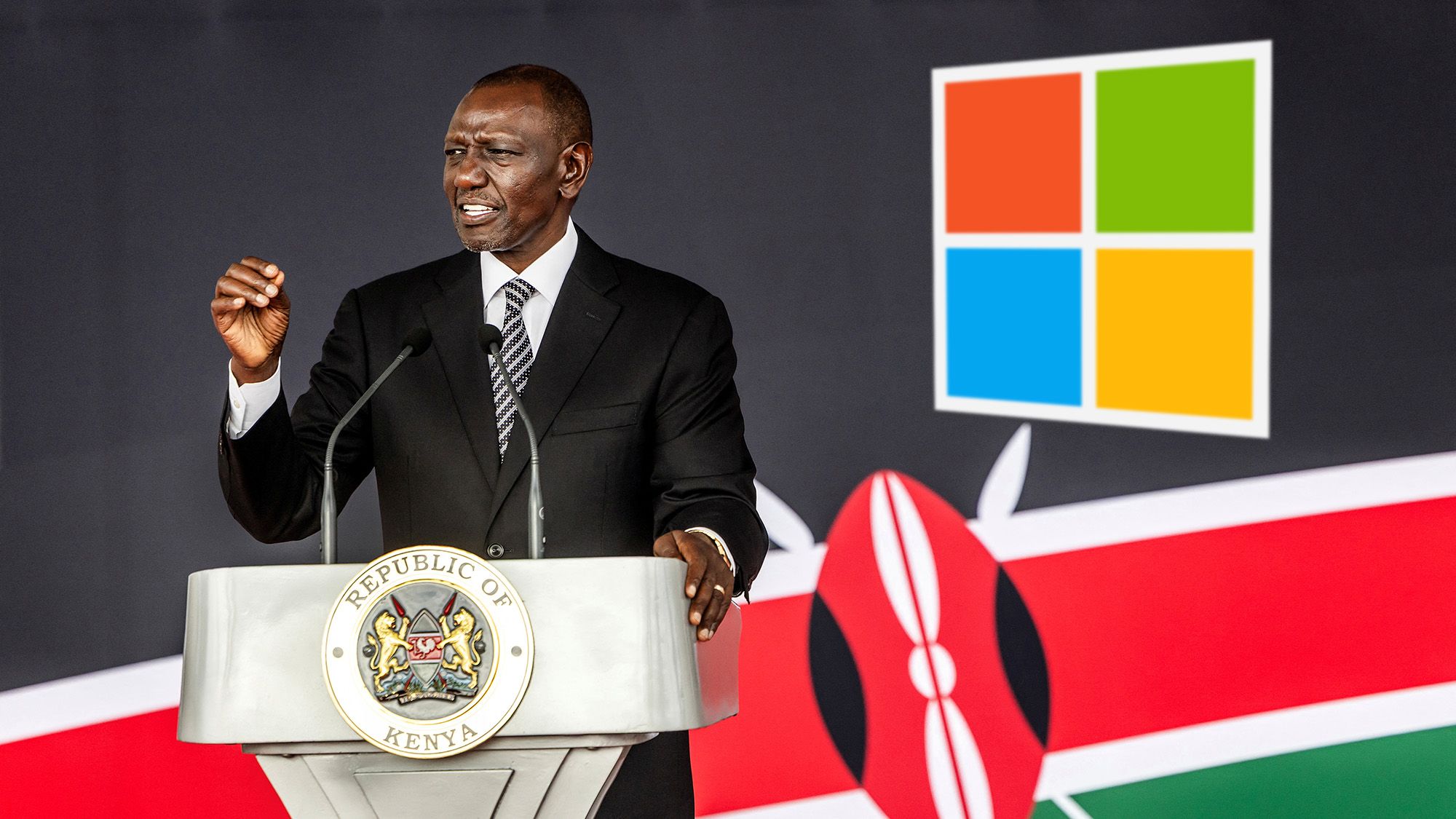
At a recent event in Nairobi, Kenyan President William Ruto described the challenge in simple terms. He said the country would need to “switch off half the country” to keep the facility running. The remark sounded dramatic, but Kenya’s energy numbers show why officials are concerned.
Kenya’s total installed electricity capacity stands at around 3,000 to 3,200 megawatts. Peak electricity demand reached a record 2,444 megawatts earlier this year, according to state-owned power producer KenGen. The first phase of the Microsoft-G42 project alone was expected to use 100 megawatts. Over time, the companies hoped to expand the site to 1 gigawatt.
That final target would consume close to a third of Kenya’s total power capacity.
The Microsoft-G42 Data Center Deal Faces Delays and Restructuring
Even the smaller first phase would have placed heavy pressure on the Olkaria geothermal complex, which currently produces about 950 megawatts across several plants. Geothermal power is one of Kenya’s strongest energy assets and already supports homes, factories, and businesses across the country.
The project was supposed to create a new East Africa cloud region powered by Microsoft Azure. G42 planned to lead construction while Microsoft would provide cloud services and infrastructure. Officials expected the first phase to go online this year.
Kenya’s Ministry of Information says the deal is not dead. John Tanui, principal secretary at the ministry, told Bloomberg that talks are still active and that the project “requires some structuring” because of its size. Another smaller 60-megawatt data center proposal with local developer EcoCloud also remains under discussion.
The Kenya project carried major political and business value for Microsoft. It was expected to become the first facility jointly developed by Microsoft and G42 after Microsoft invested $1.5 billion into the Abu Dhabi firm in 2024.
That partnership drew global attention because it came after G42 agreed to reduce ties with Chinese companies under pressure from Washington. The company reportedly removed Huawei equipment from its systems and divested from Chinese investments as part of the deal. Microsoft President Brad Smith later joined G42’s board and described the Kenya data center as a major step forward for the country’s digital economy.
The Global Struggle for Powering Data Infrastructure
At the same time, Huawei continues to grow its presence in Kenya. The Chinese tech giant recently launched a new fiber broadband service with Safaricom, the country’s largest telecom provider.
Africa remains a small player in global data infrastructure. The continent currently hosts about 1% of the world’s total data center capacity. Yet demand for AI services and cloud computing continues to grow across the region, pushing governments and tech firms to search for new power sources and infrastructure investments.
The stalled Kenya project also reflects a larger global problem facing the AI industry.
Microsoft plans to spend around $190 billion on capital expenditures in 2026 and adds roughly 1 gigawatt of data center capacity every three months worldwide. But electricity shortages and weak grid infrastructure have become major barriers in many countries.
The United States faces similar issues. Reports show that nearly half of planned U.S. data center projects this year have either been delayed or canceled because power systems cannot support them. Supply chain problems and shortages of electrical equipment have added more pressure.
AI companies now face a difficult balance. They need massive amounts of energy to power cloud services, AI training, and large-scale computing. But many national grids were not built to handle facilities that consume as much electricity as small cities.
Kenya’s case shows how quickly AI infrastructure plans can collide with energy limits. The country wants more technology investment and stronger digital infrastructure. But officials must also protect power supplies for homes, businesses, and industry.
For now, Microsoft and G42 appear willing to keep negotiating. Whether Kenya can support a project of this size without straining its energy grid remains the key question.