


• Send Us A Tip
  • Calling all Tech Writers
  • Advertise
Saturday, October 24, 2026
  • Login
TechStory
  • News
  • Crypto
  • Gadgets
  • Memes
  • Gaming
  • Cars
  • AI
  • Startups
  • Markets
  • How to
No Result
View All Result
  • News
  • Crypto
  • Gadgets
  • Memes
  • Gaming
  • Cars
  • AI
  • Startups
  • Markets
  • How to
No Result
View All Result
TechStory
No Result
View All Result
Home Business

Juul and the Addiction With Being Cool

by
January 16, 2019
in Business, Popular, Startups, Stories, Tech
Reading Time: 6 mins read
0
Juul

Juul Credit: Inc.com

TwitterWhatsappLinkedin
Juul
Juul Credit: Inc.com
Juul

Take a careful look at this graph. It demonstrates how cigarette sales peaked in the 1970s in the United States, but have been on a consistent decline since then. Paints a happy picture, doesn’t it? Now, to double up on this, here is a second graph.

You might also like

How Accurate Captions Make Short Mobile Videos More Accessible and Easier to Understand

At Least 17 Data Center Campuses Proposed on US Public Lands, Raising Environmental Concerns

Google Employees Resign Amid Backlash Over AI Contracts With Military

Juul

This one too looks very optimistic. It shows that the sales of cigarette alternatives like Juul, e-cigarettes, and vaporizers also have shot up. It can be inferred from this that most adults who were smokers are now switching to cigarette alternatives, which could be potentially and relatively safer and healthier.

Logically, when cigarette sales decrease, nicotine consumption in a population should also decrease. That means less substance dependency, less gateway into harder drugs, and healthier smoke-free population. But, turns out that is not the case. Instead, a surprising trend is being noticed in the US, where nicotine consumption is increasing since 2015.

This sudden trend was leaving experts and health officials perplexed. How could a trend that was seeing a continuous demise for the past 30 years, suddenly see an upsurge? The answer to this is Juul.

What is Juul?

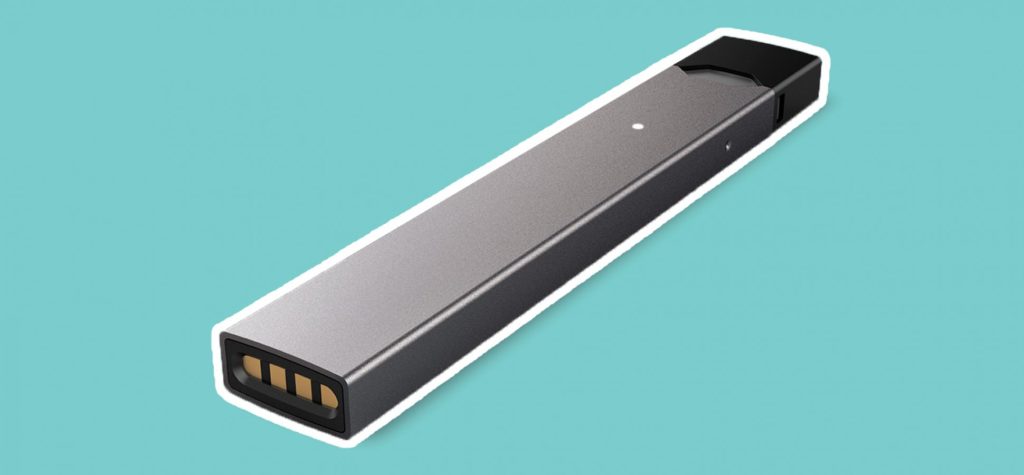
Now, in proper blueprint terms, Juul is an e-cigarette that transmits nicotine into the system without the tobacco or the smoke. It looks like a USB stick and is one of the most discreet smoking alternatives you can carry around, unlike e-cigarettes or vaporizers that generally look like normal cigarettes or are very big and produce big plumes of smoke.

When a Juul device runs out of the liquid, you just need to replace it with a refill pod. The device comes in a variety of flavors such as mint and mango, and is also available in a selection of solid, bright colors.

The system was designed by two graduates from Stanford School of Design – Adam Bowen and James Monsees.

The thing that actually set Juul apart is that it went viral overnight on Instagram posts, Tweets, YouTube videos, and TikTok clips. Soon, the main user base was not smokers who were trying to quit; it was young impressionable teens using the futuristic device in high school backyards, locked rooms, and college dorms.

Experts say that this happened because the company didn’t sell the product like another cigarette alternative. They sold it like a culture. It is a small, inconspicuous device that you can carry anywhere and look cool while holding it. It is not just smoking, it is “Juuling”

“Going to school, having (Juul) in your pocket… is much better than having a big vape, that’s like a lightsaber. You can kind of Juul anywhere in discreteness.”

The Boom

The organic emulsion of cutting-edge design with a viral trend made Juul to blow up. As the company kept going viral in the United States, sales grew too. In 2017 only, Juul Labs sold 16.2 million devices. That is $245 million in sales with $35 per device and $16 per pod.

In 2018, the sales surpassed 1 billion USD. The company, as of 2018, had a stronghold over 70% of the e-cigarette market in the United States. It is valued at more than 16 million USD.

Presently, the company is growing at an exponential rate with sales growing outside of the US in countries like Israel, Canada, and the United Kingdom.

The founders are now billionaires and the company is producing one of the fastest growing physical consumer products seen in years.

The Bust

But, why is this virality of “Juuling” problematic? To the unaware, Juuls’ are just e-cigarettes. They are not potentially life-threatening, carcinogenic, or addictive like normal cigarettes. Right?

But, here is where most people are wrong. Juuls contain nicotine – the addictive chemical present in cigarettes. And most users are not aware of this fact. This is also not just nicotine that is of a lower dosage to help smokers slowly wean off of normal cigarettes. Instead, while a normal e-cigarette contains 16-30 mg of nicotine, one Juul pod contains 59 mg of nicotine.

That is more nicotine than what is found in a full pack of cigarettes. That nicotine limit is so high that it doesn’t stay under the permitted limit in the European Union, which is why the product cannot be sold over there. A Juul device comes with 4 refill pods (and more can be bought). That is 240 milligrams of nicotine in a full Juul pack.

This is worrying for health officials. A trend of smoking that would eventually meet a dead end in a decade or two, is suddenly seeing a resurgence in teenagers below 18 years of age.

“Once people are introduced to it, they’re staying because they’re conditioned to like all these different (tech) products and this is just another product, and it’s just another product… until you’re addicted to nicotine.”

The Future

After Juul boomed, it very quickly also came under the public scrutiny. Government agencies like the FDA started questioning the ingredients and Juul fell under the radar also for its marketing and aggressive cultural appeal.

Soon, the company went on the defense and started dialing down its marketing. From colorful ads that pandered to teenagers, the company went for more muted marketing tactics.

“It was a mistake,” says co-founder Monsees, “I think the biggest mistake was not believing enough that the core product proposition would be the most powerful marketing tool that we would have.”

The company soon pledged to commit $30 million over the next three years to youth nicotine prevention efforts. However, the damage is more or less done. The virality of Juul as a product very quickly slipped out of the company’s hands.

Today, while the Juul Instagram page is only accessible to adults over 25 years of age, there are several sub-pages, hashtags, and communities dedicated to the “coolness” of Juuling.

Health officials now don’t only have to worry about taking a product out of teenagers hands, but also have to work towards dismantling a whole culture – which is a much more abstract and harder feat to achieve.


Tags: Cigarette alternativee-cigarettesJuulStartup JourneyUSA
Tweet54SendShare15
Previous Post

Spotify partnered with T-Series, India launch seems imminent

Next Post

Flipkart co-founder Sachin Bansal invests $21 M in Ola

Recommended For You

How Accurate Captions Make Short Mobile Videos More Accessible and Easier to Understand

by Rohan Mathawan
October 24, 2026
0
Short videos have become a daily habit for mobile users. People watch clips on buses, in waiting rooms, during breaks, and late at night with the volume turned down. Gaming highlights, creator tutorials, reaction clips, and quick product reviews all compete for a few seconds of attention. In that setting, captions are no longer a bonus feature. They are a core part of how a video communicates. When captions are accurate, they help more people follow along, understand the message, and enjoy the content as the creator intended. When they are careless, they can confuse viewers or leave them out entirely. Why Captions Matter for Mobile Viewers Many creators now rely on a caption generator to turn spoken audio into on screen text quickly, which saves time when they publish several clips each week. The real value of that text, however, depends on how closely it matches what is actually said and heard. For viewers who are deaf or hard of hearing, captions are the main way to access speech, tone, and important sound cues. For other viewers, captions support situations where audio is not practical, such as noisy streets, shared spaces, or quiet environments. A clip with clear and correct text works for all of these people without requiring any extra effort from them. Accessibility Starts with Accuracy Accessibility is about giving every viewer a fair chance to understand the content. Captions that skip words, change meanings, or misspell names can make that difficult. A viewer who relies on text cannot compare it against the audio, so any error becomes part of the message they receive. Accurate captions should include the spoken words, the speaker when it is not obvious, and meaningful sounds such as music cues, laughter, or alerts. For example, in a cooking clip, a caption that reads "add two teaspoons of salt" instead of "add two tablespoons of salt" changes the result of the recipe. Accuracy protects the viewer from small mistakes with real consequences. Comprehension in Fast Moving Gaming Clips Gaming clips move quickly. Players speak fast, use abbreviations, call out locations, and react to events that happen in a split second. Team callouts such as map positions, weapon names, and character abilities often sound similar when heard quickly, which makes accurate text especially useful. A viewer who is new to a game may not recognize a term by ear, but seeing it written correctly helps them learn it. Captions also help when the in game audio, music, and voice chat overlap. Clear text separates the commentary from the background noise, so the viewer can follow what the player is saying without replaying the clip several times. Creator Clips and Clear Communication Creators share advice, tutorials, opinions, and stories in short formats where every second counts. Captions give them a way to reinforce key points without adding extra length. A beauty creator can display product names exactly as spoken, a fitness creator can show the number of repetitions, and a tech reviewer can spell out model names that are easy to mishear. Captions also help viewers whose first language is not the language of the video. Reading along while listening can make unfamiliar accents or fast speech easier to follow. This does not replace translation, but it supports comprehension for people who are still building their listening skills. Common Caption Errors and Their Effects Some caption mistakes appear again and again in short videos. Understanding them helps creators know what to check before publishing. Homophones, such as "their" and "there," or "to" and "two," can change the meaning of a sentence. Proper nouns, including usernames, game titles, brand names, and place names, are often misspelled. Missing punctuation can make a sentence read as a different statement or question. Lines that appear too early or too late can confuse the viewer about who is speaking. Technical terms and slang may be replaced with common words that sound similar but mean something else. Each of these errors is small on its own, but in a clip that lasts under a minute, even a few of them can reduce clarity. Reviewing the text once before posting is a simple habit that keeps these problems from reaching the audience. Practical Tips for Better Captions Creators do not need advanced skills to improve caption quality. A few steady habits can make a visible difference. Record audio as clearly as possible, because clean speech gives any captioning method a better starting point. Read through the full text while listening to the clip, and correct names, numbers, and terms that are specific to the topic. Keep each line short, so viewers can read it comfortably without missing the picture. Add brief descriptions for important sounds, such as "applause" or "game alert," when they affect understanding. Watch the final video on a phone, since that is where most viewers will see it. These steps are practical rather than technical. They focus on the viewer experience and not on any promise of a specific result. Timing, Placement, and Design on Small Screens On a small mobile screen, the look of captions matters almost as much as their wording. Text should appear at a size that is easy to read, with enough contrast against the background. White text with a dark outline or a soft background box is a common choice because it stays readable over changing scenes. Captions should also avoid covering important parts of the video, such as the game interface, a product being demonstrated, or a speaker's face. Timing is equally important. Text that appears just as the words are spoken feels natural, while text that lags behind can make the video feel out of sync. Careful placement and timing help viewers read and watch at the same time without effort. Conclusion Accurate captions make short mobile videos more accessible, easier to follow, and more useful to a wider audience. They support viewers who cannot rely on sound, help new players understand fast gaming clips, and give creators a reliable way to share clear messages in a few seconds. A caption generator can speed up the first step by producing text from speech, but the best results come when creators review the output, correct names and terms, and check timing and readability on a phone. By treating captions as a real part of the video and not an afterthought, creators can make their content welcoming and understandable for more people, one short clip at a time.

Short videos have become a daily habit for mobile users. People watch clips on buses, in waiting rooms, during breaks, and late at night with the volume turned...

Read more

At Least 17 Data Center Campuses Proposed on US Public Lands, Raising Environmental Concerns

by Shailja Jha
October 24, 2026
0
At Least 17 Data Center Campuses Proposed on US Public Lands, Raising Environmental Concerns

At least 17 data center campuses have been proposed on public lands across the western United States, highlighting the growing demand for infrastructure to support artificial intelligence and...

Read more

Google Employees Resign Amid Backlash Over AI Contracts With Military

by Shailja Jha
October 24, 2026
0
Google Employees Resign Amid Backlash Over AI Contracts With Military

Google is facing renewed internal criticism over its artificial intelligence contracts with military organizations, with reports of employees resigning in protest against the company's involvement in defense-related projects....

Read more
Next Post
Flipkart co-founder Sachin Bansal invests $21 M in Ola

Flipkart co-founder Sachin Bansal invests $21 M in Ola

Please login to join discussion

Techstory

Tech and Business News from around the world. Follow along for latest in the world of Tech, AI, Crypto, EVs, Business Personalities and more.
reach us at info@techstory.in

Advertise With Us

Reach out at - info@techstory.in

Aviator Game India 2026

BROWSE BY TAG

#Crypto #howto 2024 acquisition AI amazon Apple Artificial Intelligence bitcoin Business China cryptocurrency e-commerce electric vehicles Elon Musk Ethereum facebook funding Gaming Google India Instagram Investment iPhone IPO Market Markets Meta Microsoft News OpenAI samsung Social Media SpaceX startup startups tech Tech news technology Tesla TikTok trend trending twitter US

© 2025 Techstory.in

No Result
View All Result
  • News
  • Crypto
  • Gadgets
  • Memes
  • Gaming
  • Cars
  • AI
  • Startups
  • Markets
  • How to

© 2025 Techstory.in

Welcome Back!

Login to your account below

Forgotten Password?

Retrieve your password

Please enter your username or email address to reset your password.

Log In
Are you sure want to unlock this post?
Unlock left : 0
Are you sure want to cancel subscription?