Josh Woodward wasn’t supposed to be the guy who would make OpenAI break a sweat. He was 42 years old and an executive at Google, and he’d spent the better part of a decade operating in the background, out of the spotlight that shines so prevalently on the biggest names in tech. But in 2024, something shifted.
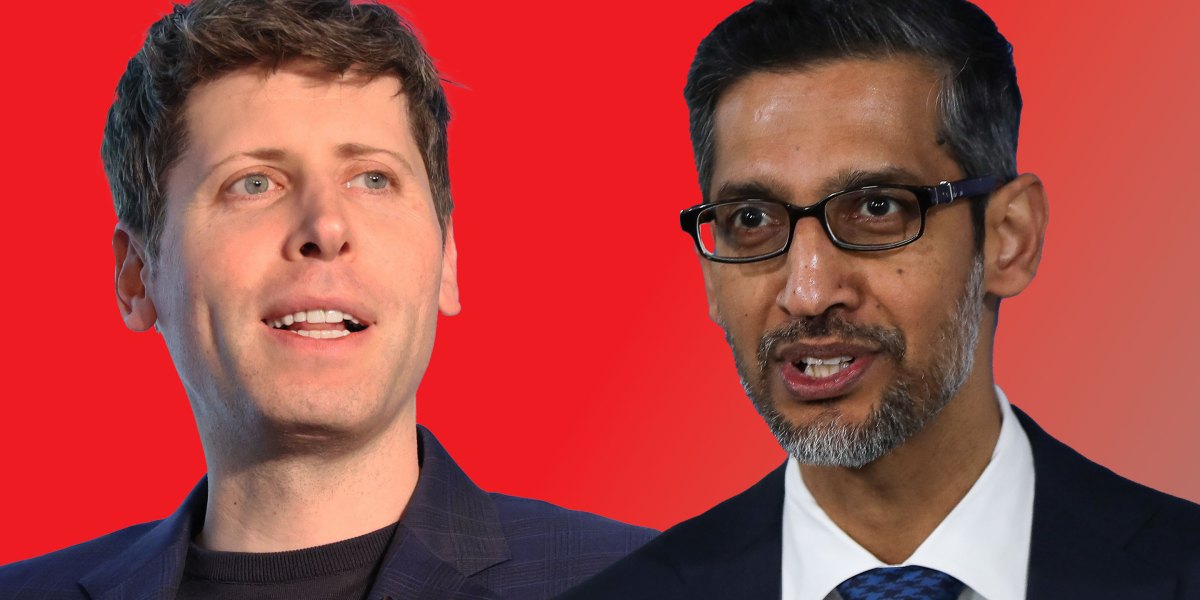
Woodward decided that under his direction, Google’s Gemini app would go from scrappy underdog to threat, and OpenAI took notice. Sam Altman has been paying attention, too, writing what CNBC has termed a “code red” memo to the team at OpenAI early in December.
The gist: forget the side projects, forget the experiments, and get back to work protecting ChatGPT. “For a firm that has spent the last two years looking invincible, this is a sobering acknowledgement.”
The Gemini app was taken over by Woodward in April while he was still with Google Labs. What happened next is perhaps the quickest turnaround in tech history. Monthly active users rose from 350 million in March to 650 million in October. That’s not an expansion—but a dash to the finish line of Chat GPT.
But let’s take a look at what Similarweb has to offer. Just last year, there was no question that ChatGPT led in terms of generative AI website traffic with over 87 percent market share. Gemini was not even registering with 5 percent.
Now, ChatGPT is down to 68 percent, while Gemini has broken 18 percent. Those are not marginal movements. Those are changes that make you reassess your entire strategy.
Google vs. OpenAI: How Gemini 3 Reclaimed the AI Throne
What Woodward does differently within Google isn’t just ambition, though. It’s speed. “Google has always been known as this cautious, methodical, and at times painfully slow company,” says David Lawee, former general counsel.
“Woodward operates in a different tempo. His speed approaches what I’ve seen in startups.” Clay Bavor, former co-head of Google Labs, called him “a force that breaks through bureaucracy and moves at the speed of a startup.”
Apparently, his strategy is refreshingly hands-on. In fact, his team closely tracks user feedback on services like X and Reddit and pushes those updates right into his development groups’ hands.
When issues arise, his networks alert him instantly so those issues can be addressed right away instead of hindering progress. This is definitely not how Google has been perceived in the past.
Gemini’s ascent, however, is not just about slow but continuous progress. It has had moments of explosive growth. The Nano Banana image creation capability arrived in August and became viral overnight. The traffic generated became so much that Google’s own AI infrastructure had trouble coping with it. It’s a problem that most firms would dream of having, and something that OpenAI had all to themselves before.
But then came late November with Google’s announcement of Gemini 3. Their new version dethroned OpenAI’s solutions on key metrics.
Alphabet’s stock price reacted well. OpenAI supposedly postponed its projects concerning advertising services, e-commerce platforms, and AI assistants in favor of focusing solely on the chat experience provided by ChatGPT.
How Josh Woodward Turned the Tables on OpenAI?
The resources that are at Woodward’s disposal are something that cannot be easily replicated at OpenAI. The cash reserves at Google are enormous. They own custom-built hardware, which allows them to control their own hardware stack. The Alphabet ecosystem, which includes Search, YouTube, Android, and Chrome, provides a distribution advantage that no rival can hope for.
Despite all the successes, the company continues facing the struggle of finding funds every day. Its performance has to satisfy the investors so that the inflow of cash does not stop. This isn’t the case with Google. This year’s performance of the company’s stock in the market has only increased the company’s confidence in spending more than others in the AI race.
The fact that OpenAI had to put out a code red internally is telling. This is what OpenAI’s chatbot is up against. OpenAI’s product is competing with a chatbot. However, what they are competing with is a product that has a bigger budget.
The success of Woodward at Google is indicative of what transpires when a large corporation chooses to act like a small one. The bureaucracy that hindered Google has not disappeared, but Woodward has managed to work around this to become so effective that
Gemini is now OpenAI’s biggest worry and was once an afterthought.
Whether Google can sustain this level of performance remains to be seen. For now, Josh Woodward has accomplished a remarkable feat: he has made this race among AIs competitive again.