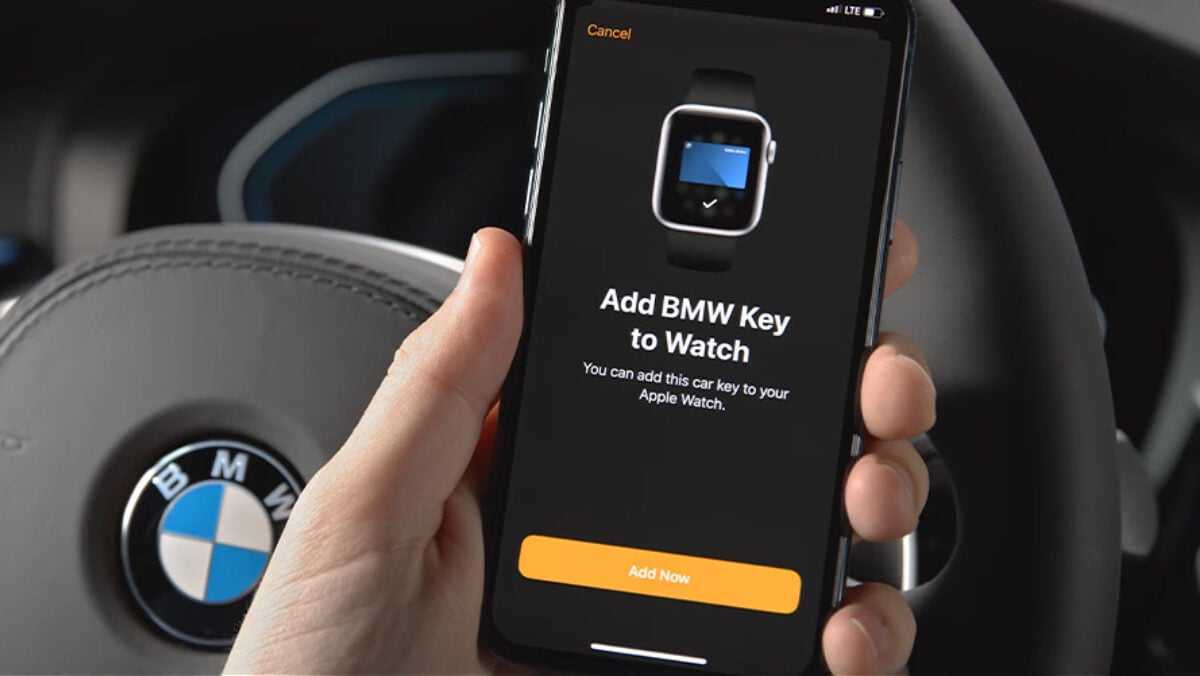
Car keys have come a long way from cut metal blanks and clunky fobs. Today, millions of drivers unlock, lock, and start their vehicles using nothing but a smartphone or smartwatch. This shift is powered by digital car keys — a technology that turns everyday devices into secure, wireless access credentials for your vehicle.
If you’ve ever wondered how a phone can replace a physical key without compromising safety, this guide breaks down the technology, the standards behind it, and what the future holds.
What Are Digital Car Keys?
Digital car keys are virtual credentials stored securely on a smartphone, smartwatch, or other connected device that let you lock, unlock, and start your car without a traditional key fob. Instead of a mechanical key or a simple RF signal, digital car keys rely on encrypted wireless communication between your device and the vehicle.
Automakers including BMW, Tesla, Mercedes-Benz, Hyundai, and Genesis, along with platforms like Apple Wallet and Google Wallet, now support some form of phone-as-key functionality. Systems that combine NFC, BLE, and UWB can improve usability and security, especially by using UWB for precise distance checks that help mitigate relay attacks.
The Core Technologies Behind Digital Car Keys
Three wireless technologies work together — sometimes independently, sometimes in combination — to make digital car keys function smoothly and securely.
-
Near-Field Communication (NFC)
NFC technology can be used to unlock a car or start the engine when the user holds their smartphone near the car’s NFC reader. It’s the same short-range technology used for contactless payments. Because NFC only works within a few centimeters, it’s considered highly secure against remote interception, but it requires you to physically tap your device against the car — not ideal if your hands are full.
NFC also serves as a valuable fallback: even if a smartphone battery runs out, NFC-based digital keys can still function, since NFC chips can often draw minimal power even in low-battery states, ensuring you’re never locked out.
-
Bluetooth Low Energy (BLE)
Bluetooth Low Energy is the most commonly used technology for digital car keys, allowing short-range communication between devices, and it can unlock and start a car while remaining compatible with most modern smartphones. BLE offers considerably more range than NFC — a car’s BLE node can detect an approaching smartphone from more than 30 meters away — making it well-suited for passive, hands-free entry as you walk up to your vehicle.
However, BLE alone has a weakness: it estimates proximity using signal strength, which isn’t always precise and can, in theory, be manipulated.
-
Ultra-Wideband (UWB)
UWB is the technology driving the newest generation of digital car keys. UWB relies on proximity to calculate the distance between a device and the vehicle with centimeter-level accuracy, locking or unlocking the car once the device is within a set distance and even factoring in the direction of movement.
What makes UWB especially valuable is how it measures distance. Unlike Bluetooth, UWB is based on time rather than signal strength, so relay attacks don’t work against it because any interception adds latency that reveals the device isn’t actually near the vehicle.
Apple was an early adopter of this approach. Apple’s digital car key system uses both UWB and Bluetooth Low Energy, drawing on a device’s U1 chip and secure element to generate session-specific UWB ranging keys that enable passive entry functions, with vehicles equipped with multiple UWB and BLE transceivers for 360-degree coverage.
How the Technologies Work Together
Most modern digital car key systems don’t rely on a single technology — they layer them for the best balance of convenience, power efficiency, and security. A typical sequence looks like this:
- Detection: As you approach the car, BLE detects your phone from a distance and initiates a low-power handshake.
- Verification: The vehicle verifies the BLE public key of the phone and confirms the authenticity of the digital car key before proceeding.
- Precision ranging: UWB then takes over to pinpoint your exact location relative to the car, confirming you’re genuinely nearby rather than being spoofed by a relay device.
- Access granted: Once verified, the car unlocks automatically, and you can start the engine simply by having the authenticated device inside the cabin.
- NFC fallback: If your phone’s battery is dead, tapping it against an NFC reader on the door handle still grants access, since NFC can draw power passively.
This layered approach, combining Bluetooth Low Energy, Ultra Wideband, and Near Field Communication, provides a comfortable and secure hands-free car access experience while keeping energy consumption low.
Security: How Digital Car Keys Prevent Theft
Because digital keys transmit data wirelessly, security is a top priority for automakers. Two major protections make this possible:
Encrypted, cryptographic pairing: Communications are secured through the Digital Key standard protocol, using public and private keys to encrypt and decrypt messages exchanged between the phone and vehicle. Modern UWB systems use secure protocols to exchange keys between devices, so even if an attacker intercepted a signal, the data would be useless without the correct code.
Relay-attack resistance: Traditional key fobs are vulnerable to relay attacks, where thieves use two linked devices to trick a car into thinking the real key is nearby. Relay attacks typically involve one hacker near the vehicle and another near the fob, intercepting and retransmitting the signal to fool the car into unlocking. UWB’s time-based distance measurement largely closes this loophole, since any relayed signal introduces detectable delay.
Secure Elements (SEs): Because constant communication between the car and smartphone carries inherent security risks, many digital car key systems incorporate Secure Elements to add hardware-level protection for stored credentials.
Industry Standards: The Car Connectivity Consortium
To ensure digital car keys work consistently across brands and devices, the automotive and tech industries collaborate through the Car Connectivity Consortium (CCC). Digital keys combine NFC taps for close-range entry, BLE for remote commands, and UWB for seamless proximity detection, and the CCC’s Digital Key 4.0 standard marks a step forward in balancing innovation with security for connected vehicles. For everyday users, this mostly happens behind the scenes — drivers continue using NFC, BLE, or UWB to unlock their vehicles, while the standard delivers broader compatibility and more consistent performance across different car models and device ecosystems.
Sharing Digital Car Keys
One of the standout benefits of digital car keys is convenient sharing. Many systems let owners grant full access to another trusted driver or passenger, allowing that person to lock, unlock, and start the vehicle — typically set up through the automaker’s mobile wallet integration or the vehicle’s infotainment system. This makes digital keys ideal for families, car-sharing services, and rental fleets, where physical key handoffs are impractical.
Not Every Vehicle Uses the Same Setup
It’s worth noting that digital key implementation varies by manufacturer. Not every vehicle uses UWB technology; some automakers rely solely on Bluetooth Low Energy or Near-Field Communication systems instead. Generally, vehicles that combine all three technologies offer the smoothest and most secure experience, while single-technology systems may trade off either convenience or security precision.
The Future of Digital Car Keys
As UWB chips become standard in more smartphones and automakers continue adopting CCC standards, digital car keys are set to become the default rather than the exception. Expect deeper integration with smart home ecosystems, more granular key-sharing permissions, and continued improvements in relay-attack resistance as the technology matures.
Final Thoughts
Digital car keys represent a meaningful leap forward in vehicle access — blending the convenience of a smartphone with cryptographic security that, in many ways, surpasses traditional key fobs. By combining NFC, Bluetooth Low Energy, and Ultra-Wideband technology, automakers have built a system that’s both effortless to use and resistant to the theft techniques that plague older keyless entry systems. As standards mature and adoption grows, digital car keys are quickly becoming the new normal for how we get behind the wheel.