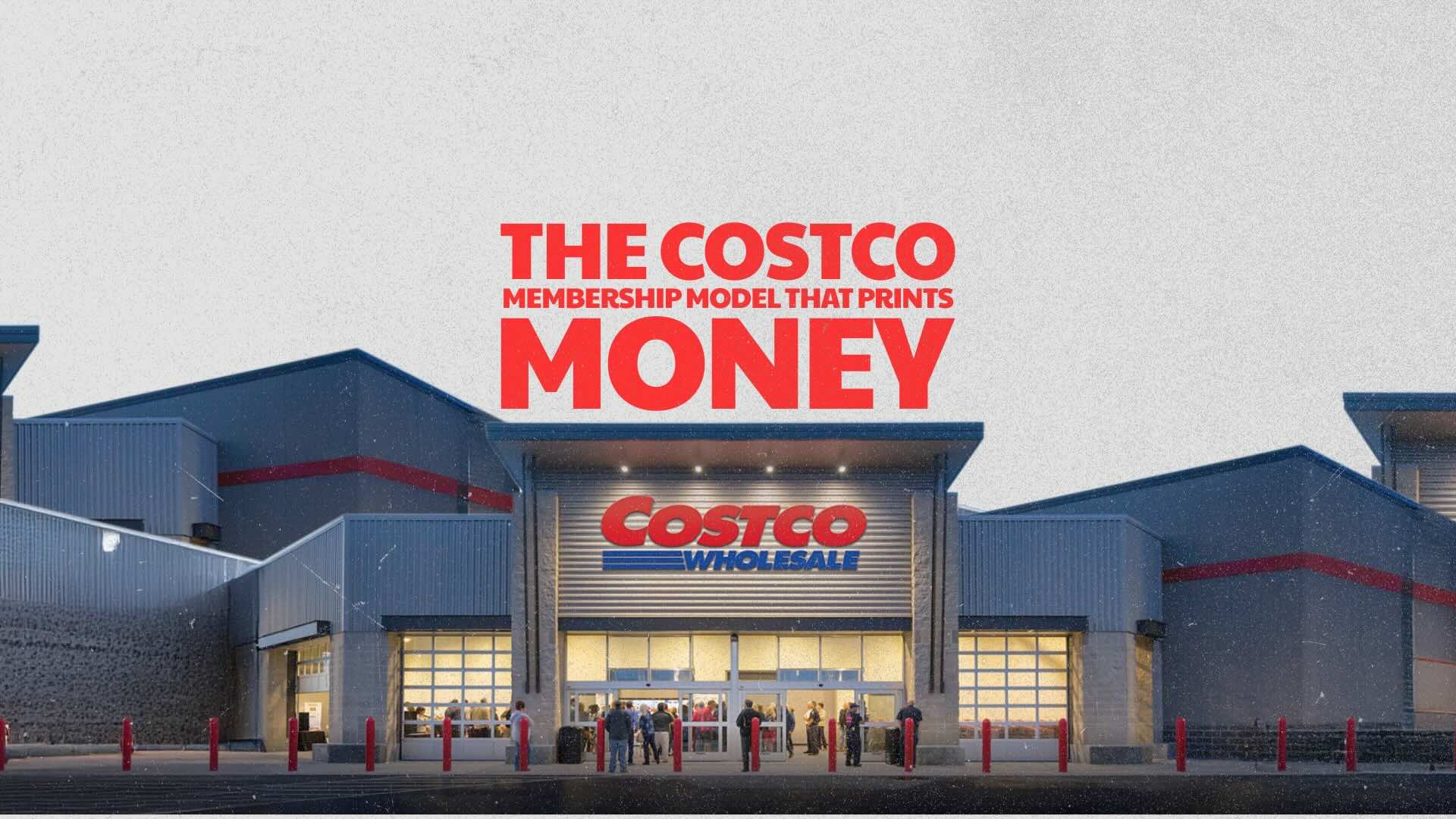
Retail has never been an easy business. Consumer preferences change constantly, competition is fierce, and economic downturns often force shoppers to cut back on spending. Yet every once in a while, a retailer emerges that seems almost immune to the usual pressures. Costco has become one of those rare companies.
The warehouse giant has built a business model that doesn’t simply depend on selling products—it depends on creating loyal members. That distinction has allowed Costco to weather recessions, inflation, supply chain disruptions, and changing shopping habits better than many of its competitors. Its fiscal third-quarter 2025 results only reinforced that reputation, showing strong revenue growth, rising profits, and exceptionally high membership renewal rates despite increasing membership fees.
While many retailers are struggling to convince shoppers to spend more, Costco has created a system where customers willingly pay just for the privilege of shopping there. That strategy has transformed the company into one of the most resilient retailers in the world and explains why investors continue to reward it with a premium valuation.
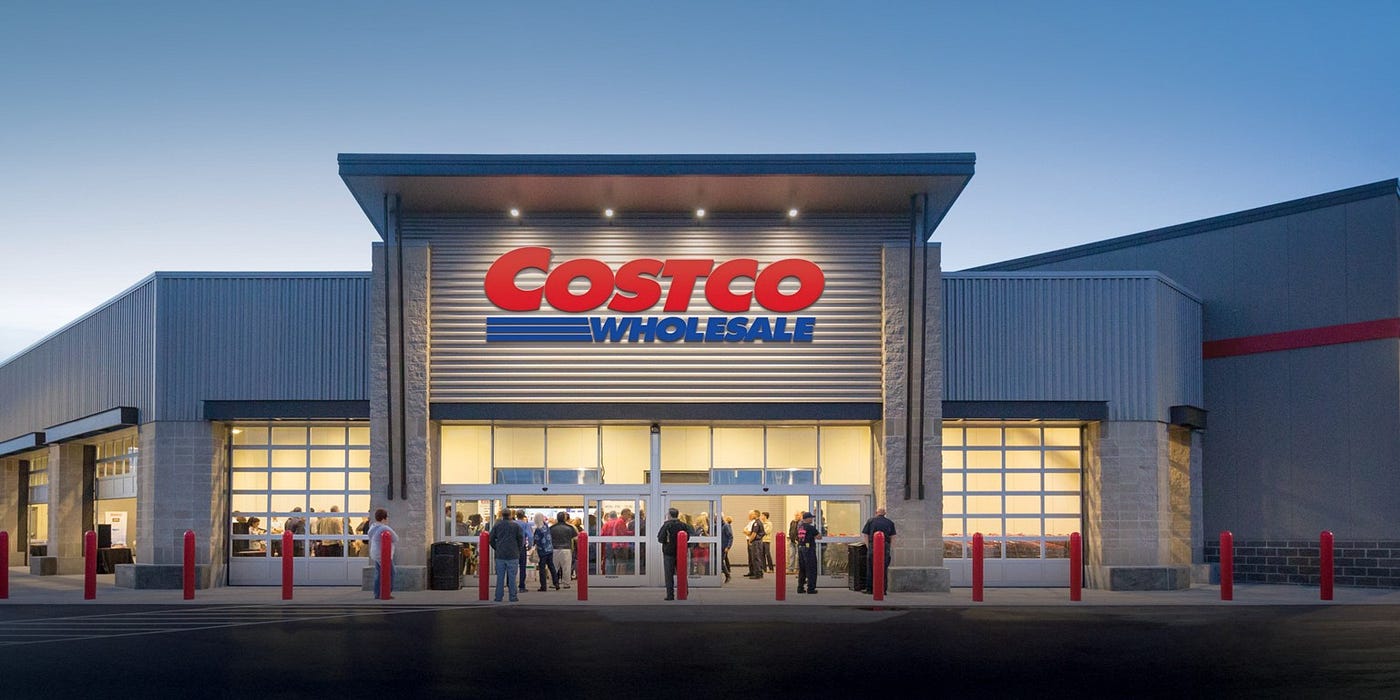
Credits: Medium
A Quarter That Exceeded Expectations
Costco’s latest earnings once again demonstrated the strength of its business model. The company reported earnings per share of $4.28, slightly ahead of analysts’ expectations of $4.24. Revenue grew by 8% year-over-year, continuing a trend of consistent growth that has become characteristic of the retailer.
Even more impressive was the growth in profitability. Net income climbed 13.1% compared to the same period last year, reaching approximately $1.9 billion. While higher sales certainly contributed to the increase, one factor stood above everything else—membership income.
Unlike traditional retailers that rely almost entirely on product margins, Costco earns a significant portion of its operating income through annual membership fees. Those fees generate an extremely profitable stream of recurring revenue, allowing the company to keep merchandise margins unusually low while maintaining healthy overall profitability.
This approach gives Costco a unique advantage that many analysts often compare to software subscription businesses. Just as streaming services or cloud software companies benefit from recurring subscription income, Costco enjoys a dependable revenue source before customers even make their first purchase.
The Secret Behind Costco’s Success
The brilliance of Costco’s business model lies in its simplicity.
Customers pay an annual membership fee to gain access to the warehouse. Once inside, they encounter products priced with remarkably thin markups compared to traditional retailers. Because shoppers know they’re getting competitive prices, they often purchase in larger quantities, resulting in higher average transaction values.
Everyone benefits from the arrangement.
Customers save money on bulk purchases.
Suppliers gain access to enormous sales volumes.
Costco maintains exceptional inventory turnover.
The company collects recurring membership revenue regardless of how much an individual customer spends.
This creates a powerful cycle that becomes stronger with every passing year. As more people join Costco, the company gains greater purchasing power with suppliers. Those savings are passed on to members, making the membership even more valuable and encouraging additional customers to sign up.
It’s a self-reinforcing system that competitors have struggled to replicate successfully.
:max_bytes(150000):strip_icc()/What-Is-Costco-Next-FT-BLOG0424-1a8ef6efaf4f4848bccecb90b6722a64.jpg)
Credits: Food & Wine
Members Keep Coming Back
One of the most remarkable figures in Costco’s latest earnings wasn’t revenue growth or profit—it was the membership renewal rate.
Despite increasing membership fees in September 2024 for the first time in seven years, Costco continues to report renewal rates above 90% worldwide.
For many businesses, raising prices risks losing customers. Costco experienced the opposite.
The standard Gold Star membership increased from $60 to $65, while Executive memberships also became more expensive. Yet the overwhelming majority of members chose to renew without hesitation.
This speaks volumes about the perceived value of the membership.
Customers don’t view the annual fee as an expense. Instead, they see it as an investment that quickly pays for itself through lower grocery prices, discounted fuel, affordable electronics, pharmacy savings, travel services, and exclusive product offerings.
When consumers believe they’re saving hundreds of dollars annually, paying an extra five dollars becomes almost insignificant.
For Costco, however, that seemingly small increase translates into hundreds of millions of dollars in additional operating income.
The Psychology of Paying to Shop
Costco has mastered a fascinating aspect of consumer psychology.
Normally, paying an entrance fee would discourage shoppers. Instead, Costco’s membership makes customers feel invested.
Once someone has paid for a membership, they naturally want to maximize its value. That often means visiting more frequently, buying more products, and choosing Costco over competing retailers.
Psychologists call this the “sunk cost effect.” Having already paid for access, members are motivated to justify the expense by shopping there regularly.
The result is extraordinary customer loyalty.
Instead of constantly chasing new shoppers through expensive advertising campaigns, Costco enjoys repeat visits from millions of members who have already committed to the brand.
This loyalty reduces customer acquisition costs while increasing long-term spending.
Thriving During Tough Economic Times
History shows that Costco performs particularly well when the economy becomes uncertain.
During the global financial crisis of 2008 and 2009, many retailers experienced sharp declines in sales as consumers reduced discretionary spending.
Warehouse clubs, however, remained surprisingly resilient.
Costco continued growing while many competitors struggled because shoppers actively searched for better value.
Buying in bulk may require spending more upfront, but it often reduces the cost per unit significantly. During difficult economic periods, families become more price-conscious, making Costco’s value proposition even stronger.
The same pattern appeared during the COVID-19 pandemic.
As lockdowns spread across the world, consumers rushed to stock up on household essentials.
Costco’s warehouses became one of the primary destinations for bulk purchases, driving massive sales growth. Fiscal 2021 revenue surged by roughly 16%, while online sales accelerated dramatically.
Rather than suffering from changing consumer behavior, Costco benefited from it.

Credits: Finance Buzz
Digital Growth Is Becoming Another Strength
Although Costco is famous for its enormous warehouses, the company is increasingly becoming a digital retailer as well.
Its e-commerce business continues to grow at a healthy pace, expanding by approximately 15% in recent periods.
Customers are purchasing furniture, electronics, appliances, jewelry, and household goods online, while the Costco mobile app has become an increasingly important part of the shopping experience.
Features such as digital membership cards, online ordering, personalized offers, and Scan-and-Go technology reduce friction and encourage repeat purchases.
The digital ecosystem also creates valuable customer data that helps Costco better understand shopping behavior.
Unlike traditional advertising, which can be expensive and unpredictable, the Costco app provides a direct communication channel with millions of loyal members.
Every smartphone carrying the Costco app effectively becomes another touchpoint for customer engagement.
Why Investors Pay a Premium
Costco isn’t a cheap stock.
The company currently trades at a price-to-earnings ratio approaching 60, significantly higher than most traditional retailers.
Normally, investors hesitate to pay such lofty valuations for retail businesses because the industry is cyclical and profit margins tend to be relatively thin.
Costco represents an exception.
Its recurring membership revenue provides unusually stable cash flows.
Its customer loyalty is among the strongest in retail.
Its balance sheet remains exceptionally healthy.
Management has consistently executed its long-term strategy with remarkable discipline.
For investors, these characteristics reduce uncertainty, making Costco appear more like a predictable subscription business than a conventional retailer.
The premium valuation reflects confidence that Costco can continue generating reliable growth for many years.
Challenges Still Lie Ahead
Despite its impressive strengths, Costco is not immune to external pressures.
Inflation continues to increase operating costs across the retail industry.
Tariffs remain another challenge, raising import costs for certain merchandise categories. In the latest quarter, Costco reported a sizeable LIFO inventory accounting charge related to higher costs, illustrating that inflationary pressures remain real.
Competition is also becoming more intense.
Sam’s Club continues investing heavily in technology and store improvements, while Walmart remains one of the world’s largest retailers with enormous purchasing power.
Amazon also continues expanding its grocery and household essentials business, giving consumers additional options for convenience.
Meanwhile, Costco’s premium valuation leaves little room for disappointment.
When expectations are exceptionally high, even small earnings misses can trigger significant stock price volatility.
Investors therefore need to balance admiration for the company’s strengths with awareness of the risks associated with paying a premium price.
:max_bytes(150000):strip_icc()/GettyImages-2181015208-93c46a880996429e8f16f9b1d6736d60.jpg)
Credits: Investopedia
Can Costco Continue Winning?
Wall Street remains largely optimistic.
Most analysts continue to recommend buying the stock, citing Costco’s consistent execution, resilient business model, expanding membership base, and ability to outperform competitors even during challenging economic conditions.
Analysts also point to Costco’s focus on essential consumer goods as an advantage. Unlike retailers that depend heavily on discretionary spending, Costco generates much of its revenue from groceries and everyday necessities that consumers continue purchasing regardless of economic conditions.
Its scale further strengthens this advantage.
Because Costco purchases enormous quantities from suppliers, it often negotiates lower prices than smaller competitors can achieve. These savings reinforce the company’s reputation for value, creating another competitive moat that becomes increasingly difficult to challenge.
A Membership Model Built for the Long Term
Costco has proven that the most successful retailers aren’t necessarily those with the largest stores or the biggest advertising budgets. Instead, lasting success comes from building genuine customer loyalty and creating a business model that benefits both shoppers and shareholders.
Its latest quarterly performance illustrates why the company continues to stand apart in an increasingly competitive retail landscape. Strong sales growth, rising profits, expanding digital capabilities, and membership renewal rates above 90% all point to a business that continues to execute with remarkable consistency.
While macroeconomic headwinds, tariffs, inflation, and premium valuation risks shouldn’t be ignored, Costco’s core strengths remain firmly intact. Its membership-driven strategy provides predictable recurring income, encourages repeat shopping, and allows the company to maintain competitive pricing without sacrificing profitability.
In an industry where many retailers struggle to adapt to changing consumer habits, Costco has built a model that grows stronger with every new member. That combination of resilience, loyalty, and disciplined execution explains why the warehouse giant continues to outperform expectations—and why many investors believe its story is far from over.