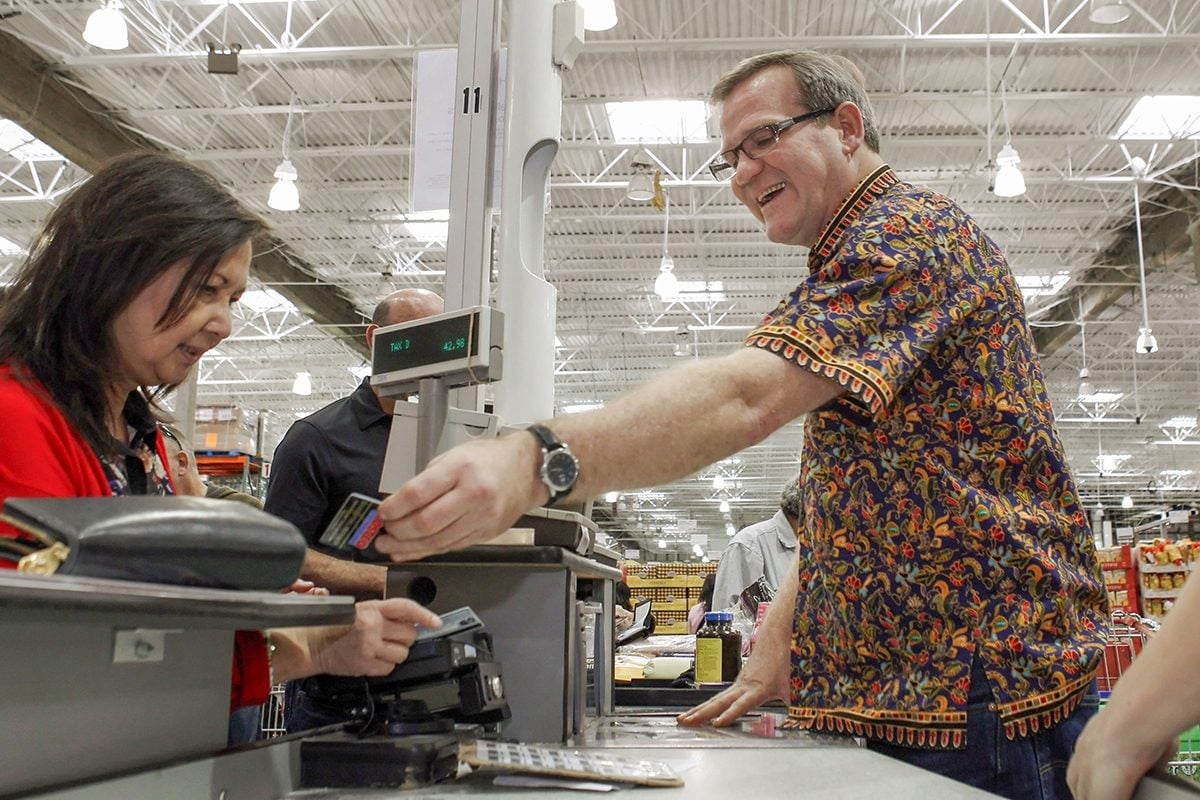
Walk into almost any major retailer today, and you’ll find a familiar sign at the checkout counter: We accept Visa, Mastercard, American Express, and Discover. It’s become the industry standard, giving customers the freedom to pay however they like. But Costco is one of the few retail giants that breaks this rule.
If you’ve ever tried paying with an American Express card at a Costco warehouse in the United States, you’ve probably been greeted with an awkward moment at the register. Despite being one of the world’s biggest retailers, Costco only accepts Visa credit cards in its physical stores. It’s a policy that surprises many shoppers, especially since American Express is one of the largest payment networks globally.
So why would a company willingly turn away millions of potential cardholders? The answer has nothing to do with brand rivalry or customer preference. Instead, it reveals a fascinating lesson in negotiation, operating efficiency, and one of the most disciplined retail business models ever created.
Credits: WSJ
Costco’s Business Model Depends on Keeping Costs Low
To understand Costco’s payment policy, you first need to understand how the company makes money.
Unlike traditional retailers that rely heavily on product markups, Costco follows a completely different approach. Its merchandise margins are intentionally kept extremely low, often ranging between 10% and 15%. Many supermarkets and department stores mark up products by 30% to 50%, but Costco refuses to play that game.
Instead, the company earns a significant portion of its profits from annual membership fees. Millions of members pay every year for the privilege of shopping at Costco, providing the retailer with a steady stream of recurring revenue.
This unique model allows Costco to sell products at prices that competitors often struggle to match. However, it also means that every operating expense matters. A small increase in costs can quickly eat into already-thin margins.
That includes the fees Costco pays every time someone swipes a credit card.
The Hidden Cost Behind Every Credit Card Transaction
Every time you use a credit card, the retailer doesn’t receive the full purchase amount.
Instead, banks and payment networks charge what’s known as a merchant or interchange fee. Depending on the payment network, this fee usually ranges from around 1% to 3% of every transaction.
For most retailers, these fees are simply another cost of doing business.
But Costco processes billions of dollars in annual sales. Even a tiny difference in processing costs can translate into hundreds of millions of dollars over time.
For example, imagine two payment networks charging 1.6% and 2.5% respectively. That difference may seem insignificant on a single $100 purchase, but multiply it across millions of daily transactions, and the savings become enormous.
Costco realized that controlling payment costs could help it continue offering lower prices to members.
Why American Express Was the Odd One Out
American Express has long operated differently from Visa and Mastercard.
Unlike Visa and Mastercard, which mainly function as payment networks connecting banks, merchants, and consumers, American Express historically acted as both the card issuer and payment processor. This allowed it to offer premium rewards, travel benefits, airport lounge access, and luxury perks.
However, these premium benefits came at a cost.
American Express traditionally charged merchants higher processing fees than Visa and Mastercard. Retailers accepted those higher costs because Amex cardholders often spent more money per transaction.
For luxury retailers and upscale restaurants, that trade-off made sense.
For Costco, it didn’t.
Costco isn’t trying to maximize profits on individual purchases. Its entire business depends on keeping prices as low as possible. Paying higher merchant fees would either reduce profits or force Costco to increase prices across thousands of products.
Neither option fit the company’s strategy.
Costco and American Express Were Once Partners
Ironically, Costco and American Express weren’t always on opposite sides.
For years, American Express was Costco’s exclusive credit card partner in the United States. If you shopped at Costco before 2016, chances are you regularly used an Amex card.
The partnership lasted for over a decade and became one of American Express’s largest commercial relationships.
During this period, Costco members could only use American Express credit cards inside warehouses. Visa and Mastercard users had to rely on debit cards or cash.
But as Costco continued growing, the retailer gained more negotiating power.
When it came time to renew the partnership, Costco reportedly wanted lower processing fees and more favorable financial terms. American Express wasn’t willing to reduce its pricing enough to satisfy Costco’s demands.
As negotiations stalled, Costco explored alternatives.
The Visa Deal Changed Everything
In 2016, Costco announced one of the biggest payment network changes in retail history.
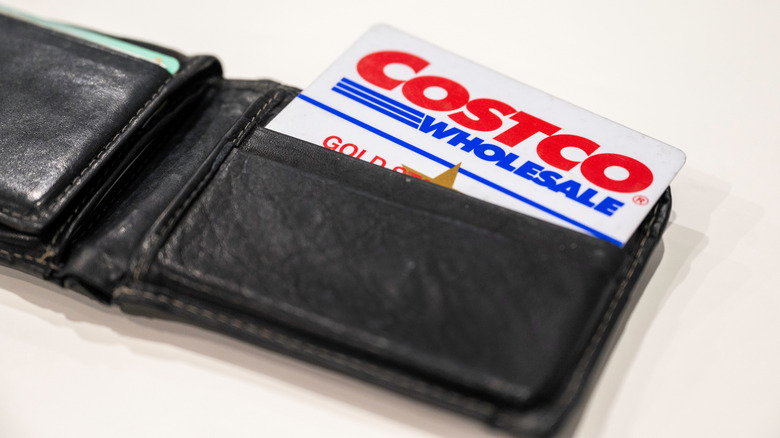
The retailer ended its long-standing partnership with American Express and signed an exclusive agreement with Visa instead. At the same time, Citi became the issuer of Costco’s co-branded credit card.
The switch wasn’t simply about replacing one logo with another.
Visa reportedly offered Costco significantly lower merchant fees while maintaining a reliable payment infrastructure capable of handling millions of transactions every day.
For Costco, the decision was straightforward.
Lower payment processing costs meant lower operating expenses, which aligned perfectly with the company’s low-price promise.
The transition affected millions of members, who had to replace their Costco-branded American Express cards with new Visa cards issued by Citi.
Although the change created short-term inconvenience, it ultimately strengthened Costco’s cost structure.
Credits: Chowhound
Exclusive Partnerships Give Costco More Bargaining Power
Most retailers accept every major credit card network because they don’t want to inconvenience customers.
Costco deliberately chose a different strategy.
By offering exclusivity, Visa receives access to one of the largest groups of loyal retail shoppers in the world. In return, Costco receives better financial terms than it might otherwise negotiate.
It’s a classic example of using purchasing power to reduce costs.
Costco buys products in enormous volumes, allowing it to negotiate lower wholesale prices from suppliers.
It applies exactly the same philosophy to payment processing.
Instead of treating payment networks equally, Costco creates competition between them and rewards the company willing to provide the best deal.
Customers Benefit More Than They Realize
At first glance, limiting payment options seems inconvenient.
Many shoppers wonder why Costco can’t simply accept every major credit card like everyone else.
The answer lies in who ultimately pays merchant fees.
Retailers often pass these expenses on to customers through higher prices.
If Costco accepted payment networks with significantly higher fees, those costs would eventually appear somewhere—either through increased membership prices, higher product prices, or reduced profitability.
By minimizing payment expenses, Costco helps preserve the value proposition that members expect.
This strategy contributes to the retailer’s ability to keep prices stable on many of its best-selling products.
The famous $4.99 rotisserie chicken has become a symbol of Costco’s commitment to value. While payment processing isn’t the only factor behind maintaining that price, reducing operational costs across the business certainly helps.
What Payment Methods Does Costco Accept?
Although American Express isn’t accepted in Costco warehouses, shoppers still have plenty of payment options.
In physical Costco locations, customers can use:
- Visa credit cards
- Cash
- Costco Shop Cards
- Most PIN-based debit cards
- ATM cards
- Apple Pay
- Google Pay
- Samsung Pay
- EBT cards
- Personal checks from Costco members
- Business checks from Costco Business members
- Eligible FSA and HSA debit cards for pharmacy, optical, and hearing aid purchases
Interestingly, Costco.com is slightly different.
Online shoppers can use both Visa and Mastercard credit cards, along with Apple Pay and several debit card options.
This means Mastercard users who can’t use their cards inside warehouses can still shop through Costco’s website without any issues.

Credits: AS USA – Diario AS
Could Costco Ever Accept American Express Again?
Never say never.
Retail partnerships change all the time. Costco itself proved this by ending its long relationship with American Express in favor of Visa.
However, any future reunion would likely depend on economics rather than customer demand.
If American Express could offer merchant fees that matched or beat Visa’s pricing, Costco would probably consider the proposal.
But under the current system, Visa continues to offer a financial arrangement that supports Costco’s business model.
As long as that remains true, there is little incentive for Costco to change.
The Bigger Lesson Behind Costco’s Decision
Costco’s Visa-only policy is about much more than credit cards.
It reflects the company’s broader philosophy of eliminating unnecessary costs wherever possible.
Whether it’s limiting product selection, selling items in bulk, minimizing warehouse décor, charging membership fees, or negotiating aggressively with suppliers, every decision is made with efficiency in mind.
The exclusive Visa partnership fits perfectly into that strategy.
Rather than offering every possible payment option, Costco prioritizes lower operating costs that benefit millions of members through lower prices.
In an era where many retailers compete by adding more features and services, Costco has built one of the world’s most successful retail businesses by doing the opposite—simplifying operations and relentlessly controlling costs.
The next time someone wonders why their American Express card doesn’t work at Costco, the answer is surprisingly simple. It’s not because Costco dislikes Amex or wants to inconvenience shoppers. It’s because saving a fraction of a percent on every transaction adds up to enormous savings over billions of dollars in sales—and those savings help keep the warehouse giant’s famous bargains alive.