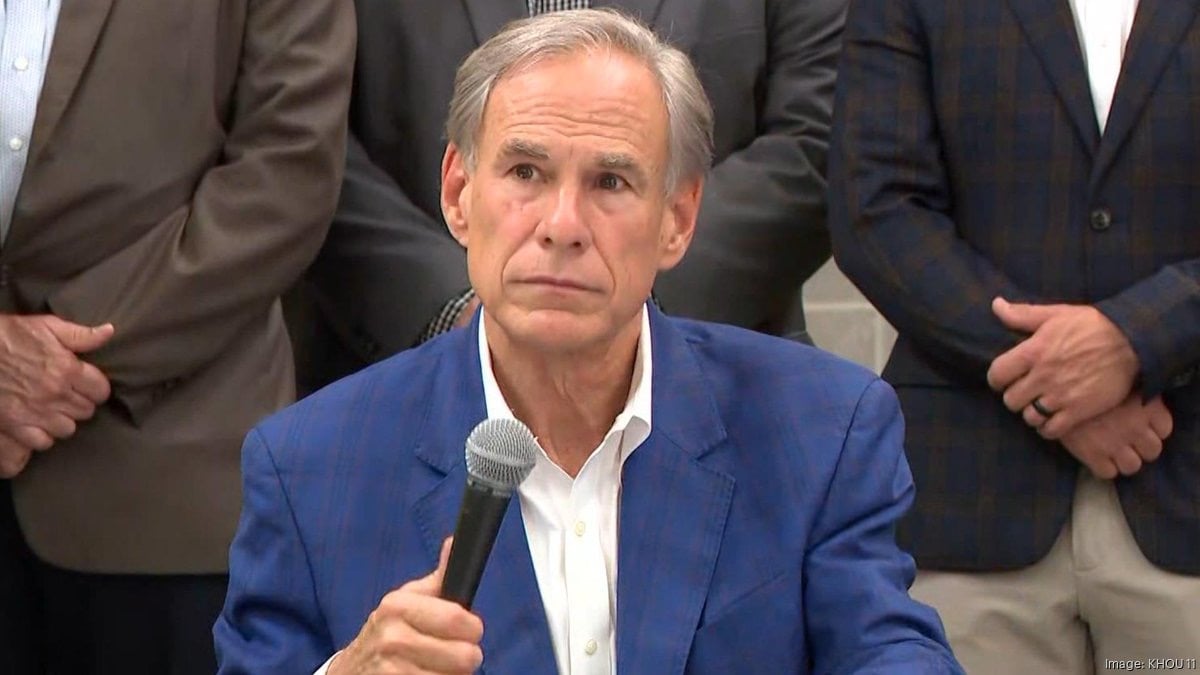
Texas Gov. Greg Abbott has ordered state environmental regulators to temporarily stop issuing permits for new data centers while state agencies conduct an audit of the industry’s growing demand for electricity and water.
The move comes as Texas faces a surge in data center development driven by artificial intelligence, cloud computing and other digital services. The facilities are becoming larger and more energy-intensive, raising concerns about whether the state’s power grid and water infrastructure can support the industry’s rapid expansion.
Under Abbott’s directive, the Texas Commission on Environmental Quality will pause permits for data center projects while state officials gather information about their expected resource consumption. The review is intended to provide a clearer picture of how much electricity and water the facilities will require and whether developers are adequately accounting for the infrastructure costs associated with their operations.
The decision represents a new phase in Texas’ approach to the data center industry, which has received significant investment in recent years.

Texas faces rising electricity demand
Data centers have become a major source of new electricity demand in Texas.
Unlike many conventional commercial facilities, large data centers can operate continuously, with thousands of servers running around the clock. The electricity is required not only to power computing equipment but also to operate cooling systems and other infrastructure.
The rapid development of artificial intelligence has increased the pressure.
AI systems require substantial computing capacity, particularly when companies train large models and operate services for millions of users. As technology companies expand their AI operations, they are building increasingly large data centers capable of supporting specialized processors and high-performance computing systems.
Texas has attracted many of these projects because of its large land availability, energy resources and business environment. However, the growing number of proposed facilities has raised questions about whether the state’s electricity system can accommodate all of them.
State officials are now examining the potential demand before allowing additional projects to move forward.
Electricity audit underway
The permitting halt is connected to a broader review involving Texas energy regulators.
Officials are examining data center projects seeking connections to the state’s electricity grid and assessing how much additional power the facilities could require.
The volume of proposed projects has become a major concern. Developers have submitted requests representing enormous amounts of potential electricity demand, although many proposed projects may never ultimately be built.
The distinction is important because a request for a grid connection does not necessarily mean that a facility will become operational. Projects can be delayed, canceled or reduced in size.
Nevertheless, state officials want to understand the potential demand before making long-term decisions about electricity generation and transmission infrastructure.
Texas has experienced rapid population growth and increasing industrial activity in addition to the expansion of data centers. New manufacturing facilities, oil and gas operations and other large businesses are also competing for electricity.
The data center review is therefore part of a larger discussion about how Texas should prepare its power system for future demand.
Water use becomes another concern
Electricity is not the only resource attracting attention.
Data centers generate substantial amounts of heat, requiring sophisticated cooling systems to keep computer equipment operating safely. Some cooling technologies rely heavily on water, making water consumption an important consideration when evaluating new facilities.
The issue is particularly significant in parts of Texas where communities already face concerns over water availability.
State officials are reviewing how much water data centers currently use, how much future facilities could require and whether companies are using technologies that reduce consumption.
The review could influence where new facilities are built and what conditions are attached to future projects.
Data center developers have increasingly explored alternative cooling technologies, including systems designed to reduce or eliminate continuous water consumption. However, the technology used can vary depending on the size and design of each facility.
Developers could face longer approval timelines
The temporary permitting halt creates uncertainty for companies planning new data centers in Texas.
Projects that were preparing to begin construction may now have to wait for regulators to complete their reviews. Companies could also face additional requirements concerning electricity consumption, water use and infrastructure costs once the audits are completed.
The pause does not mean Texas is closing its doors to data center investment.
Instead, state officials are seeking more information before approving additional projects. The objective is to determine whether new facilities can operate without placing excessive pressure on existing infrastructure.
The review could eventually result in new rules governing data center development.
Those rules could address how projects connect to the power grid, how much infrastructure developers must finance themselves and how water consumption is monitored.
Who pays for new infrastructure?
One of the biggest issues surrounding the data center boom is the cost of supporting new facilities.
Building a large data center can require new transmission lines, substations, electricity generation capacity and other infrastructure.
State officials have increasingly argued that data center companies should pay a greater share of these costs rather than passing them on to ordinary electricity customers.
The concern is that utilities could make investments specifically to serve large technology projects, potentially increasing costs for other customers if the expected demand does not materialize.
Abbott has indicated that Texas needs to ensure data centers cover the infrastructure costs associated with their operations.
The issue could become an important part of future discussions in the Texas Legislature.
AI boom complicates the decision
Texas’ permitting decision comes at a time when demand for AI infrastructure is increasing rapidly.
Technology companies are investing billions of dollars in new computing capacity, and data centers are becoming a critical component of the global AI economy.
Restricting or delaying new projects could affect the pace at which companies expand their operations in Texas. At the same time, allowing unlimited development could create challenges for the state’s electricity and water systems.
That tension is at the center of the current review.
Texas wants to remain a major destination for technology investment while ensuring that its infrastructure can keep up with growth.
For now, Abbott’s directive puts new data center permits on hold while regulators gather information about the industry’s impact.
The results of the electricity and water audits could determine how Texas handles future projects and whether developers face stricter requirements.
As artificial intelligence continues to drive demand for computing power, the state’s decision could become an important example of how governments balance technology investment with energy reliability, water availability and infrastructure costs.