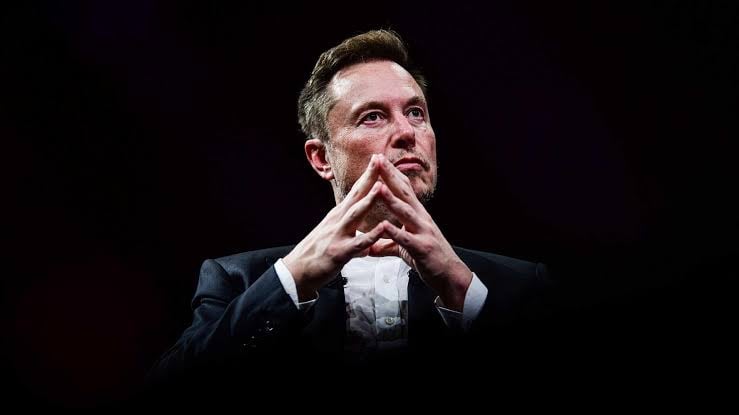
Elon Musk has sparked a new conversation about the future of medicine after describing disease treatment as increasingly similar to solving a software problem. His comments came as advances in artificial intelligence, mRNA technology and personalised cancer vaccines point toward a future in which treatments could be designed around the unique biological characteristics of individual patients.
Musk’s remarks followed encouraging developments from Moderna and Merck involving a personalised mRNA cancer vaccine for melanoma. The companies reported positive results from a late-stage clinical trial, raising hopes that personalised vaccines could eventually become an important tool in preventing cancer from returning after treatment.
“Curing diseases is now a software problem,” Musk said, highlighting his belief that artificial intelligence and programmable biological technologies could fundamentally change the way scientists approach disease.
The statement is provocative, but it captures a major shift occurring in biotechnology. Researchers are increasingly using computers and AI to analyse enormous quantities of genetic information, identify potential disease targets and help design treatments that are more precisely matched to individual patients.
How the Moderna Breakthrough Works
The Moderna vaccine, developed in partnership with Merck, is designed to help the immune system recognise and attack cancer cells based on mutations found in a patient’s tumour.
The treatment is being tested in people with melanoma, one of the most aggressive forms of skin cancer. Even after a tumour has been surgically removed, there is a possibility that cancer cells can remain in the body and eventually cause the disease to return.
The personalised vaccine is intended to reduce that risk.
Unlike conventional vaccines, which are generally designed to protect large populations against the same infectious organism, a personalised cancer vaccine can be created using information from an individual patient’s tumour.
Scientists analyse the genetic makeup of the tumour and identify mutations that could serve as targets for the immune system. The selected targets are then incorporated into an mRNA-based treatment.

The objective is to train the immune system to recognise those specific markers and respond if cancer cells carrying them are encountered later.
In a Phase 3 trial involving more than 1,000 patients with high-risk melanoma, Moderna and Merck reported that the combination of their personalised vaccine and the immunotherapy drug Keytruda reduced the risk of the cancer returning or spreading compared with Keytruda alone.
The results have increased expectations surrounding personalised cancer vaccines, although further evaluation and regulatory review will be required before the treatment can become widely available.
Where Artificial Intelligence Comes In
AI is becoming an increasingly important part of this process because cancer is extraordinarily complex.
A tumour can contain thousands of genetic changes, but only a fraction of them may be useful targets for treatment. Determining which mutations are most likely to trigger a strong immune response requires analysing huge amounts of biological information.
AI systems can help researchers process this information much faster.
Algorithms can examine genetic sequences, identify patterns and rank potential targets according to their likelihood of producing a useful immune response. This can help scientists narrow down the mutations that should be included in a personalised vaccine.
The process resembles programming in one important sense.
Instead of developing a single fixed treatment for every patient, scientists can use biological data to generate a set of instructions tailored to a specific individual. The mRNA then acts as a temporary set of instructions that tells cells to produce particular proteins.
In cancer treatment, those proteins can help the immune system recognise tumour-specific targets.
This is what makes mRNA technology particularly interesting. The underlying platform can remain largely the same while the genetic instructions can be changed depending on what scientists want the patient’s cells to produce.
A Shift Toward Personalised Medicine
The development also reflects a broader movement away from one-size-fits-all medicine.
Two patients can have the same type of cancer but possess completely different tumour mutations. As a result, a treatment that works well for one person may be less effective for another.
Personalised medicine attempts to address this difference.
Instead of asking which existing treatment works best for an entire group of patients, researchers can increasingly ask which treatment is best suited to the biology of an individual patient.
AI could make this approach more practical by reducing the time needed to analyse complex biological information.
In the future, doctors could potentially obtain a tumour sample, sequence its genetic information and use computational systems to identify the most promising targets. A personalised treatment could then be designed and manufactured specifically for that patient.
Such a system could significantly change how certain cancers are treated.
Moderna’s Ambitions Beyond Melanoma
The melanoma programme is only one part of Moderna’s broader effort to develop personalised cancer vaccines.
Researchers are exploring whether similar approaches can be used against other cancers, including lung, bladder, kidney, pancreatic and gastrointestinal cancers.
If the technology proves successful across different diseases, the implications could extend well beyond melanoma.
However, major challenges remain. Personalised treatments must be produced quickly enough to benefit patients, and the manufacturing process needs to become efficient and affordable. Scientists also need to determine which cancers and patients are most likely to benefit from the approach.
Safety and long-term effectiveness will remain critical considerations as these treatments move through clinical development.
What Musk’s Statement Really Means
Musk’s description of medicine as a “software problem” should not be interpreted literally. Biology is far more complicated than computer code, and AI cannot simply solve diseases with a few lines of programming.
Instead, his comments point toward the growing convergence between computing and biology.
Artificial intelligence can analyse information. Genetic sequencing can reveal the biological instructions underlying disease. mRNA technology can deliver new instructions to cells. Together, these technologies create a system in which biological treatments can increasingly be designed, adjusted and personalised using computational tools.
The Moderna results provide an example of how that vision is beginning to take shape.
The technology is still developing, and personalised cancer vaccines are not yet a universal cure for cancer. Nevertheless, the combination of AI, genetic analysis and programmable medicine could dramatically accelerate the search for better treatments.
For decades, medicine has relied heavily on discovering drugs that work across large populations. The emerging model is different. It focuses on understanding the individual patient and designing interventions around their specific biology.
That is the transformation Musk is highlighting.
If AI can help scientists understand diseases at a molecular level and mRNA can deliver customised biological instructions, the future of medicine could become increasingly programmable.
The latest developments in personalised cancer vaccines suggest that this future is no longer purely theoretical. It is already being tested in patients—and could eventually redefine how diseases are understood, treated and, in some cases, prevented from returning.