• Send Us A Tip
  • Calling all Tech Writers
  • Advertise
Saturday, October 24, 2026
  • Login
TechStory
  • News
  • Crypto
  • Gadgets
  • Memes
  • Gaming
  • Cars
  • AI
  • Startups
  • Markets
  • How to
No Result
View All Result
  • News
  • Crypto
  • Gadgets
  • Memes
  • Gaming
  • Cars
  • AI
  • Startups
  • Markets
  • How to
No Result
View All Result
TechStory
No Result
View All Result
Home Future Tech AI

Google Employees Resign Amid Backlash Over AI Contracts With Military

The reported resignations reflect a broader movement among technology workers who believe companies should exercise greater caution when developing systems for military use.

by Shailja Jha
October 24, 2026
in AI, Tech, Trending, World
Reading Time: 5 mins read
0
Google Employees Resign Amid Backlash Over AI Contracts With Military
TwitterWhatsappLinkedin

Google is facing renewed internal criticism over its artificial intelligence contracts with military organizations, with reports of employees resigning in protest against the company’s involvement in defense-related projects. The controversy highlights growing tensions within the technology industry as companies expand their relationships with government agencies while workers raise ethical concerns about how advanced AI systems could be used.

You might also like

How Accurate Captions Make Short Mobile Videos More Accessible and Easier to Understand

At Least 17 Data Center Campuses Proposed on US Public Lands, Raising Environmental Concerns

Multiple Reports Allege Nvidia Fueled Gaming GPU Crisis by Encouraging Big Tech to Stockpile AI Hardware

The backlash comes as artificial intelligence becomes increasingly important to military operations, intelligence analysis and national security. Although these technologies can improve efficiency and support defensive capabilities, their potential applications in surveillance and warfare have prompted concerns among researchers, engineers and other technology professionals.

For Google, the dispute raises questions about corporate responsibility, employee trust and the boundaries technology companies should establish when supplying AI tools to government customers.
Google employees resign over Project Maven and AI for military: Here's what  has happened | Technology News - The Indian Express

Employees Challenge Military AI Partnerships

The reported resignations reflect a broader movement among technology workers who believe companies should exercise greater caution when developing systems for military use. Employees have raised concerns about the possibility that AI technologies originally designed for civilian applications could eventually support activities that conflict with their ethical principles.

Artificial intelligence can process enormous volumes of information, identify patterns and generate insights that would otherwise require substantial human effort. These capabilities make the technology attractive to military organizations seeking to improve intelligence analysis and operational planning.

However, critics argue that the same capabilities can introduce serious risks when applied to sensitive military operations. Depending on how systems are deployed, AI could support surveillance, target identification or other decisions with significant consequences for human safety.

Employees concerned about these applications may question whether companies have sufficient safeguards to prevent their technology from being used in harmful ways.

The resignations also demonstrate how disagreements over corporate strategy can extend beyond boardrooms. In an industry that depends heavily on specialized engineering and research talent, employees increasingly expect their employers to explain how their work aligns with stated ethical commitments.

Google’s History of Military AI Controversies

Google has previously faced significant employee opposition over defense-related technology projects. In 2018, protests over Project Maven, a US Department of Defense initiative involving AI-assisted analysis of drone imagery, led the company to decide against renewing its contract.

The controversy became a defining moment in discussions about the ethical responsibilities of technology companies. Employees questioned whether their work should contribute to military applications, while the company faced pressure to clarify its position on developing AI for defense purposes.

The episode also demonstrated that internal opposition could influence corporate decisions about government partnerships.

The latest reported backlash raises similar questions about Google’s approach to military AI contracts. As the company’s AI capabilities expand, determining which applications are acceptable has become increasingly complicated.

Modern AI systems can serve multiple purposes, making it difficult to draw clear boundaries between civilian and military uses. Technologies designed for data analysis, cloud computing and automation may also prove useful to defense organizations.

This versatility creates commercial opportunities but complicates efforts to establish consistent ethical standards.

Why Military Organizations Want AI

Military organizations are exploring artificial intelligence to improve efficiency across several operational areas. Potential applications include intelligence analysis, cybersecurity, logistics, equipment maintenance and the processing of information collected from different sources.

AI tools can help personnel identify patterns, organize complex datasets and make sense of information more quickly. These capabilities may be particularly valuable when organizations must respond to rapidly changing security threats.

Governments are also investing in advanced computing infrastructure to strengthen cybersecurity and modernize public-sector operations.

Nevertheless, military AI applications raise concerns about accuracy, accountability and human oversight. AI systems can produce incorrect results, misunderstand context or generate misleading conclusions. In sensitive environments, such failures could have serious consequences.

Critics argue that companies supplying these technologies should establish clear restrictions on their use, particularly when applications could affect civilians or fundamental human rights.

They also emphasize that consequential decisions should not be delegated to automated systems without appropriate safeguards and meaningful human supervision.

Growing Divisions Across the Technology Industry

Google’s reported employee backlash reflects a wider debate across the technology sector about cooperation with military and intelligence agencies.

Some workers believe technology companies should avoid projects that could facilitate warfare or intrusive surveillance. They argue that commercial innovation should prioritize public welfare and avoid applications that could cause significant harm.

Others maintain that providing advanced technology to defense organizations can support legitimate national security objectives. AI systems, for example, may help identify cybersecurity threats, protect critical infrastructure and improve logistical planning.

These contrasting positions create difficult choices for corporate leadership.

Companies must balance commercial opportunities and government relationships against employee expectations, public scrutiny and their own commitments to responsible AI development.

Persistent disagreements can also affect workplace morale and recruitment. Employees who believe their concerns are being ignored may seek opportunities elsewhere, while prospective candidates may scrutinize a company’s policies before accepting positions.

For organizations competing to recruit highly skilled AI researchers and engineers, maintaining employee confidence is an increasingly important consideration.

The Challenge of Responsible AI Development

The controversy highlights a fundamental question about accountability in the AI industry: how much responsibility should developers bear for the eventual use of their technology?

Companies may develop general-purpose systems that customers subsequently adapt for specific purposes. Although developers cannot always predict every application, they can introduce safeguards designed to limit foreseeable misuse.

Potential measures include contractual restrictions, technical controls, independent evaluations and monitoring mechanisms. Clear policies can also help employees understand which projects the company considers acceptable.

However, safeguards are only effective when they can be implemented and enforced. Critics may therefore call for greater transparency regarding military contracts, the intended applications of AI systems and the measures used to prevent misuse.

Employees seeking stronger protections may argue that ethical assessments should take place before contracts are signed, rather than after concerns emerge.

As AI capabilities continue to advance, technology companies will face increasing pressure to demonstrate that their governance policies are meaningful and effective.
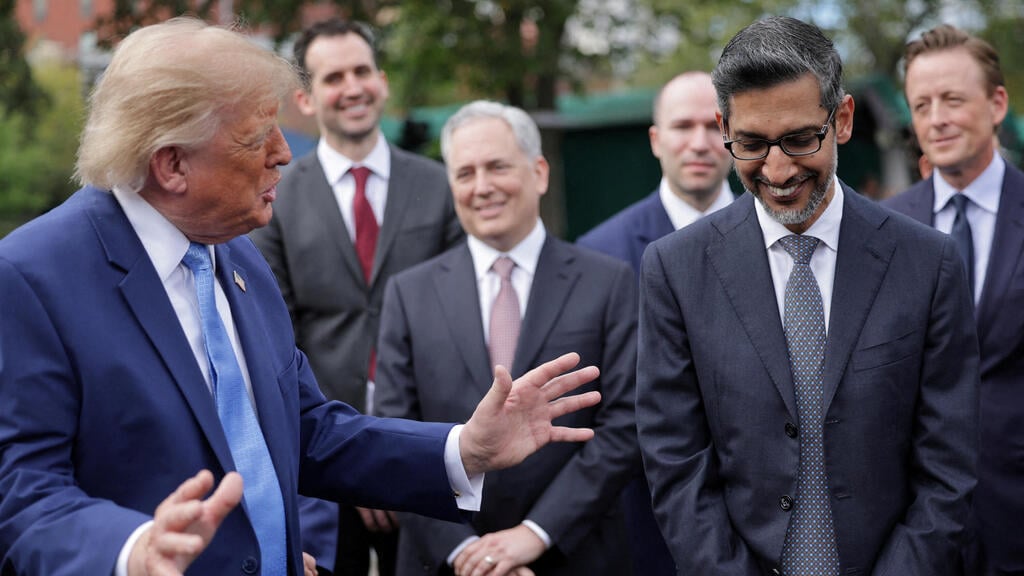
Ashamed to work at Google': DeepMind researchers quit over US military AI  contracts

Conclusion

The reported resignations at Google over its AI contracts with military organizations underscore the growing conflict between commercial expansion and ethical responsibility in the technology industry.

As governments pursue advanced AI capabilities, companies must determine how to balance national security partnerships with concerns about surveillance, warfare and human safety.

For Google, the controversy renews questions about transparency, employee participation and the limits of military AI applications. Its experience with Project Maven illustrates how disagreements over defense contracts can influence corporate decision-making and shape public perceptions of technology companies.

Ultimately, the debate extends beyond a single company. It highlights the need for clear AI governance policies, effective safeguards and accountability for the use of powerful technologies. How Google and other technology companies respond could influence the future relationship between the AI industry, its workforce and military organizations.


Tags: Artificial Intelligenceartificial intelligence newsartificial intelligence updatesGoogleGoogle Employees Resign Amid Backlash Over AI Contracts With MilitaryGoogle is facing renewed internal criticism over its artificial intelligence contracts with military organizationsGoogle NewsGoogle updatesTech newsTechstoryThe reported resignations reflect a broader movement among technology workers who believe companies should exercise greater caution when developing systems for military use.
Tweet54SendShare15
Previous Post

Multiple Reports Allege Nvidia Fueled Gaming GPU Crisis by Encouraging Big Tech to Stockpile AI Hardware

Next Post

At Least 17 Data Center Campuses Proposed on US Public Lands, Raising Environmental Concerns

Shailja Jha

Recommended For You

How Accurate Captions Make Short Mobile Videos More Accessible and Easier to Understand

by Rohan Mathawan
October 24, 2026
0
Short videos have become a daily habit for mobile users. People watch clips on buses, in waiting rooms, during breaks, and late at night with the volume turned down. Gaming highlights, creator tutorials, reaction clips, and quick product reviews all compete for a few seconds of attention. In that setting, captions are no longer a bonus feature. They are a core part of how a video communicates. When captions are accurate, they help more people follow along, understand the message, and enjoy the content as the creator intended. When they are careless, they can confuse viewers or leave them out entirely. Why Captions Matter for Mobile Viewers Many creators now rely on a caption generator to turn spoken audio into on screen text quickly, which saves time when they publish several clips each week. The real value of that text, however, depends on how closely it matches what is actually said and heard. For viewers who are deaf or hard of hearing, captions are the main way to access speech, tone, and important sound cues. For other viewers, captions support situations where audio is not practical, such as noisy streets, shared spaces, or quiet environments. A clip with clear and correct text works for all of these people without requiring any extra effort from them. Accessibility Starts with Accuracy Accessibility is about giving every viewer a fair chance to understand the content. Captions that skip words, change meanings, or misspell names can make that difficult. A viewer who relies on text cannot compare it against the audio, so any error becomes part of the message they receive. Accurate captions should include the spoken words, the speaker when it is not obvious, and meaningful sounds such as music cues, laughter, or alerts. For example, in a cooking clip, a caption that reads "add two teaspoons of salt" instead of "add two tablespoons of salt" changes the result of the recipe. Accuracy protects the viewer from small mistakes with real consequences. Comprehension in Fast Moving Gaming Clips Gaming clips move quickly. Players speak fast, use abbreviations, call out locations, and react to events that happen in a split second. Team callouts such as map positions, weapon names, and character abilities often sound similar when heard quickly, which makes accurate text especially useful. A viewer who is new to a game may not recognize a term by ear, but seeing it written correctly helps them learn it. Captions also help when the in game audio, music, and voice chat overlap. Clear text separates the commentary from the background noise, so the viewer can follow what the player is saying without replaying the clip several times. Creator Clips and Clear Communication Creators share advice, tutorials, opinions, and stories in short formats where every second counts. Captions give them a way to reinforce key points without adding extra length. A beauty creator can display product names exactly as spoken, a fitness creator can show the number of repetitions, and a tech reviewer can spell out model names that are easy to mishear. Captions also help viewers whose first language is not the language of the video. Reading along while listening can make unfamiliar accents or fast speech easier to follow. This does not replace translation, but it supports comprehension for people who are still building their listening skills. Common Caption Errors and Their Effects Some caption mistakes appear again and again in short videos. Understanding them helps creators know what to check before publishing. Homophones, such as "their" and "there," or "to" and "two," can change the meaning of a sentence. Proper nouns, including usernames, game titles, brand names, and place names, are often misspelled. Missing punctuation can make a sentence read as a different statement or question. Lines that appear too early or too late can confuse the viewer about who is speaking. Technical terms and slang may be replaced with common words that sound similar but mean something else. Each of these errors is small on its own, but in a clip that lasts under a minute, even a few of them can reduce clarity. Reviewing the text once before posting is a simple habit that keeps these problems from reaching the audience. Practical Tips for Better Captions Creators do not need advanced skills to improve caption quality. A few steady habits can make a visible difference. Record audio as clearly as possible, because clean speech gives any captioning method a better starting point. Read through the full text while listening to the clip, and correct names, numbers, and terms that are specific to the topic. Keep each line short, so viewers can read it comfortably without missing the picture. Add brief descriptions for important sounds, such as "applause" or "game alert," when they affect understanding. Watch the final video on a phone, since that is where most viewers will see it. These steps are practical rather than technical. They focus on the viewer experience and not on any promise of a specific result. Timing, Placement, and Design on Small Screens On a small mobile screen, the look of captions matters almost as much as their wording. Text should appear at a size that is easy to read, with enough contrast against the background. White text with a dark outline or a soft background box is a common choice because it stays readable over changing scenes. Captions should also avoid covering important parts of the video, such as the game interface, a product being demonstrated, or a speaker's face. Timing is equally important. Text that appears just as the words are spoken feels natural, while text that lags behind can make the video feel out of sync. Careful placement and timing help viewers read and watch at the same time without effort. Conclusion Accurate captions make short mobile videos more accessible, easier to follow, and more useful to a wider audience. They support viewers who cannot rely on sound, help new players understand fast gaming clips, and give creators a reliable way to share clear messages in a few seconds. A caption generator can speed up the first step by producing text from speech, but the best results come when creators review the output, correct names and terms, and check timing and readability on a phone. By treating captions as a real part of the video and not an afterthought, creators can make their content welcoming and understandable for more people, one short clip at a time.

Short videos have become a daily habit for mobile users. People watch clips on buses, in waiting rooms, during breaks, and late at night with the volume turned...

Read more

At Least 17 Data Center Campuses Proposed on US Public Lands, Raising Environmental Concerns

by Shailja Jha
October 24, 2026
0
At Least 17 Data Center Campuses Proposed on US Public Lands, Raising Environmental Concerns

At least 17 data center campuses have been proposed on public lands across the western United States, highlighting the growing demand for infrastructure to support artificial intelligence and...

Read more

Multiple Reports Allege Nvidia Fueled Gaming GPU Crisis by Encouraging Big Tech to Stockpile AI Hardware

by Shailja Jha
October 24, 2026
0
Nvidia in Talks to Invest in Athropic’s Mega IPO, Sources Say

Nvidia is facing growing scrutiny over allegations that its artificial intelligence hardware business may be contributing to shortages and rising prices in the gaming graphics card market. Multiple...

Read more
Next Post
At Least 17 Data Center Campuses Proposed on US Public Lands, Raising Environmental Concerns

At Least 17 Data Center Campuses Proposed on US Public Lands, Raising Environmental Concerns

Please login to join discussion

Techstory

Tech and Business News from around the world. Follow along for latest in the world of Tech, AI, Crypto, EVs, Business Personalities and more.
reach us at info@techstory.in

Advertise With Us

Reach out at - info@techstory.in

Aviator Game India 2026

BROWSE BY TAG

#Crypto #howto 2024 acquisition AI amazon Apple Artificial Intelligence bitcoin Business China cryptocurrency e-commerce electric vehicles Elon Musk Ethereum facebook funding Gaming Google India Instagram Investment iPhone IPO Market Markets Meta Microsoft News OpenAI samsung Social Media SpaceX startup startups tech Tech news technology Tesla TikTok trend trending twitter US

© 2025 Techstory.in

No Result
View All Result
  • News
  • Crypto
  • Gadgets
  • Memes
  • Gaming
  • Cars
  • AI
  • Startups
  • Markets
  • How to

© 2025 Techstory.in

Welcome Back!

Login to your account below

Forgotten Password?

Retrieve your password

Please enter your username or email address to reset your password.

Log In
Are you sure want to unlock this post?
Unlock left : 0
Are you sure want to cancel subscription?