In this article, we will delve into Apple India’s robust FY25 performance, exploring how its rising revenues, expanding service ecosystem, and strategic “Make in India” manufacturing bet have played a crucial role. We will also examine why India is rapidly evolving into a key pillar of Apple’s long-term global growth roadmap.
Credits: ET Telecom
Top Line Strength Fuels Bottom Line Surge
Apple India closed the fiscal year 2024–25 on a strong note, recording a 16% jump in net earnings to INR 3,196 Cr (≈ $3.6B), up from INR 2,745.7 Cr (≈ $3.1B) in the previous year. This growth did not happen in isolation—it’s backed by impressive traction on the revenue front.
Operating revenue grew 19% year-on-year, climbing from INR 66,727.7 Cr in FY24 to INR 79,060.5 Cr in FY25. Apple India’s total revenue including finance and other non-operational income reached INR 79,378.4 Cr, reflecting the rising demand for premium consumer electronics in the country.
Hardware Still Rules, but Services Are Gaining Ground
As expected, product sales remained Apple India’s largest revenue stream. The segment contributed INR 74,680.5 Cr in FY25, growing 18% YoY. This bucket includes the sale of iPhones, MacBooks, iPads, wearables, and accessories—the ecosystem that continues to attract first-time and repeat premium buyers across metros and tier-2 cities alike.
However, the story doesn’t end at hardware.
Apple’s services business in India saw significant traction, adding an additional INR 4,380 Cr to operating revenue through offerings like AppleCare and technical support. This aligns with Apple’s larger global strategy of building recurring revenue streams through warranties, subscriptions, iCloud storage, and service ecosystems.
Globally, Apple Inc. reported $416.2B in net sales and $112B in net profit for FY25, showcasing how India’s rapid acceleration syncs with the company’s worldwide shift toward platform and service monetization.
Retail Expansion and Omnichannel Strategy Strengthen Presence
Apple’s growth in India isn’t just a product of demand—it’s a result of deliberate strategic moves.
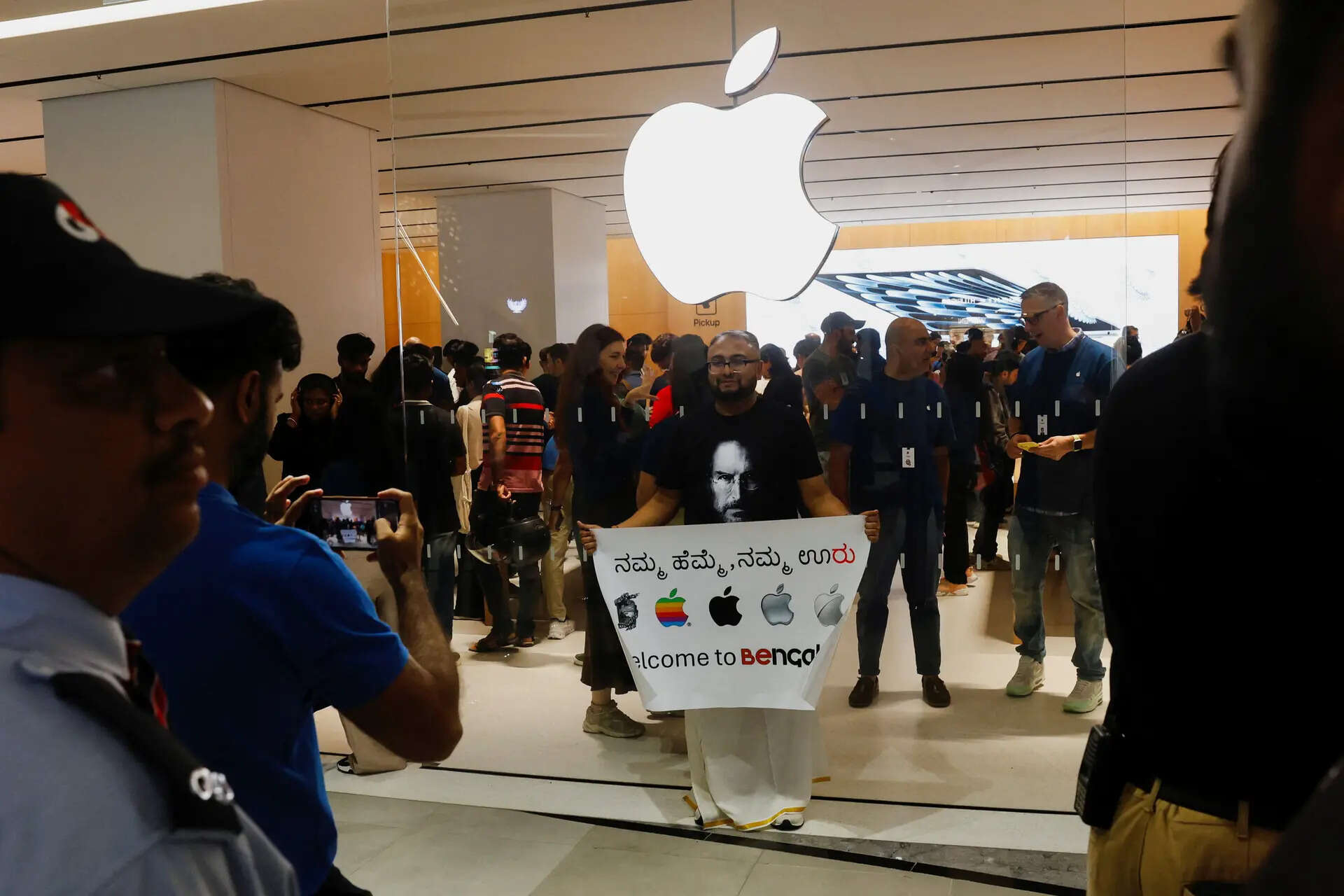
The tech giant currently runs three flagship retail stores in Mumbai, Delhi, and Bengaluru. Its FY25 roadmap includes two new stores in Hyderabad and Pune, further deepening direct consumer engagement.
India’s online channels—both Apple’s official website and partner retailers—also continue to outperform, supported by financing options, trade-in programs, and localized marketing campaigns.
‘Make in India’ Push Becomes a Game-Changer
Apple’s profitability story increasingly reflects manufacturing localization. The company now produces all iPhone 16 models domestically, and has initiated local production for the iPhone 17 series as well.
Major contract partners like Foxconn, Tata Technologies, and Pegatron continue expanding capacity. In FY25 alone, iPhone exports from India surged 76% to INR 1.50 Lakh Cr (FOB value), positioning India not just as a consumption market—but as a global manufacturing hub.
Apple has also publicly stated plans to shift all US-bound iPhone manufacturing to India by 2026, indicating the scale and confidence behind its investment strategy.
Rising Costs Reflect Scaling Operations
The company’s growth also brought higher expenses. Total expenditure rose 18%, increasing from INR 63,397 Cr in FY24 to INR 75,190 Cr in FY25. Employee-related expenses saw a similar uptick, rising 19% YoY to INR 3,107.4 Cr, signaling talent expansion across retail, logistics, customer service, and operations.
Other financial outlays, including administration and compliance, also grew 20% YoY, reaching INR 877.1 Cr.

Credits: The Economic Times
India: From Market to Global Epicentre
Apple India’s FY25 performance reflects more than financial growth—it marks a strategic shift. India is now not only a high-value consumption market but also an integral export and manufacturing destination.
With rising local production, increased retail footprint, and growing services revenue, Apple’s India playbook is no longer experimental—it’s foundational.
And if current growth continues, the world’s most valuable tech company may soon call India one of its most significant markets—financially and strategically.