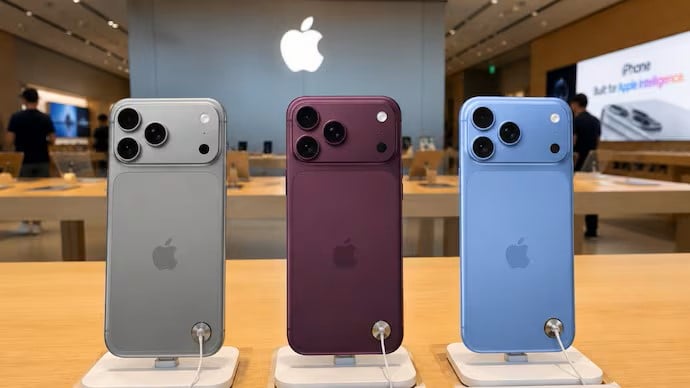
Apple has taken an unusual step in India following the launch of its latest iPhone 18 Pro lineup. Instead of cutting prices of older models, as is typically expected after a new iPhone generation arrives, the company has increased the prices of several existing iPhone models.
The iPhone 17 has seen one of the biggest changes, with the 256GB variant now starting at ₹99,900. This is ₹17,000 higher than its original launch price of ₹82,900. Apple has also increased the prices of the iPhone 16, iPhone 17e and iPhone Air, making its current smartphone lineup significantly more expensive for Indian consumers.

Credits: 91Mobiles
iPhone 17 gets ₹17,000 price hike
The iPhone 17 now costs ₹99,900 for its 256GB configuration, compared with ₹82,900 when it was originally launched. The ₹17,000 increase is notable because consumers generally expect previous-generation iPhones to become more affordable after Apple introduces newer models.
The price increase, however, extends beyond the iPhone 17. The iPhone 16 is now priced at ₹89,900, while the iPhone 17e has become ₹15,000 more expensive. The iPhone Air has recorded an even steeper increase, with prices rising by ₹30,000 for the affected configuration.
The changes mean buyers looking for a comparatively affordable iPhone from Apple’s official lineup will now have to spend considerably more than they might have expected.
Rising memory costs put pressure on Apple
The price increases appear to be linked to rising component costs, particularly those related to memory and storage. Demand for memory chips has surged as technology companies and data-centre operators continue to expand artificial intelligence infrastructure.
The rapid growth of AI has increased demand for advanced computing hardware and memory, putting pressure on global supplies. As component prices rise, smartphone manufacturers face higher production costs, creating pressure to either absorb those expenses or pass them on to customers.
Apple had already warned about the impact of rising component costs. Former CEO Tim Cook said in June that higher costs could eventually lead to price increases, arguing that Apple had attempted to shield consumers from the additional expenses but could not continue doing so indefinitely.
Cook later described the situation in memory markets as a “100-year flood”, highlighting the extraordinary scale of the price pressure compared with what he had experienced during his more than four decades in the technology industry.
Why did Apple increase prices after the new launch?
The timing of Apple’s decision is particularly interesting because of how its latest product launch unfolded.
Apple unveiled the iPhone 18 Pro and iPhone 18 Pro Max on September 9. However, the company did not introduce a standard iPhone 18 during the event. As a result, the iPhone 17 continues to occupy the position of Apple’s standard flagship smartphone rather than immediately becoming a previous-generation model.
That distinction could partly explain why Apple has retained the iPhone 17 as an important part of its lineup while adjusting its price.
At the same time, the increases demonstrate that Apple’s pricing decisions are increasingly influenced by supply-chain economics rather than simply the age of a particular iPhone model. Even an older device can become more expensive if the costs of key components rise significantly.
What the price hike means for iPhone buyers
For Indian consumers, Apple’s latest move changes the usual equation around iPhone launches. Traditionally, buyers who were willing to choose an older model could wait for a new generation and benefit from an official price reduction.
That strategy may no longer be as reliable. If component costs continue to rise, Apple could increase prices even for models that have already been available for a year or more.
The higher prices are already influencing potential buyers. Some existing iPhone users who had planned to upgrade are now considering waiting for festive-season discounts, retailer promotions or other offers rather than paying Apple’s revised official prices.
One iPhone 16 user who had planned to upgrade to the iPhone 17 said the higher price made the purchase less attractive, particularly because the iPhone 17 is already a year old. Another iPhone 15 user who had been planning an upgrade also said the price increase could prompt them to wait for a price drop or festive-season offer.

Credits: The Economic Times
Festive sales could become crucial
The development could make India’s upcoming festive shopping season particularly important for Apple buyers. While Apple’s official prices have moved higher, retailers and e-commerce platforms may still offer discounts, exchange bonuses and promotional deals to attract customers.
For consumers who are not in a hurry to upgrade, waiting could therefore make more sense than immediately paying the revised official price.
Apple’s latest pricing decision also highlights a broader shift in the smartphone market. As AI-related demand reshapes the global semiconductor supply chain, consumers may increasingly feel the impact through higher prices for everyday technology products.
For now, Apple’s iPhone 18 Pro launch has delivered an unexpected consequence in India: instead of making older iPhones cheaper, it has made several of them more expensive.