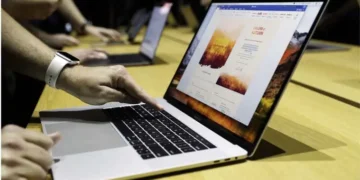


Apple has finally broken one of its longest-standing design conventions, unveiling its first touchscreen MacBook Pro with an OLED display and the company’s latest M5 Pro and M5 Max chips. The new laptop, called the MacBook Pro with ProLED XDR Display, marks a significant shift in Apple’s approach to personal computing after years of resisting touchscreen technology on its laptops.
Announced on Wednesday, the device combines touch-based interaction with the traditional macOS experience, allowing users to manipulate videos, images and other content directly on the screen. Apple CEO John Ternus confirmed the change during live remarks to media and analysts in Los Angeles.
“Yes, for the very first time, we are bringing touch to the Mac,” Ternus said.
The new MacBook Pro will go on sale on November 6, with the 14-inch model starting at $2,899 and the 16-inch version priced from $3,399. The prices represent a substantial increase over existing models, adding to a series of price hikes across Apple’s computer lineup this year.

Credits: CNET
Apple Brings Touchscreens to MacBooks After Years of Resistance
The launch represents a major departure from Apple’s long-standing position that touchscreen laptops are unnecessary. While Windows-based manufacturers have offered touchscreen notebooks for years, Apple has consistently maintained that Macs and iPads serve different purposes and require distinct interaction methods.
The company has traditionally favoured trackpads, keyboards and indirect input for its laptops, while reserving touch-based interaction for the iPhone and iPad.
In 2018, Apple software chief Craig Federighi argued that using a touchscreen laptop could lead to arm fatigue because of the physical effort involved in repeatedly reaching towards the display.
Ternus himself defended the distinction in 2021, telling The Wall Street Journal that Apple’s iPad was optimised for touch, while the Mac was designed for indirect input.
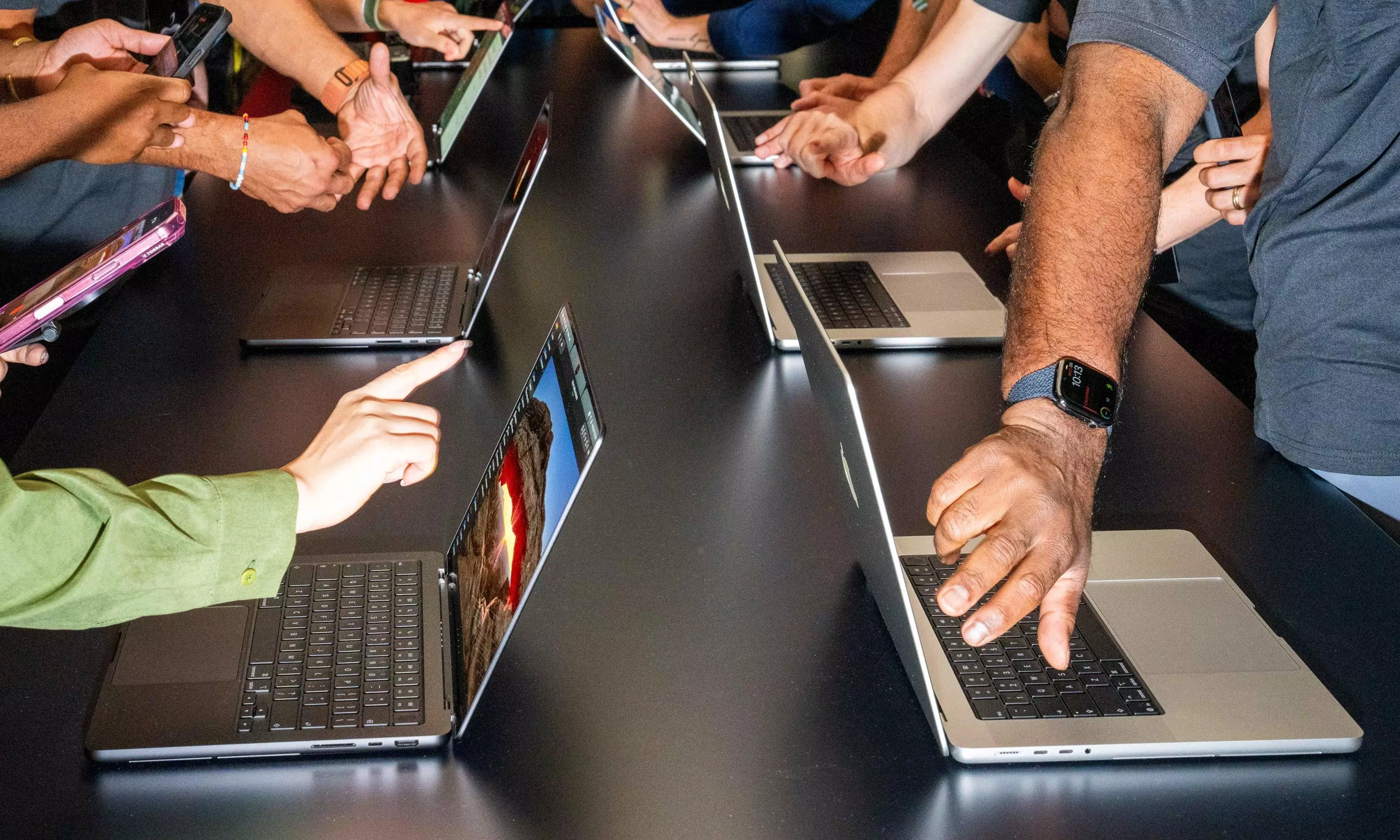
The new MacBook Pro signals that the company is now prepared to reconsider that philosophy. In a demonstration video, Apple showed users swiping across the display to interact directly with videos and images, suggesting that touch will complement rather than replace the traditional keyboard and trackpad.
Importantly, the laptop will continue running macOS instead of adopting an iPadOS-style interface. Apple has also retained the glowing Apple logo on the laptop’s lid, adding a familiar design element to the new hardware.
OLED Display and M5 Chips Headline Hardware Upgrades
The new MacBook Pro features an OLED display that Apple says delivers improved brightness, richer colours and wider viewing angles. The company has also highlighted a lighter design compared with its existing Pro laptops.
The device will be available with Apple’s M5 Pro or M5 Max processors, positioning it towards professionals who need substantial computing performance for demanding workloads.
These upgrades could make the laptop particularly attractive to video editors, designers, software developers and other users who regularly work with visually intensive applications.
However, the higher starting prices could limit its appeal among consumers who do not need the additional performance or the touchscreen functionality.
The launch also comes amid a broader refresh of Apple’s hardware portfolio. Earlier in the week, the company introduced an iPad Mini starting at $699, a $100 increase over its predecessor. Apple also unveiled new iMac and MacBook Pro models powered by M6 chips, following earlier price increases across its computer lineup.
Together, these releases reflect an accelerated product-launch schedule under Ternus, who took over as CEO following Tim Cook’s transition to executive chairman.
Credits: Deccan Chronicle
Rising Memory Costs Push Laptop Prices Higher
Apple’s touchscreen MacBook arrives at a challenging time for the global computer market. Overall laptop shipments are expected to decline by 11% this year, while rising memory costs linked to an AI-driven supply crunch have put additional pressure on manufacturers and consumers.
According to market researcher IDC, total PC shipments fell 20% year over year in the third quarter. Apple’s own shipments declined by an estimated 11% during the same period.
The company has not been immune to the rising cost of components. Cook warned earlier this summer that the memory-price situation was becoming “unsustainable”, and nearly all Mac models received price increases this year.
Mac Mini models introduced in August, for instance, became $300 more expensive. The latest MacBook Pro’s premium pricing adds to these pressures, raising questions about whether professional users will be willing to pay more for incremental hardware improvements and a new interaction method.
Touchscreen technology alone may not be enough to reverse the broader market slowdown. IDC data indicates that only 17% of notebook PCs shipped globally this year will feature touchscreens. The feature is also associated with slightly lower average selling prices than non-touchscreen notebooks.