Technology’s biggest names gathered around a long table at the White House Thursday evening, with their checkbooks ready and promises of massive investments flowing as freely as the dinner conversation.
President Donald Trump hosted what can only be described as one of the most expensive dinner parties in recent memory, bringing together Silicon Valley’s elite for a rare White House gathering focused on artificial intelligence and America’s digital future.
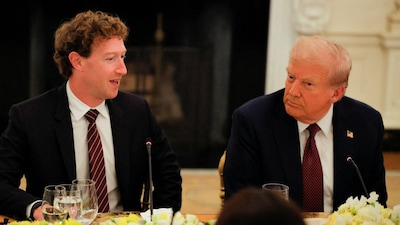
The evening’s star attraction wasn’t the menu, but the mind-boggling investment figures that tech executives pledged to pump into American AI infrastructure. Meta CEO Mark Zuckerberg, seated at Trump’s right hand, kicked things off by announcing his company would invest “at least $600 billion” in the United States through 2028.
“That’s a lot,” Trump responded with characteristic understatement, though he seemed genuinely pleased with the figure that dwarfs Meta’s previously announced $50 billion data center project in Louisiana.
Trump Gathers Tech Titans, A “High IQ” Dinner Yields Billions in Investment
Trump wasn’t content to let the conversation drift into typical Washington small talk. Instead, he went around the table like a seasoned fundraiser, pressing each executive for their specific investment commitments. The approach worked, with Google CEO Sundar Pichai announcing around $250 billion in US investments, while Microsoft’s Satya Nadella committed “up to $80 billion per year.”
Also at dinner was Apple CEO Tim Cook, who expressed his favor for more American investment but didn’t provide numbers for the company specifically.
“This is taking our country to a whole other level,” Trump stated, visibly energized by what he was being informed by what he called the “high IQ people” building America’s next-generation technology future.
The guest list was like a who’s who of tech royalty. The founder of Microsoft Bill Gates sat beside Google founder Sergey Brin, and OpenAI’s Greg Brockman sat next to Oracle CEO Safra Catz. Other giants included IBM chairman Arvind Krishna, CEO of Blue Origin David Limp, and a few other heavyweight players from across the tech ecosystem.
Nonetheless, the most notable absence more or less loomed large over pre-dinner discussions. Elon Musk, the head of Tesla and SpaceX and at one point Trump’s closest tech valley supporter, avoided the event in spite of being invited. Musk communicated on his X platform that he would not make it but would send a representative.
Trump’s Shifting Relationship with Silicon Valley and the American Economy
The absent billionaire’s absence underscored the recent chill in his Relationship with Trump. The two had a highly publicized rift earlier this year, specifically after Trump initially assigned Musk to head the Department of Government Efficiency.
The dinner marked something of a Silicon Valley do-over for Trump’s second term. Several of the executives who have stood at arms’ lengths throughout his first presidency have now returned to the White House fold and have made commitments of significant domestic investment and, in various instances, matched more of their corporate policy to Trump’s desires.
Dozens of other companies have in recent weeks copied Trump by reducing diversity programs and adopting alternative approaches to content policing and misinformation policy.
The announcement followed a Trump Artificial Intelligence Education Task Force meeting that First Lady Melania Trump leads, and it signified serious consideration on the part of the administration to ensure America’s competitiveness in AI innovation.
A New Era of American Investment
The overall Trump economic policy was on full display throughout the evening. Trump has been using a combination of threats of levies and investment pitches to push business to build more of its plants on American soil. The president has indicated that from among those specific trade duties, such companies investing in key projects at home would not have to pay.
The approach appears to be yielding dividends, at least in headline and corporate rhetoric. Beyond the technology sector, multinationals from other industries have vowed US investment of billions of dollars since Trump’s return to power in January.
The night also provided glimpses of how Trump’s dealings with the Valley have developed over his initial term. Zuckerberg, Cook, and Pichai were each given center seats at Trump’s January inaugural following massive donations by the event.
With the 2026 midterms on the horizon already, Trump and the Republican leadership will also continue to seek the aid of these technology leaders as they target keeping Congress in Republican hands.
For the moment, however, everyone’s obsessed with those massive acts of expenditure and whether they’ll yield American AI dominance Trump promises.