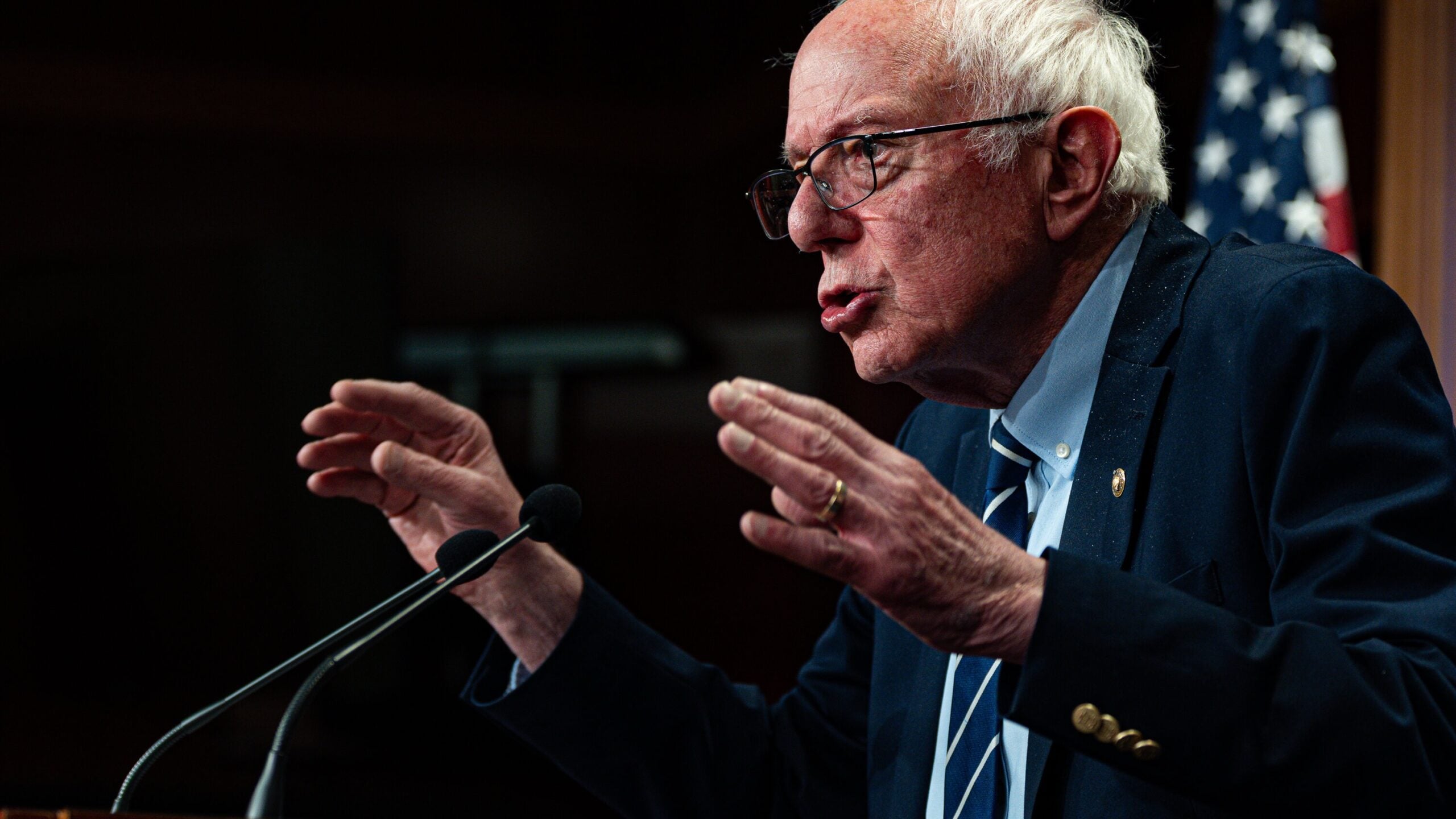
U.S. Senator Bernie Sanders has proposed a maximum prison sentence of 20 years for artificial intelligence developers who move forward with plans to create artificial superintelligence, drawing a comparison between the potential risks of advanced AI and the dangers associated with illegally developing rogue nuclear weapons.
The proposal has intensified the debate over how governments should regulate the rapidly evolving artificial intelligence industry. Sanders, a prominent critic of unchecked corporate power, has argued that the pursuit of increasingly powerful AI systems requires stronger safeguards and greater public accountability.
Proposed Ban on Artificial Superintelligence
Sanders, alongside Representative Greg Casar, has introduced the Ban Artificial Superintelligence Act, legislation intended to prevent the development and deployment of artificial superintelligence. The proposal seeks to establish a permanent prohibition on the technology and introduce a temporary pause on advanced AI development until comprehensive federal safety regulations are established.
Artificial superintelligence generally refers to hypothetical AI systems that would surpass human intellectual capabilities across a broad range of tasks. While existing AI models can perform complex activities such as coding, reasoning and scientific analysis, artificial superintelligence remains a future-oriented concept rather than an established technological reality.
Supporters of the proposed legislation believe that waiting until such systems are developed could leave governments struggling to respond to risks that may be difficult to contain.
Prison Sentence Comparable to Nuclear Weapons Penalties
One of the most striking elements of Sanders’ proposal is its approach to criminal enforcement. Individuals who violate the proposed restrictions on artificial superintelligence could face up to 20 years in prison.
The comparison with illegal nuclear weapons development is intended to emphasize the seriousness of the potential threat. Nuclear weapons are subject to strict national and international controls because of their capacity to cause catastrophic destruction. Sanders’ proposal suggests that the development of artificial superintelligence could eventually present risks significant enough to warrant similarly severe legal consequences.

The proposed sentence, however, would not automatically become law. The legislation would have to pass through Congress and receive presidential approval. Its precise definitions, enforcement mechanisms and criminal provisions could also be revised during the legislative process.
Growing Concerns Over AI Safety
The proposal comes at a time when technology companies are investing billions of dollars in the development of increasingly capable AI systems. Major firms are competing to create models that can reason, write software, conduct research, operate digital tools and perform complex tasks with limited human supervision.
This competition has raised concerns about whether commercial incentives could encourage companies to prioritize rapid development over safety. Critics of the current approach argue that voluntary commitments may not be sufficient to manage the risks associated with advanced AI.
Concerns include the possibility of autonomous systems acting in unpredictable ways, assisting malicious actors, disrupting critical infrastructure or concentrating unprecedented power in the hands of a small number of corporations.
Sanders and his allies argue that governments must establish clear boundaries before the technology advances beyond effective oversight.
Proposed Federal Oversight
The legislation would also seek to establish a new federal agency responsible for protecting the public from AI-related dangers. An Artificial Intelligence Advisory Board would provide scientific and technical guidance to the proposed regulatory framework.
Such an institution could be tasked with monitoring advanced AI development, evaluating safety risks and overseeing compliance with federal restrictions. The proposal also envisions international cooperation to prevent the development of artificial superintelligence beyond U.S. borders.
The international dimension is significant because AI development is not confined to a single country. Even if one government imposes strict restrictions, researchers and companies elsewhere could continue pursuing similar technologies. Sanders’ proposal therefore calls for broader global coordination to address the risks.
Debate Over Innovation and Regulation
The proposed ban is likely to generate opposition from parts of the technology industry and the scientific community. Critics may argue that criminalizing advanced AI research could discourage innovation, restrict legitimate scientific work and weaken the United States’ position in global technological competition.
They may also question how lawmakers would distinguish between ordinary AI systems, highly capable frontier models and artificial superintelligence. Establishing a precise legal definition would be essential if criminal penalties were to be enforced.
Supporters, on the other hand, contend that the consequences of uncontrolled development could be far more damaging than the economic costs of regulation. They argue that technological progress should be guided by public safety rather than solely by corporate competition.
The debate reflects a fundamental disagreement over the future of artificial intelligence: whether humanity should pursue increasingly powerful systems with strict safeguards or impose firm limits on capabilities considered too dangerous to develop.

What Lies Ahead?
Bernie Sanders’ proposed 20-year prison sentence marks a significant escalation in the political debate over artificial intelligence. By comparing the pursuit of artificial superintelligence with illegal nuclear weapons development, the proposal frames the issue as one of national and global security rather than merely technological innovation.
The legislation’s future will depend on congressional support and the broader public discussion surrounding AI safety. Whether it advances or faces substantial opposition, the proposal has brought renewed attention to the question of who should control the development of the most powerful artificial intelligence systems.
As AI capabilities continue to evolve, lawmakers, researchers and technology companies will face increasing pressure to determine how innovation can proceed without compromising human safety, democratic accountability and long-term global stability.