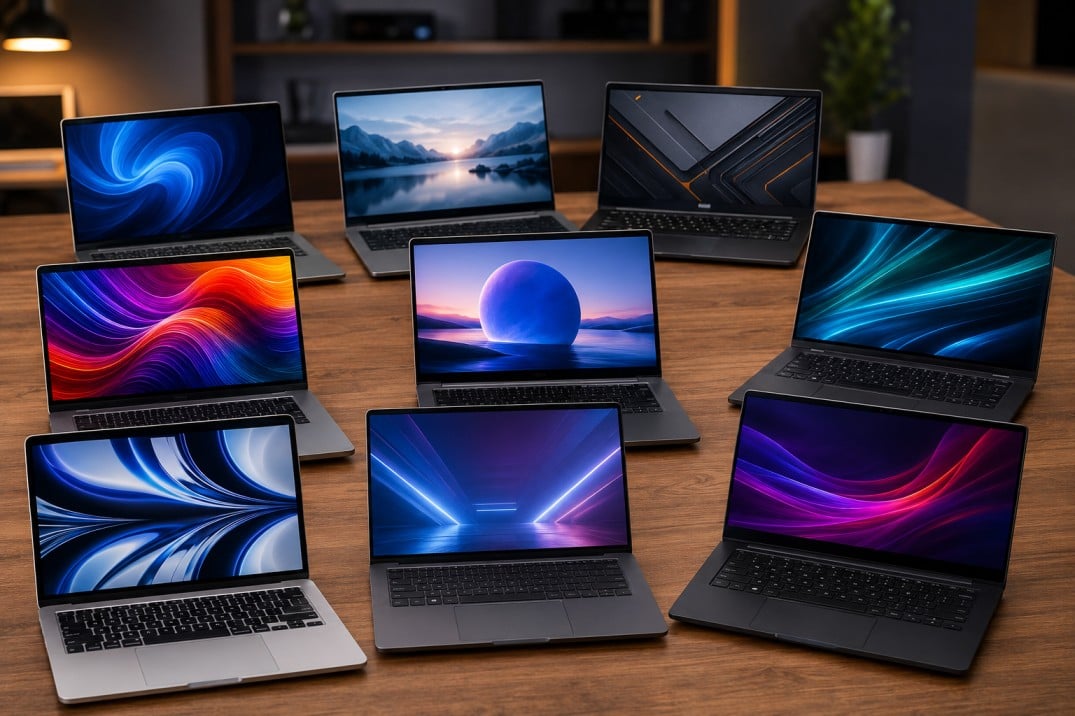
Buying a laptop has become a more complicated decision than it was just a few years ago. The market is packed with machines that promise faster processors, longer battery life, better displays and artificial intelligence functions. At the same time, prices have climbed steadily, making the sub-₹70,000 category one of the most closely watched parts of the market.
For many buyers, this price range sits in a practical middle ground. It is high enough to deliver capable hardware for work, study and entertainment, yet remains within reach of students, young professionals and households replacing ageing computers. The result is intense competition among manufacturers trying to offer the strongest mix of speed, battery life, display quality and portability without pushing prices into premium territory.
What stands out in 2026 is how much computing power has filtered down into this segment. Buyers no longer need to spend well above ₹1 lakh to access fast processors, solid-state storage or high-quality displays. Instead, many of those specifications are becoming standard across machines priced below ₹70,000.
1. Apple MacBook Neo (13-inch, ~₹69,900)
Among the most discussed devices in this category is Apple’s MacBook Neo. Priced at around ₹69,900, the laptop represents Apple’s effort to bring macOS to a wider audience. Powered by the A18 Pro chip, it offers strong battery life and a compact design that appeals to students and users already invested in Apple’s product family.
The machine is not aimed at heavy professional workloads, but for browsing, office work, video streaming and routine productivity tasks, it offers a level of efficiency that has attracted attention from buyers considering a first Mac.
2. Lenovo IdeaPad Slim 3 (15IRH8, ~₹69,890)
Lenovo continues to compete aggressively in the Windows market with the IdeaPad Slim 3. Equipped with Intel’s Core i7-13620H processor, 16GB of memory and a 512GB SSD, it targets users who prioritise raw computing power over brand prestige.
The laptop handles multitasking comfortably and offers enough headroom for coding, business applications and heavier workloads that would challenge entry-level machines. Its relatively understated design may not draw much attention, but its specifications have made it a frequent recommendation among value-conscious buyers.
3. HP 15s (Core Ultra 5 / i5 variants, ~₹58,000–68,000)
HP’s 15s range occupies a similar position. Available with Intel Core Ultra processors and configurations that fit comfortably under the ₹70,000 mark, the series has become a common choice among office workers and students. The appeal lies not in any single specification but in balance.
The machines generally offer dependable battery life, a familiar keyboard layout and hardware capable of handling the daily mix of web browsing, spreadsheets, video calls and media consumption that defines modern computing.
4. ASUS Vivobook 16 / S16 (~₹63,000–68,000)
Display quality has become an increasingly important battleground, and Asus has responded through its Vivobook range. Models such as the Vivobook 16 and Vivobook S16 bring larger screens into a category that was once dominated by 14-inch and 15.6-inch laptops.
Some configurations include OLED panels, giving buyers access to richer colours and deeper contrast without entering premium pricing territory. That makes these devices particularly attractive to users who spend long periods watching content, editing images or working across multiple windows.
5. Dell Inspiron 15 / 14 (~₹54,000–65,000)
Dell’s Inspiron series remains one of the safest choices for buyers who prioritise reliability and support networks. The Inspiron 14 and Inspiron 15 models continue to sell strongly because they focus on familiar strengths rather than headline-grabbing specifications.
Comfortable keyboards, practical port selection and dependable build quality have helped Dell maintain a loyal customer base. In a market where many buyers keep laptops for five years or more, durability often matters as much as processor speed.
6. Acer Aspire 7 (A715-79G, ~₹68,990)
Gaming and creative workloads introduce different requirements, and that is where Acer’s Aspire 7 enters the conversation. Equipped with Nvidia’s RTX 3050 graphics card alongside Intel’s Core i5 processor, the laptop offers dedicated graphics capability within the ₹70,000 ceiling.
While it is not intended to compete with expensive gaming machines, it provides enough power for video editing, design software and mainstream gaming. The trade-off is battery life, which remains one of the compromises associated with laptops carrying discrete graphics processors.
7. Infinix INBook Air Pro Plus (~₹69,990)
Another entrant attracting attention is the Infinix INBook Air Pro Plus. Infinix remains a relatively newer name compared with established laptop brands, yet the company has gained visibility through aggressive pricing and display quality.
The inclusion of a 14-inch OLED screen in this price category has helped the model stand out. Combined with a lightweight chassis and 16GB of memory, the device appeals to buyers seeking portability without sacrificing screen quality.
8. Lenovo ThinkBook 16 Gen 6 (~₹64,000)
Business users looking for a larger display often gravitate towards Lenovo’s ThinkBook 16 Gen 6. Powered by AMD’s Ryzen 7 processor, the machine places productivity ahead of entertainment. The larger screen allows users to manage spreadsheets, presentations and multitasking workloads more comfortably than smaller alternatives. The ThinkBook series has also developed a reputation for practical design choices that suit office environments.
9. HP Victus / Gaming variants or ASUS TUF entry (~₹65,000–70,000)
The final position on many shortlists is occupied by gaming-focused options such as HP Victus and entry-level Asus TUF models. These machines often offer configurations built around RTX graphics processors and high-refresh-rate displays. While they attract gaming audiences, their appeal extends further. Video editors, engineering students and users running demanding software often prefer these systems because of their stronger graphics capability. The downside remains portability, as gaming laptops tend to be heavier and less battery-efficient than standard productivity machines.
What makes the current market particularly interesting is the variety available at the same price point. A buyer can choose a lightweight machine focused on battery life, a large-screen productivity laptop, a gaming-focused system with dedicated graphics or even an entry-level Mac. That level of choice was far less common several years ago, when hardware differences between budget and premium machines were much more pronounced.
Artificial intelligence has also begun influencing purchasing decisions, although its practical impact remains uneven. Manufacturers increasingly promote AI-ready processors and software functions, but for many users the immediate benefits remain secondary to battery life, screen quality and overall speed. The machines that continue to attract buyers are generally those that balance specifications with reliability rather than relying solely on emerging software capabilities.
The competition under ₹70,000 shows how rapidly the laptop market has changed. Features that were once reserved for far more expensive systems have steadily moved into mainstream products. Whether buyers prioritise portability, gaming, productivity or display quality, there are now multiple options capable of handling daily workloads without stretching budgets into premium territory. That growing competition may be the most important development of all, because it has forced manufacturers to deliver more capable machines at prices that remain within reach of a much wider audience.